
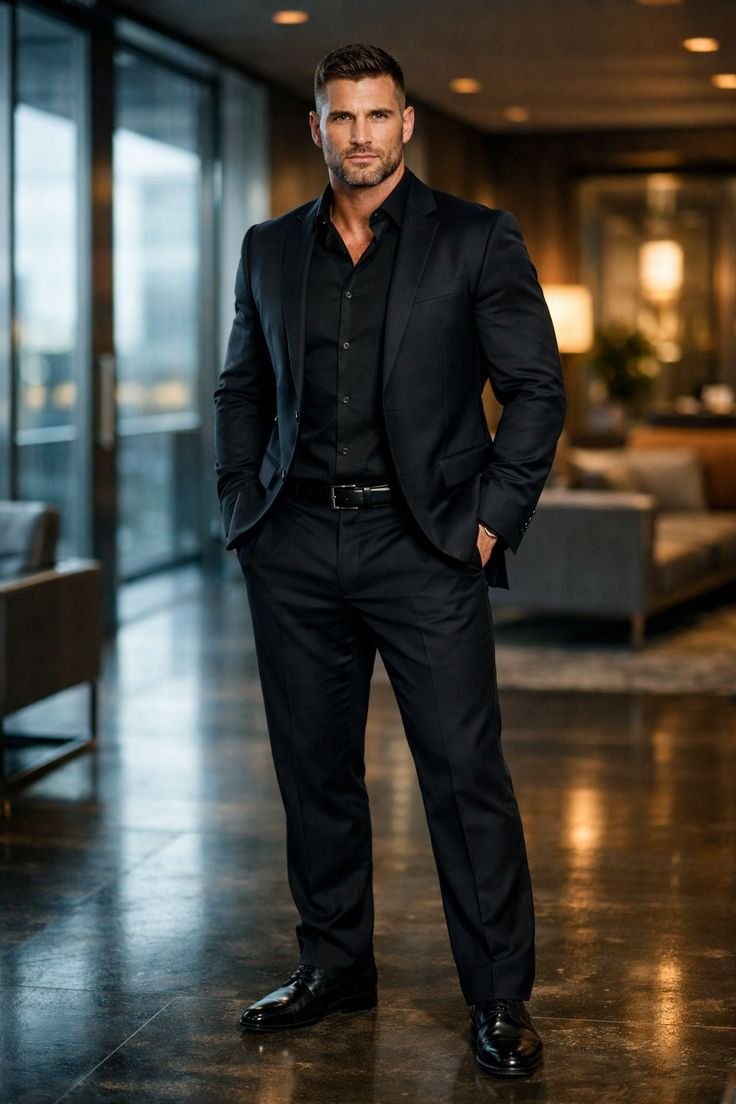
You walk into a room and nobody looks up. You’re talking and people keep checking their phones. You finish saying something important and it just… dies in the air. No reaction. No weight to it.
That’s not a charisma problem. That’s a body language problem — and the frustrating part is most men have no idea it’s happening to them.
Confidence body language for men isn’t about power poses in bathroom mirrors before a job interview. It’s a set of physical habits, built over time, that signal to other people — and to your own nervous system — that you’re a man worth paying attention to. This guide covers the science, the practical mechanics, and the exact steps to make it work in real life.
Why Your Body Language Is Undermining You Right Now
Here’s the uncomfortable truth: your body is already communicating. The question is whether it’s saying what you want it to say.
Research from Albert Mehrabian’s work on nonverbal communication suggests that a significant portion of your perceived message is delivered not through words, but through vocal tone and physical expression. More relevant to modern men: studies in behavioral science consistently show that people form judgments about dominance, trustworthiness, and competence within the first few seconds of meeting someone — before you open your mouth.
Your posture habits, how you hold your hands, where your eyes go when someone challenges you — these aren’t just optics. They’re signals your brain and body send back and forth in a feedback loop. Bad posture doesn’t just look weak.
It actually produces weaker hormonal states. A 2010 study by Amy Cuddy and colleagues at Harvard found that expansive body postures were associated with higher testosterone and lower cortisol levels in participants.
While some aspects of the original study have been debated in replication studies, the directional relationship between body stance and psychological state has continued to hold up in subsequent research.

The point is simple: how you hold yourself changes how you feel, which changes how you perform.
The Foundation: Posture Habits That Signal Real Presence
Stop Collapsing Forward
Most men in their 20s and 30s have what trainers call “tech neck” — head forward, shoulders rounded, chest caved. Hours of screens, desk work, and phone scrolling have turned the average man’s posture into a question mark.
This matters because a collapsed posture does three things simultaneously: it compresses your diaphragm (weakening your voice), it signals low status to everyone around you, and it increases cortisol — the stress hormone. You’re not just looking anxious. You’re creating the biochemical conditions for anxiety.
Fix it with these daily posture habits:

- Every morning, spend 2 minutes doing thoracic extensions over a foam roller or the edge of a chair. This counteracts overnight compression.
- Set a phone or laptop reminder every 90 minutes to do a 10-second posture reset: chin back, shoulders rolled back and down, chest slightly lifted.
- When sitting, stop leaning on the desk. Keep your back at a slight natural curve, feet flat on the floor.
It takes about three weeks of consistent practice before this starts becoming automatic. James, a 28-year-old software engineer, described it as “the single weirdest thing — I started getting more eye contact from coworkers within two weeks of just fixing how I sit. Nothing else changed.”
The Way You Take Up Space
Confident men don’t shrink. They don’t cross their arms tightly across their chest, pull their elbows into their ribs, or press their knees together when they sit. These contracted positions aren’t just shy-looking — they’re submission signals that evolved from primate behavior. Your nervous system reads them that way. So does everyone else’s.
Presence-building rule: Occupy your natural space without apology. When you sit, a slight outward angle of the knees is natural and grounded. When you stand, feet shoulder-width apart, weight equally distributed. Arms hang loose, not glued to your sides.
This isn’t about taking up more than your share of space — it’s about not artificially compressing yourself.
Eye Contact: The Most Misunderstood Element of Confidence Body Language
Men either avoid eye contact (which reads as insecurity or evasiveness) or they do the dead-eyed stare they read about in some pickup forum (which reads as aggression or instability).
Real eye contact is dynamic. It’s engaged, breaks naturally, and returns with comfort. The research-based guideline is roughly 60–70% eye contact during a conversation — enough to signal attention and confidence, not so much that it becomes a dominance contest.
In practice:
- Hold eye contact while someone is making a key point. This signals you’re listening, not just waiting to talk.
- When you break eye contact, break it to the side or downward-briefly, not down-left (which reads as discomfort) and not up (which reads as fabricating).
- In group settings, distribute eye contact evenly. Leaders address the whole group, not just the person they’re closest to.
The deeper skill here is learning to be comfortable with eye contact rather than performing it. The discomfort most men feel comes from a low tolerance for being seen — which is a psychological issue, not a physical one. Build exposure gradually. Start with holding eye contact two beats longer than feels natural in low-stakes conversations.
Voice and Communication Skills: Where Body Language Meets Language
The Physical Side of Your Voice
Your voice is part of your body. The way you breathe, how you hold your jaw, whether you project from your chest or your throat — all of it shapes whether your voice commands attention or disappears into the room.
The most common vocal problem in men is upspeak — ending statements as if they’re questions. “I think we should go with the second option?” That rising inflection is a request for validation. It tells the room you’re not sure you’re allowed to have an opinion.
Fix it by consciously letting your voice land. Finish sentences on the same pitch or slightly lower. It sounds simple. It makes an enormous difference.
Practical communication skills checklist:
- Breathe from the diaphragm before speaking in high-stakes situations. Deep belly breath in, exhale, then speak.
- Slow down by 20%. Most men speak faster when nervous. Slowing down signals that you believe what you’re saying is worth time.
- Pause before answering questions. A 2-second pause before responding reads as thoughtfulness, not hesitation.
- Project toward the back of the room, not at the person in front of you.
Gestures That Reinforce What You’re Saying
Gestures should be open and deliberate. Closed gestures — fidgeting with a ring, touching your face, playing with your phone — signal anxiety, even when you’re not feeling anxious. The body is doing stress-discharge behavior that other people read as nervousness.
Open gestures: hands visible, movements that punctuate meaning (not random), arms moving from the shoulder rather than tight at the elbow.
Marcus, a 32-year-old in sales, noticed his close rate improving when he stopped clicking his pen and started keeping both hands visible on the table during client meetings. “It sounds stupid,” he said, “but people seemed to trust me more. I think I seemed more relaxed.”
Presence Building: The Long Game
How You Enter a Room
Presence isn’t just what you do when everyone’s watching. It’s built in the moments before anyone’s paying attention.
How you walk matters. The confident walk isn’t fast or slow — it’s purposeful. Head level (not down, not exaggeratedly high), eyes forward, pace steady. Don’t rush for the sake of being efficient and don’t stroll to seem casual. Move like someone who knows where they’re going and isn’t worried about the reception they’ll get when they arrive.
Simple drill: Next time you’re walking into a work meeting or social event, take one full breath before opening the door. Roll your shoulders back, lift your chin to neutral, and walk in at your natural pace. Do it every time for 30 days. The ritual alone starts to shift your mental state.
Stillness as a Signal
One of the least talked-about elements of confidence body language for men is stillness. Men who command rooms don’t fidget. They don’t rock on their heels. They don’t bounce their knee under the table.
Stillness is a physiological signal of low threat-response. It tells your nervous system — and everyone else’s — that you’re not in danger, not anxious, not overwhelmed. It’s the physical expression of being fully present.
Practice it deliberately. When you’re in a conversation, track your unconscious movements. Many men don’t realize how much they’re moving until they try to stop.
Common Mistakes Men Make With Body Language
Performing confidence instead of building it. There’s a difference between adjusting your posture for a photograph and actually developing the postural habits that change your resting state. One is aesthetic. The other is functional.
Overcompensating. Men who’ve read too much about alpha body language often end up looking rigid and rehearsed. Spreading too wide, staring too hard, standing too still in an unnatural way. It reads as insecure in a different direction.
Ignoring context. Confident body language is calibrated to situation. The way you sit in a job interview is not the same as how you sit with old friends. Reading the room is part of presence.
Neglecting the physical foundation. You can’t build good posture habits on top of chronic pain, poor sleep, and zero physical training. The baseline of physical maintenance — lifting, sleeping, moving — is what makes body language changes sustainable.
Trying to fix everything at once. Pick one habit. Stick with it for three weeks. Then add the next one.
Step-by-Step Implementation Guide
Follow this sequence over 90 days. Don’t skip ahead.
Weeks 1–3: Posture Reset
- Morning: 2-minute thoracic extension
- Every 90 minutes: 10-second posture reset at your desk
- Evening: 5 minutes of hip flexor stretching to counter sitting
Weeks 4–6: Eye Contact Training
- In every conversation, hold eye contact 2 beats longer than usual
- Practice in low-stakes situations: cashiers, baristas, colleagues
- In meetings, maintain eye contact while others are speaking
Weeks 7–9: Voice and Stillness
- Record yourself in a low-stakes conversation. Listen back. Identify upspeak, pace, filler words.
- Before any high-stakes conversation, take one diaphragmatic breath
- Identify one fidgeting habit. Work on eliminating it consciously.
Weeks 10–12: Room Presence and Integration
- Practice your entry ritual in every new environment
- Work on gesture openness — keep hands visible in conversations
- Begin combining all elements in natural flow
By week 12, you won’t be thinking about most of this. It will have become your default.
The Mindset Shift That Makes All of This Stick
Here’s what most body language guides miss: you can copy every physical behavior of a confident man and still project insecurity if your internal frame hasn’t shifted.
The men who carry themselves well aren’t performing. They’ve internalized a particular self-concept: I belong in this room. My presence adds value. I’m not waiting for approval to take up space.
That identity shift doesn’t happen in a weekend. It happens through accumulated evidence — small actions, daily, over months, that prove to yourself that you’re capable, grounded, and worth listening to. The physical habits are the entry point. The identity shift is the destination.
Start with the body. Let the mind follow.
Frequently Asked Questions
What is confidence body language for men? Confidence body language for men refers to the physical behaviors — posture, eye contact, movement, voice, gesture — that signal self-assurance to others and reinforce a calm, grounded internal state. It includes posture habits like keeping the spine aligned and shoulders back, holding steady eye contact, speaking with a measured pace, and moving with purpose rather than rushing or fidgeting.
How long does it take to improve body language? Most men notice a meaningful shift in others’ responses within 3–4 weeks of consistent practice on a single habit, such as posture or eye contact. Full integration of multiple body language improvements typically takes 60–90 days of daily application. The key is consistency over intensity.
Can body language actually change how confident you feel? Yes. Research in embodied cognition shows that physical states influence psychological states. Adopting expansive, upright postures is associated with reduced stress responses and increased feelings of self-efficacy. The relationship between body and mind runs in both directions — changing how you hold yourself genuinely changes how you feel over time.
What are the most important posture habits for men? The three most impactful posture habits are: (1) addressing thoracic rounding through daily mobility work, (2) setting regular reminders for posture resets throughout the workday, and (3) developing body awareness around unconscious compression habits like crossing arms, hunching shoulders, and caving the chest.
How do communication skills relate to body language? Communication skills and body language are deeply connected. Voice projection, pacing, and the use of pauses are physical skills that shape how your words land. Upspeak, fast talking, and quiet volume often come from the same source as poor body language — a low tolerance for being seen and evaluated. Improving one naturally supports improvement in the other.
One Thing to Do Today
Pick one habit from this guide. Just one. Your posture at your desk right now, the way you’ll walk into the next room, how long you hold eye contact in your next conversation. Apply it once, then again, then every day for three weeks.
That’s how this actually works. Not through insight alone, but through repetition that builds identity. The man who carries himself well didn’t read about it and transform overnight. He practiced one small thing until it became who he is — then he picked the next thing.
Start now. The room you walk into tomorrow is already waiting to respond differently.
Read also: