

The first time I heard about passive income, I was hooked. Money while you sleep. Income that flows in whether you’re working or not. Financial freedom on autopilot.
Then I actually tried building it.

Turns out “passive income” is one of the biggest lies in online business. Not because it doesn’t exist—it does. But because the word “passive” makes people think it requires no work. That you can set something up in a weekend and cash checks forever.
I spent a year chasing that fantasy. Building things I thought would run themselves. And yeah, I made some money. But nothing was actually passive. Everything required constant feeding—content, updates, customer service, marketing, troubleshooting.

The real question isn’t how to make income completely passive. It’s how to make income that requires way less ongoing effort than traditional work. That’s the honest version nobody sells you.
Why Most “Passive Income” Isn’t
Here’s what I learned the hard way: most passive income streams are only passive after you’ve done massive upfront work, and even then, they need regular maintenance.

That rental property generating monthly income? You’re dealing with tenants, repairs, property managers, and market fluctuations. That’s not passive—it’s just a different kind of work.
That course you created? You’re answering customer questions, updating content when platforms change, dealing with refunds, and constantly marketing to new audiences.

That affiliate blog making money while you sleep? Google updates its algorithm and your traffic drops 60% overnight. Now you’re scrambling to fix it.
I’m not saying these don’t work. I’m saying the “passive” part is oversold. What you’re really building is leveraged income—where your effort generates disproportionate returns compared to traditional employment. But it’s rarely truly hands-off.
From experience, the guys making serious passive income put in 6-24 months of intense work upfront, then spend 5-10 hours per week maintaining it. That’s the real math. Not zero hours. Not completely automated. Just less than a full-time job.
What Actually Comes Close to Passive
After trying a bunch of different models, I found a few things that genuinely require minimal ongoing effort once they’re set up. They’re not completely passive, but they’re close enough that it actually matters.

Digital Products Solving Specific Problems
This is the closest I’ve gotten to true passive income. Creating a digital product—template, guide, tool, spreadsheet—that solves one clear problem for one specific type of person.
I built a proposal template for freelance designers. Spent about three weeks creating it, writing the sales page, and setting up the payment system. Listed it for $39. That was two years ago.
Since then, it’s made around $28K with maybe 10 hours total of maintenance work. Updating it once when I got feedback about a section that was confusing. Answering a handful of customer emails. Tweaking the sales page copy. That’s it.
Here’s why this works: once it’s created, it exists. There’s no inventory. No shipping. No ongoing production costs. The same file sells to customer one and customer one thousand. Each sale requires zero additional effort from you.
The key is solving a problem that’s consistent and painful enough that people will pay to fix it, but specific enough that you can create a focused solution. Not “how to make money” (too broad). More like “cold email templates for B2B SaaS sales” (specific, clear pain point, clear solution).
The reality check: You still need traffic. The product doesn’t sell itself. But if you set up a basic SEO strategy, maybe run some targeted ads, or promote it in relevant communities where your audience hangs out, you can get consistent sales without constant hustling.
Content Sites with Affiliate Revenue
I was skeptical of this for a long time because it sounded too good to be true. Write articles, get traffic, earn commissions when people buy through your links. But it actually works if you’re patient.
A buddy of mine runs a site reviewing camping gear for overlanding. He started it three years ago. First year made maybe $200 total. Second year around $3K. Last year it did $42K. This year he’s on track for $60K.
His time investment now? Maybe 8 hours a month. He adds one or two new reviews, updates old content when products get discontinued or new models come out, responds to a few reader emails. That’s it.
The traffic is mostly organic—people searching Google for specific gear reviews. The income is mostly affiliate commissions when they click through and buy. He’s not creating new products, handling customer service, or managing inventory. He’s just maintaining content that keeps generating traffic and sales.
What makes this work: You need to pick a niche where people are actually buying things and where affiliate programs exist with decent commissions. Electronics, outdoor gear, software, tools—anything where people research before buying. You can’t do this with topics that don’t have commercial intent.
The grind: This takes 12-18 months minimum before you see meaningful income. You’re writing 50-100 articles before Google starts ranking you. Most people quit after 20 articles because they don’t see results. That’s why most people never see this pay off.
Software as a Service (Even Small Ones)
This one surprised me because I’m not a developer. But you don’t need to be. I partnered with a developer friend to build a simple tool for freelancers to generate branded invoices and track expenses.
We charge $12/month. Nothing crazy. But we have about 300 paying users right now, which is $3,600/month in recurring revenue. It took us four months to build the initial version. Now we spend maybe 15 hours a month combined on customer support and minor updates.
The magic of SaaS is recurring revenue. Someone signs up once and pays you every month until they cancel. You’re not hunting for new sales every day. You just need to keep existing customers happy and slowly add new ones.
You don’t need to build the next Salesforce. Small, focused tools that solve specific problems can generate solid income. Scheduling tools. Bookmark managers. Simple CRMs. Invoice generators. Stock photo organizers. There are thousands of micro-SaaS ideas that don’t exist yet.
The barrier: You need technical skills or a technical partner. And you need to be able to support the product—fix bugs, handle customer issues, keep servers running. It’s not zero maintenance. But compared to the revenue it generates, the time investment is minimal.
YouTube Channels (If You Pick the Right Format)
Most YouTube channels are the opposite of passive. You’re constantly filming, editing, posting, engaging with comments. But certain types of channels come pretty close to passive once they’re established.
Educational content, for example. Explainer videos about topics that don’t change. Math tutorials. History breakdowns. Coding fundamentals. Once the video is made, it keeps generating views and ad revenue for years.
I know someone who created a channel teaching basic Photoshop techniques. He made about 80 videos over the course of a year, then basically stopped. That was three years ago. The channel still gets 200K-300K views per month and generates $1,200-1,800 in ad revenue. He spends maybe 2 hours a month responding to comments and occasionally updating a video if the software changed significantly.
This works because the content is evergreen. People will always need to learn how to remove backgrounds in Photoshop. That video he made in 2021 is still relevant and still ranking in search.
The catch: You need to pick topics that don’t become outdated. Tech tutorials about specific software versions, news commentary, trend-based content—these have short shelf lives. But fundamental skills, timeless explanations, historical content—these keep working.
The Upfront Investment Nobody Talks About
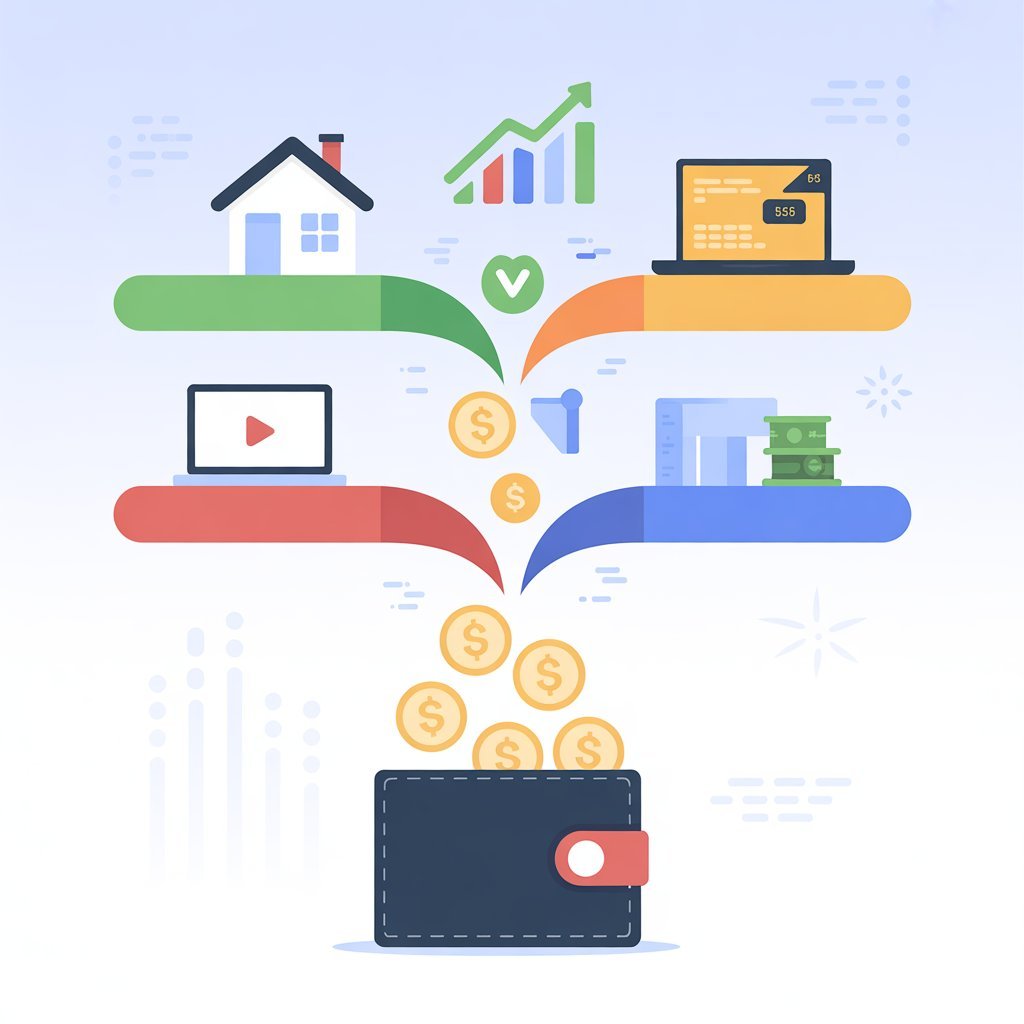
Here’s the part that kills most people’s passive income dreams: the setup phase is brutal.
That digital product I created? Three weeks of full-time work. The content site my friend runs? Two years of writing multiple articles per week before it generated meaningful income. The SaaS tool? Four months of development plus countless hours testing and refining.
None of this is quick. None of it is easy. You’re working for months with little to no financial return, betting that eventually it’ll pay off.
Most people can’t handle that delay. They want to see results in week two. When they don’t, they quit and move to the next thing. This is why most people never build passive income—not because it doesn’t work, but because they don’t stick around long enough to see it work.
What I noticed over time is that the successful people treated the setup phase like an investment, not a job. They weren’t expecting to get paid for their hours. They were building an asset that would eventually generate returns. Different mindset entirely.
What “Maintenance” Actually Looks Like
Even the most passive income streams need some attention. Here’s what that actually looks like in practice.
Digital products: Occasional customer support emails (maybe 2-3 per week), updates if you get feedback about unclear sections, tweaking sales copy if conversion drops. Total time: 2-4 hours per month.
Content sites: Adding new content occasionally to keep the site fresh, updating old posts when information changes, checking for broken links, responding to reader questions. Total time: 8-12 hours per month.
SaaS: Customer support, bug fixes, small feature improvements, server maintenance. Total time: 10-20 hours per month depending on user base.
YouTube: Responding to comments, updating videos if content becomes outdated, occasionally promoting the channel. Total time: 2-5 hours per month.
This isn’t zero. But it’s way less than 40 hours per week. And crucially, it’s flexible time. You can do it on weekends, in the evenings, whenever you want. You’re not tied to someone else’s schedule.
The Income Reality Check
Let’s be honest about what “passive income” actually generates for most people.
The digital product that’s made me $28K over two years? That’s $1,166 per month average. Not quitting-your-job money unless you have multiple products or a very low cost of living.
That content site doing $60K per year? Fantastic income. But it took three years to build and still requires 8 hours a month. And it could drop significantly if Google changes their algorithm.
The SaaS generating $3,600/month? Split between two people, that’s $1,800 each. Solid supplemental income, but not life-changing on its own.
This is the reality most people don’t want to hear. Individual passive income streams usually generate hundreds to low thousands per month, not tens of thousands. To make serious money, you need multiple streams or one very successful one (which is rare).
But here’s the thing: $1,500 extra per month changes your life even if it doesn’t replace your salary. It covers your rent. Your car payment. Your groceries. It gives you breathing room. Options. Security.
What Actually Makes It Worth It
For me, the value of passive income isn’t that I never have to work. It’s that I’m not trading time for money in a linear way anymore.
When I was freelancing, if I didn’t work, I didn’t get paid. Every dollar required my direct time and attention. There was a hard ceiling on what I could earn because there are only so many hours in a day.
Now, I have income streams that generate money while I’m doing other things. Working on a different project. Spending time with family. Sleeping. That product I created two years ago made three sales yesterday while I was at the gym. I didn’t do anything. It just… worked.
That’s the real value. Not that it’s completely hands-off, but that your effort compounds instead of being consumed. You build something once and it keeps generating value over time. That’s leverage.
The Honest Path Forward
If you’re thinking about building passive income, here’s what you need to know going in:
It’s going to take longer than you think. Plan for 12-24 months before you see meaningful returns. If it happens faster, great. But don’t bank on it.
You’ll need to maintain it. Even the most passive streams require some ongoing work. Budget 5-15 hours per month per income stream.
The first one is the hardest. You’re learning everything from scratch. The second one will be easier. The third even more so.
Start with one thing. Don’t try to build five income streams at once. Pick one model, build it properly, get it generating consistent income, then add another.
Choose based on your skills. If you’re a good writer, content sites make sense. If you’re technical, SaaS or tools. If you’re good at design, digital products. Match the model to your strengths.
Most people fail at passive income because they’re chasing the fantasy instead of accepting the reality. The reality is this: you do a lot of work upfront, a little work ongoing, and eventually you have income that doesn’t require you to be actively working every hour it’s generated.
That’s not truly passive. But it’s close enough to matter.
I’ve got three streams now that together generate around $4K-5K per month with maybe 20 hours of total maintenance work. That’s not replacing my main income yet, but it’s given me options I didn’t have before. I can take on fewer clients. Say no to projects I don’t want. Take a month off without financial panic.
That’s what passive income really gives you. Not some laptop-on-the-beach fantasy. Just more freedom. More breathing room. More control over your time.
And honestly? That’s enough.