

I used to think having multiple income streams meant I was diversified and smart. Turns out, I was just distracted and broke.
Let me explain. A few years back, I was doing freelance writing, trying to build a dropshipping store, half-committed to an affiliate site, and convinced I needed a side hustle on top of my day job. I’d read all the blogs about passive income and financial independence. They all said the same thing: “The average millionaire has seven income streams.”

So I chased seven income streams. And you know what I had? Seven things I was mediocre at and zero things I was actually good at. My income didn’t multiply—it flatlined. I was busy, stressed, and making less money than if I’d just focused on one thing.
Here’s what nobody tells you about multiple income streams: they’re the result of success, not the strategy to get there.

Why Everyone Gets This Backwards
The advice sounds good on paper. Don’t put all your eggs in one basket. Diversify your income. Build safety nets. I get it—especially if you’ve ever been laid off or seen your income disappear overnight.
But here’s the problem: most guys hear “multiple income streams” and immediately start launching a bunch of half-baked projects. They’re working a full-time job, starting a YouTube channel, building an online course, trying affiliate marketing, and flipping stuff on eBay—all at once.
What actually happens? Every stream stays shallow because you don’t have the time or focus to make any of them deep. You’re spreading yourself so thin that nothing gets the attention it needs to actually work.
I’ve been there. I thought I was being strategic. Really, I was just scared to commit to one thing and risk failing at it. It’s easier to tell yourself “I’m working on five projects” than to admit that none of them are making real money.

From experience, the guys making serious money didn’t start with multiple income streams. They started with one income stream that they got really good at. Then, once that was producing solid cash flow, they added a second. Then maybe a third. But the foundation was always built on mastering one thing first.
The One-Stream-First Principle
Here’s what I wish someone had told me earlier: your first goal isn’t multiple income streams. It’s one strong income stream that can support your life and give you breathing room.
That might be a business, a high-paying skill, a job you’re excellent at, or a service you provide. Whatever it is, you need to get it to the point where it’s reliably putting $5k, $10k, or $15k+ in your pocket every month.
Why? Because that strong foundation gives you optionality. You can invest the profits. You can hire help. You can take calculated risks on new ventures without panicking about rent.

Most people don’t realize that building one solid income stream to $10k/month is infinitely more valuable than having five income streams that each make $500/month. The first gives you leverage and freedom. The second just gives you a lot of administrative headaches.
I learned this the hard way. When I finally stopped dabbling and went all-in on one skill (freelance copywriting), my income tripled in six months. Not because I was working harder—I was actually working less—but because I was focusing all my energy on getting better at one thing, landing better clients, and raising my rates.
Once that was humming along at $8k–$12k per month, then I could think about adding other streams. But by that point, I had the money, time, and mental bandwidth to do it right.
What Real Multiple Income Streams Actually Look Like
Let’s clear up what this actually means when successful people talk about it.
When someone says they have seven income streams, they usually mean something like this:
- Their main business or skill (probably 60–80% of their income)
- Investments (stocks, index funds, real estate)
- A digital product or course they built once and now runs semi-passively
- Affiliate income from recommending tools they already use
- Maybe a YouTube channel or content platform that generates ad revenue
- Dividends or royalties from past work
- A side consulting gig or retainer client
Notice the pattern? The first income stream is doing the heavy lifting. Everything else is either passive (investments), leveraged (digital products), or supplementary (side projects that don’t take much time).
They didn’t build all seven at once. They probably spent 2–5 years mastering income stream #1, then gradually added the others as opportunities appeared and as they had surplus time and money to invest.
What I noticed over time is that most “multiple income streams” advice is being sold by people who make most of their money teaching you how to make multiple income streams. It’s kind of a scam. Their main income stream is selling the dream of passive income and diversification.
The Streams That Are Actually Worth Building
Not all income streams are created equal. Some require constant attention. Others can run in the background. Some scale. Others don’t.
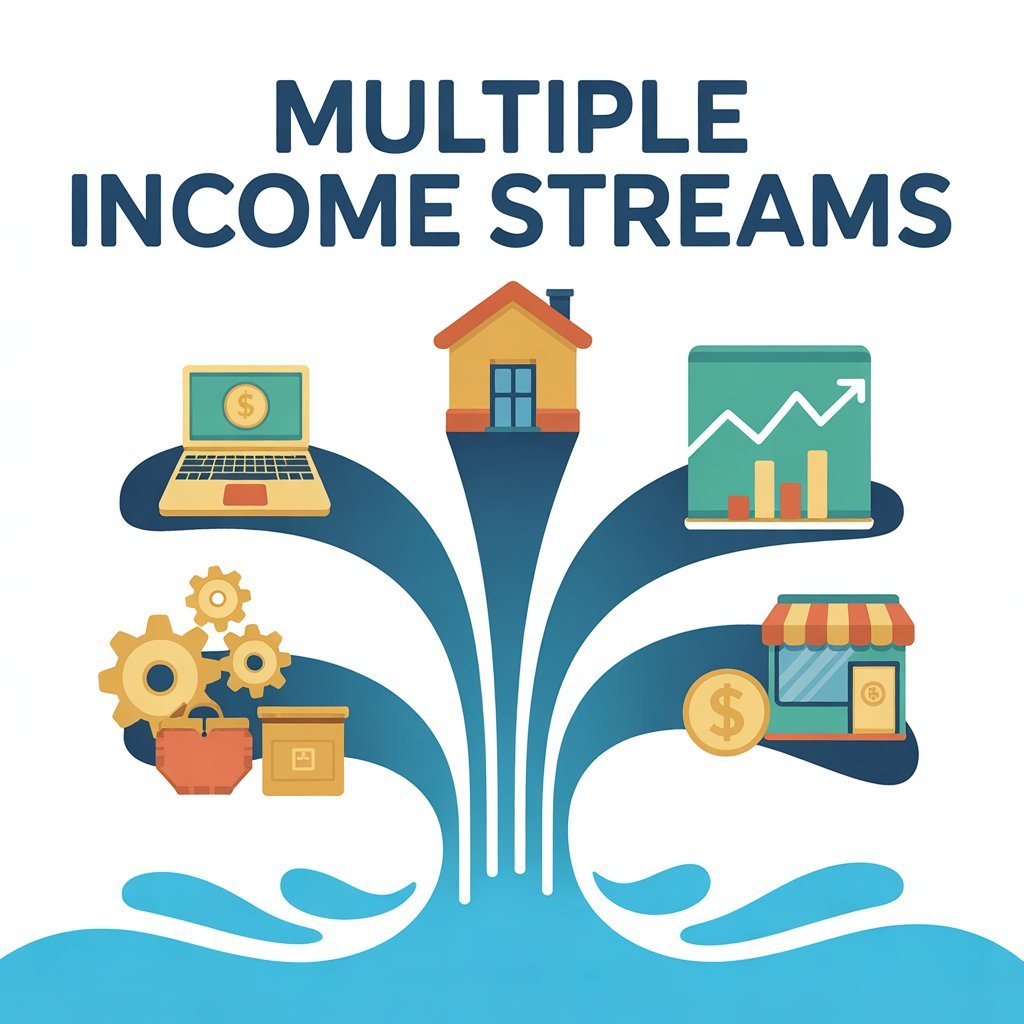
Active Income (The Foundation)
This is money you trade time and skill for. Freelancing, consulting, a job, a service business. It’s not passive, but it’s reliable and it’s how you build the capital to invest in everything else.
Most people want to skip this part because it sounds like “work.” But here’s the truth: you need to be really good at something before you can leverage it. If you’re a mediocre freelancer making $3k/month, you don’t have leverage yet. If you’re an excellent freelancer making $15k/month, now you have capital and credibility to build on.
I spent two years building my active income before I even thought about passive streams. It wasn’t sexy, but it worked.
Asset-Based Income (The Multiplier)
This is money that comes from things you own: stocks, real estate, a business that runs without you, digital products, content that generates ad revenue.
The catch? You need money or time to build these first. You can’t invest in dividend stocks if you’re broke. You can’t create a course if you don’t have expertise and an audience. You can’t buy rental property without a down payment.
This is why the one-stream-first principle matters. You need cash flow from active income to build assets that generate passive income.
Hybrid Models (The Smart Play)
These are income streams that start active but become more passive over time. A YouTube channel, a blog, an email list, a productized service, a book, a SaaS tool.
You put in heavy upfront work—creating content, building an audience, developing the product—but once it’s established, it generates income with less ongoing effort.
From what I’ve seen, this is where the real wealth gets built. Not in chasing seven different hustles, but in building one or two things that compound over time.
The Mistakes I Made (So You Don’t Have To)
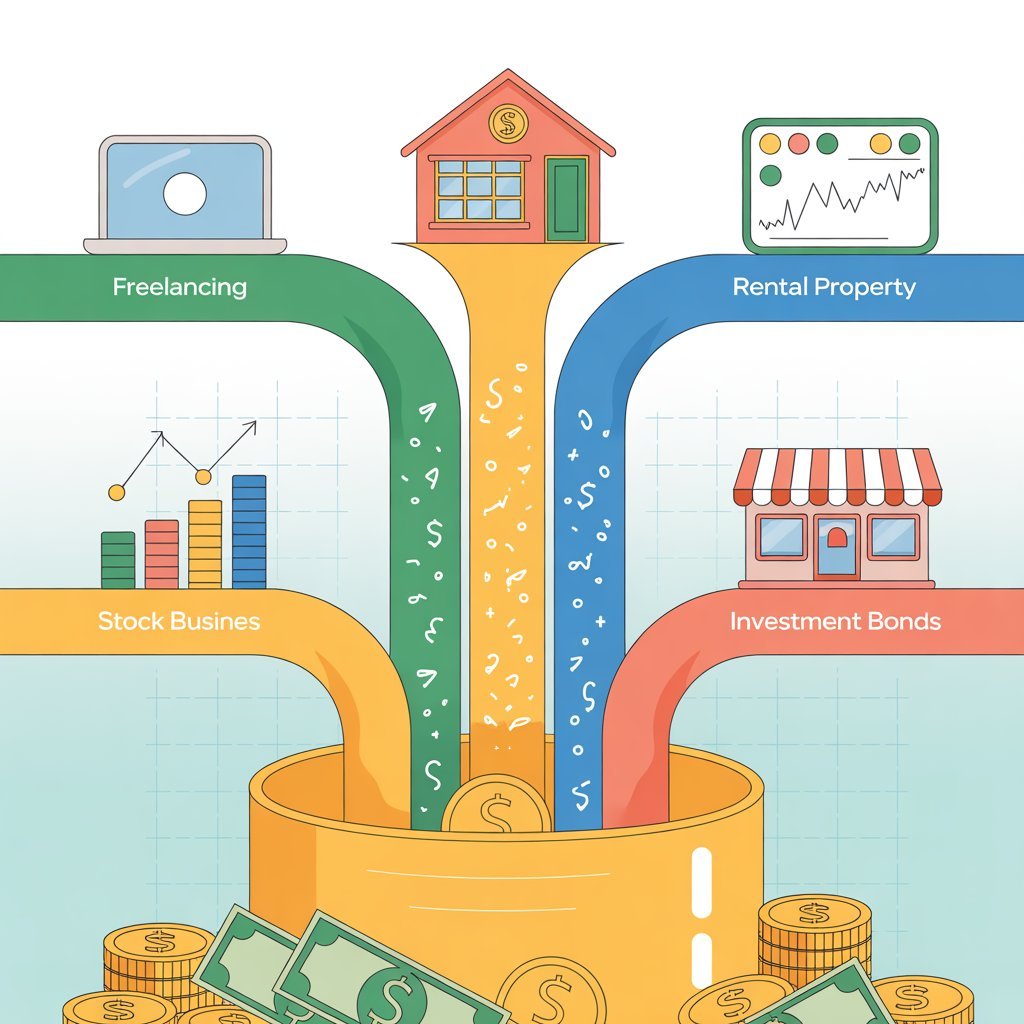
Let me walk you through what actually happened when I tried to do too much at once.
I was working a full-time job and trying to build a freelance writing business on the side. That alone was a lot. But I got impatient. I saw other people making money from courses, affiliate marketing, and digital products, so I thought I needed to do that too.
I started a blog. I tried to create a course about freelance writing even though I’d only been doing it for six months and wasn’t making great money yet. I signed up for affiliate programs and tried to promote tools I barely used.
What happened? My freelance business stalled because I wasn’t pitching enough clients. My blog got like three posts before I abandoned it. The course never launched because I realized I didn’t know what I was talking about. And I made maybe $47 total from affiliate links.
Meanwhile, my buddy focused solely on getting better at web development. He landed bigger clients, raised his rates, and within a year was making $12k/month. Then he built a small productized service—website templates for a specific niche—that started bringing in another $2k–$3k/month passively.
He had two income streams and was making $15k/month. I had five “income streams” and was making $4k/month while burning myself out.
The lesson? Depth beats width every time.
When You’re Actually Ready for a Second Stream
So how do you know when it’s time to add another income stream?
Here’s my rule: you’re ready when your primary income stream is stable, systematized, and doesn’t require 100% of your attention to maintain.
For me, that meant my freelance income was consistent at $10k+/month, I had recurring clients, and I wasn’t scrambling for new work every week. I had processes in place. I knew how to deliver results efficiently. I had enough mental bandwidth to think about something else.
At that point, I started writing on Medium and building an audience. That eventually turned into a second income stream through the partner program and paid subscribers. But I didn’t force it. I let it grow naturally while my main business stayed strong.
If your primary stream is unstable or requires constant firefighting, you’re not ready. Fix that first. Get it to the point where it can run smoothly, or where you can hand off parts of it to contractors or systems.
Then—and only then—start thinking about stream #2.
The Best Second Streams to Consider
If you’ve built a solid first stream and you’re ready to add another, here are the ones I’ve seen work best:
Investing a percentage of your income. This is the no-brainer second stream. Take 20–30% of your monthly income and put it into index funds, dividend stocks, or real estate. This is true diversification—financial diversification, not entrepreneurial distraction.
Building a digital product related to your main skill. If you’re a freelance designer, create templates or a course. If you’re a developer, build a small SaaS tool. The key is leveraging what you already know and have credibility in.
Content creation in your niche. YouTube, a newsletter, a podcast. The upfront time investment is high, but if you stay consistent, it can turn into ad revenue, sponsorships, or a funnel for your main business.
A productized version of your service. Instead of custom client work, package your expertise into a repeatable, scalable offer. It’s still your main skill, but with better leverage.
Notice what’s missing? Random side hustles that have nothing to do with what you’re already good at. If you’re a copywriter, starting a dropshipping store is a distraction, not a second income stream. It’s starting from scratch in a totally different skill set.
What Actually Creates Financial Security
Here’s the uncomfortable truth: multiple income streams don’t create security if all the streams are fragile.
Real security comes from being excellent at something valuable, having savings, and owning assets. If you’re great at your craft, you can always make money. If you have six months of expenses saved, you can survive disruptions. If you own appreciating assets, your wealth compounds.
Chasing passive income before you’ve built active income is like trying to build the roof before the foundation. It doesn’t work.
I know this sounds less exciting than the Instagram posts about “making money in your sleep” or “7 passive income streams anyone can start.” But the guys actually living that life didn’t start there. They built something real first, then leveraged it.
From experience, the path is simple but not easy: master one high-value skill, build one strong income stream, save and invest a chunk of it, then maybe add a second stream if it makes sense. Repeat.
That’s it. That’s the real playbook. Everything else is noise.
Stop Chasing, Start Building
If you’re currently trying to juggle five different income streams and none of them are really working, I’d encourage you to pause and simplify.
Pick the one with the most potential—the one you’re best at, or the one with the clearest path to real money. Go all-in on that for the next 6–12 months. Ignore everything else. Get obsessed with making that one thing work.
Once it’s producing $5k, $10k, or $15k per month consistently, you can revisit the idea of adding a second stream. But not before.
The truth about multiple income streams is this: they’re a byproduct of mastery and leverage, not a shortcut to wealth. Build one thing really well first. Everything else gets easier after that.