
 Boniface
Introduction: The Best Gym You’ll Ever Have Is Already With You
You don’t need a gym membership. You don’t need dumbbells, cables, or a bench press. You don’t even need a lot of space.
What you do need is your body — and the right plan to use it.

The problem most people run into isn’t access. It’s not knowing what to do or how to make it actually challenging enough to matter. So they do a few squats, maybe some push-ups, and call it a workout — then wonder why nothing changes.
That ends today.

This no equipment full body workout guide covers everything from your first-ever bodyweight session to advanced routines that’ll leave even seasoned athletes breathing hard. Whether you’re in a hotel room, a park, your living room, or literally anywhere else — this is your complete playbook.
What Is a No Equipment Full Body Workout?
A no equipment full body workout uses only your bodyweight to train every major muscle group — including legs, chest, back, core, and arms — in a single session. No gym or gear needed. These workouts can be scaled from beginner to advanced by adjusting reps, tempo, rest time, and exercise difficulty, making them effective at any fitness level.
Why Bodyweight Training Works (Better Than You Think)
Let’s clear something up: bodyweight training isn’t a consolation prize for people who can’t afford a gym. It’s a legitimate, science-backed training method used by athletes, military personnel, gymnasts, and martial artists worldwide.
Here’s why it works so well:
It uses compound movements. Exercises like push-ups, squats, and burpees work multiple muscle groups simultaneously — burning more calories and building more functional strength than isolated machine exercises.
It’s infinitely scalable. Can’t do a full push-up? Start on your knees. Too easy? Elevate your feet, add a pause, or go one-armed. The progressions never run out.
It builds real-world strength. Bodyweight training improves your ability to move, control, and stabilize your own body — which translates into better posture, balance, coordination, and injury prevention.
It’s sustainable. No commute, no membership fees, no waiting for equipment. When working out is this accessible, consistency follows.

The Muscle Groups You’ll Train (And How)
A proper no equipment full body workout hits all of these:
| Muscle Group | Primary Exercises |
|---|---|
| Chest & Triceps | Push-ups, dips, diamond push-ups |
| Back & Biceps | Superman holds, reverse snow angels, doorframe rows |
| Shoulders | Pike push-ups, lateral raises (water bottles), shoulder taps |
| Core & Abs | Planks, mountain climbers, hollow body holds |
| Quads | Squats, lunges, jump squats |
| Hamstrings & Glutes | Glute bridges, donkey kicks, single-leg deadlifts |
| Calves | Calf raises, jump rope (no rope needed) |
| Cardiovascular | Burpees, high knees, jumping jacks |
Beginner No Equipment Full Body Workout
Perfect for: first-timers, returning exercisers, or anyone who wants to master the fundamentals before adding intensity.
Format: 3 rounds | 30 seconds work / 30 seconds rest | Rest 90 seconds between rounds
Duration: ~25 minutes
Goal: Learn movement patterns, build baseline fitness
The Beginner Workout
Round structure (repeat 3x):
- Bodyweight Squats — 30 sec
Keep chest tall, push knees out, go as low as comfortable. - Knee Push-Ups — 30 sec
Full range of motion matters more than speed. Lower slowly. - Glute Bridges — 30 sec
Drive hips up, squeeze glutes at the top, hold 1 second. - Standing Mountain Climbers — 30 sec
Hands on a wall, drive knees up alternately. Low impact. - Dead Bug — 30 sec
Lie on your back, extend opposite arm and leg slowly. Core stays flat. - Jumping Jacks (or Step Jacks) — 30 sec
Step out instead of jumping if you need lower impact.
Rest 90 seconds. Repeat 3 times.
Beginner Progression Tips
- Week 1–2: Rest 30 seconds between moves
- Week 3–4: Drop rest to 15 seconds between moves
- Once 3 rounds feel manageable: move to intermediate level
Intermediate No Equipment Full Body Workout
Perfect for: people with some training experience, or beginners who’ve completed 3–4 weeks of consistent workouts.
Format: 4 rounds | 40 seconds work / 20 seconds rest | Rest 60 seconds between rounds
Duration: ~30–35 minutes
Goal: Build muscle endurance, increase calorie burn, improve cardiovascular fitness
The Intermediate Workout
Round structure (repeat 4x):
- Jump Squats — 40 sec
Land softly, absorb impact through your hips. Go explosive on the way up. - Standard Push-Ups — 40 sec
Body straight, elbows at 45°. No sagging hips. - Reverse Lunges — 40 sec (alternating legs)
Step back, lower knee to just above the floor, drive through your front heel. - Mountain Climbers — 40 sec
Hips level, core braced, drive knees toward chest quickly. - Pike Push-Ups — 40 sec
Hips high, head toward the floor. This is your shoulder press. - Plank Hold — 40 sec
Squeeze everything. If you break form, drop to your knees briefly. - Burpees — 40 sec
Full range: chest to floor, explosive jump, clap overhead.
Rest 60 seconds. Repeat 4 times.
Intermediate Progression Tips
- Add a 5th round once 4 rounds feel comfortable
- Increase work interval to 45 seconds / 15 seconds rest
- Add a 3-minute finisher: max burpees in 3 minutes — track and beat it weekly
Advanced No Equipment Full Body Workout
Perfect for: experienced athletes, those who want a gym-quality challenge without any equipment.
Format: 5 rounds | 45 seconds work / 15 seconds rest | No rest between rounds (rest 60–90 seconds after completing all 8 exercises)
Duration: ~40–45 minutes
Goal: Maximum strength, power output, muscular endurance, and cardiovascular conditioning
The Advanced Workout
Round structure (repeat 5x):
- Plyometric Push-Ups — 45 sec
Explode off the floor with each rep. Hands leave the ground. Pure power. - Pistol Squats (or Assisted Pistol Squats) — 45 sec
Single-leg squat to full depth. Use a wall for balance if needed. Alternate legs. - Burpee to Tuck Jump — 45 sec
Add a tuck jump instead of a standard jump at the top. Maximum intensity. - Archer Push-Ups — 45 sec
Wide push-up where you shift weight to one side — halfway to a one-arm push-up. - Jump Lunges — 45 sec
Explosive alternating lunges. Land softly. Feel your legs. - Hollow Body Hold — 45 sec
Lower back pressed flat, arms and legs extended, everything off the ground. Hold. - Superman Pull — 45 sec
Lie face down, lift arms, chest, and legs. Squeeze shoulder blades and glutes. - Broad Jump + Squat Walk Back — 45 sec
Jump forward explosively, walk back in a squat. Space needed: about 3 meters.
Rest 60–90 seconds. Repeat 5 times.
Advanced Progression Options
- Increase rounds to 6 for maximum volume
- Add a 10-minute EMOM finisher: 10 burpees every minute on the minute
- Introduce tempo training: 3 seconds down, 1 second hold, 1 second up on all strength moves
The 7-Day No Equipment Full Body Workout Schedule
Here’s how to structure a full week for maximum results:
| Day | Session | Focus |
|---|---|---|
| Monday | Full Body Workout (your level) | Strength + Endurance |
| Tuesday | Active Recovery | 20-min walk + stretching |
| Wednesday | Full Body Workout | Push focus (chest, shoulders, triceps) |
| Thursday | Core + Cardio | 20-min core circuit + 20-min light cardio |
| Friday | Full Body Workout | Pull focus (back, biceps, glutes, hamstrings) |
| Saturday | HIIT Cardio | 20–30 min high-intensity bodyweight cardio |
| Sunday | Full Rest | Rest, sleep, hydrate |
Key Exercises Explained: Step-by-Step Form Guide
The Perfect Bodyweight Squat
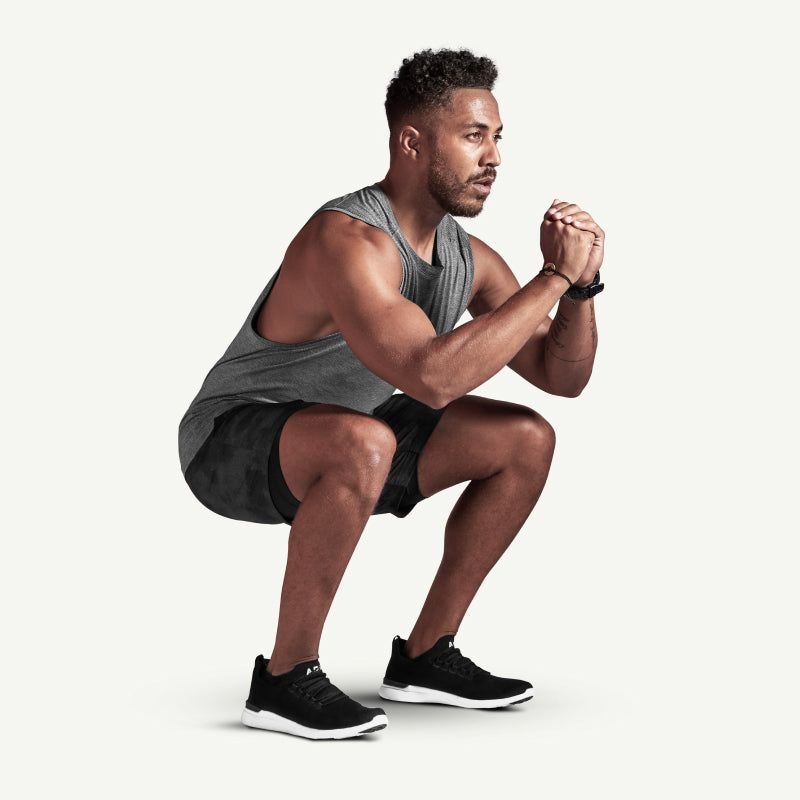
- Stand with feet shoulder-width apart, toes slightly turned out
- Brace your core like you’re about to be punched in the stomach
- Push your hips back (like sitting onto a chair behind you)
- Lower until thighs are parallel to the floor — or deeper if your mobility allows
- Drive through your full foot to stand, squeezing glutes at the top
- Keep your chest tall and knees tracking over your toes throughout
Cue to remember: “Chest up, hips back, knees out.”
The Perfect Push-Up
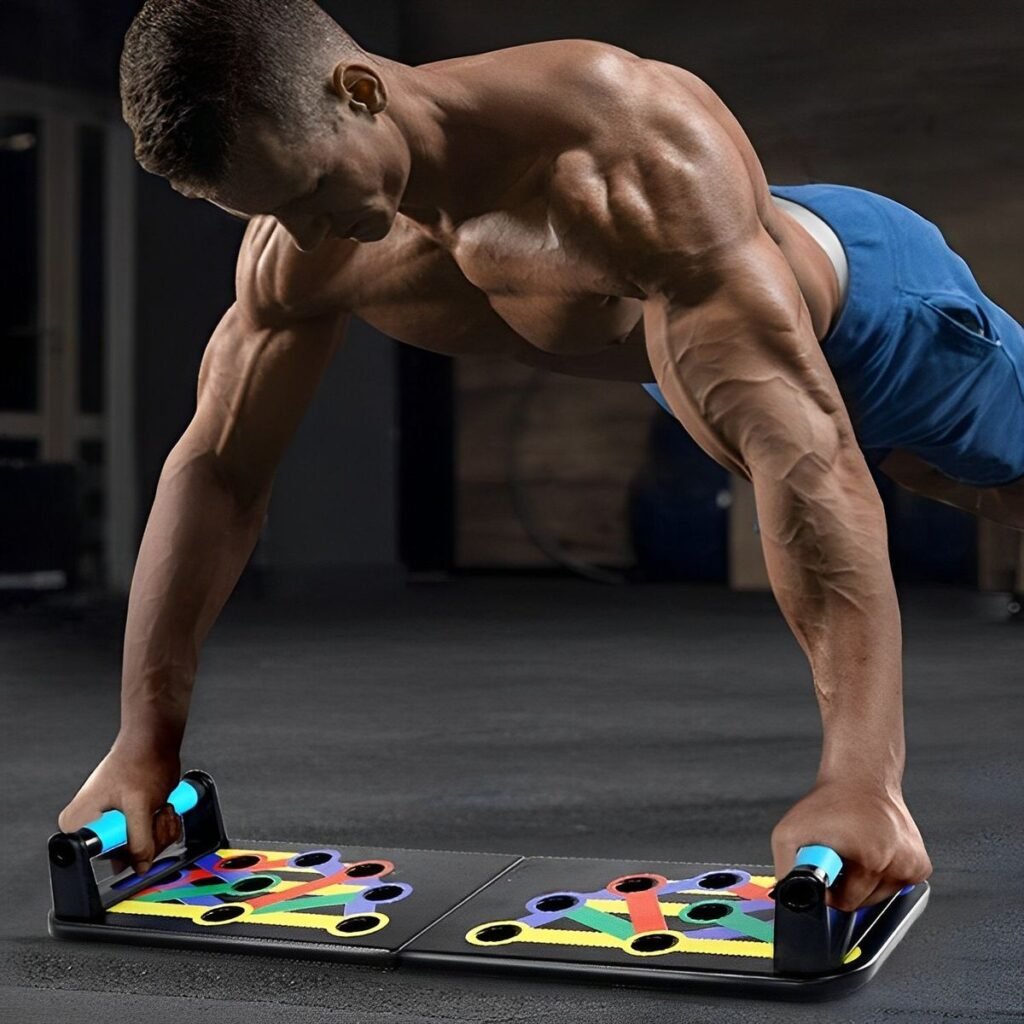
- Place hands slightly wider than shoulder-width, fingers spread
- Set up a straight line from head to heels — no sagging, no piking
- Brace your core, squeeze your glutes, pull shoulder blades together slightly
- Lower yourself by bending elbows at a 45° angle from your torso (not flared out to 90°)
- Lower until chest hovers just above the floor
- Press back up powerfully
Cue to remember: “Plank with moving arms.”
The Perfect Plank
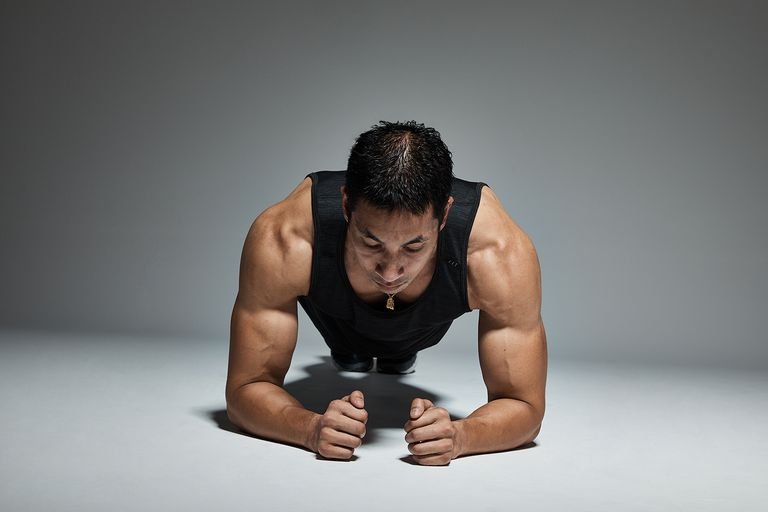
- Forearms flat on the floor, elbows directly under shoulders
- Lift hips so your body forms a straight plank
- Squeeze your core, glutes, quads, and fists simultaneously
- Look at the floor (neutral spine) — don’t crane your neck up
- Breathe steadily: inhale through the nose, exhale through the mouth
- Don’t let hips sag down or rise up
Cue to remember: “Squeeze everything you own.”
The Perfect Burpee
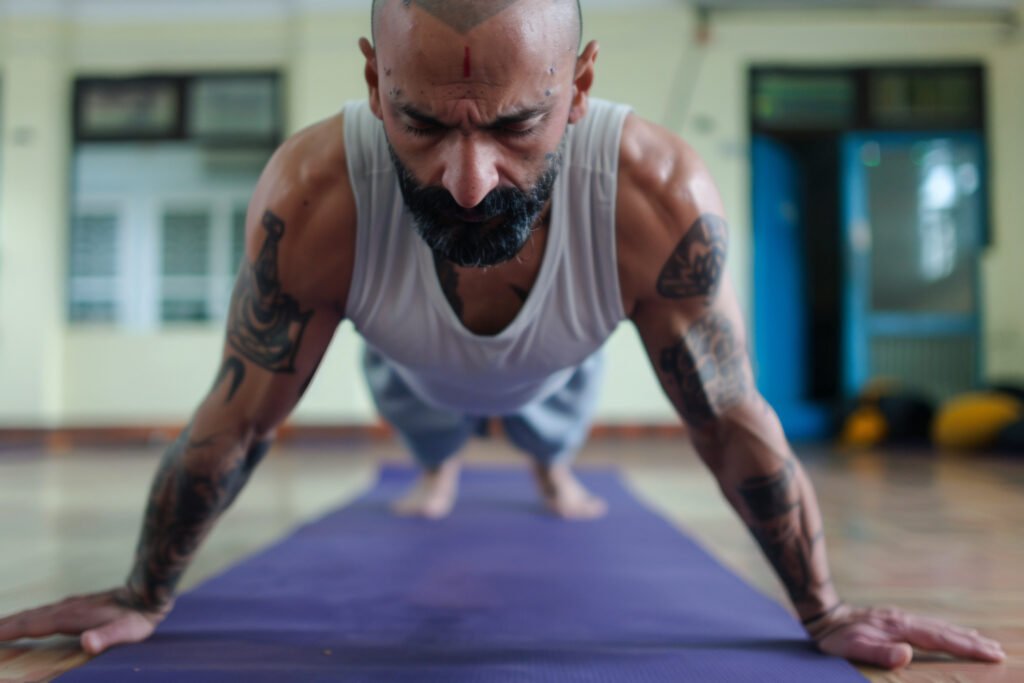
- Stand tall, then hinge and place hands on the floor
- Jump (or step) feet back to a high plank
- Lower your full body to the floor (chest, thighs, everything)
- Push up explosively and jump feet toward hands
- Swing arms, jump up, clap overhead
Cue to remember: “Down-down, up-up, jump.”
Warm-Up and Cool-Down: Don’t Skip These
5-Minute Dynamic Warm-Up (Before Every Session)
Do each for 30–45 seconds:
- Leg swings (forward-back, side-to-side)
- Hip circles
- Arm circles (forward and backward)
- Bodyweight squats (slow, controlled)
- Inchworm walk-outs
- High knees (slow pace)
5-Minute Cool-Down (After Every Session)
Hold each stretch for 30–45 seconds:
- Standing quad stretch
- Hamstring fold (standing or seated)
- Hip flexor lunge stretch
- Child’s pose
- Chest opener (hands clasped behind back)
- Spinal twist (lying down)
How to Make Any Workout Harder (Without Equipment)
Here’s a secret most beginner programs don’t tell you: you almost never run out of ways to progress with bodyweight training. Here’s how to keep leveling up:
1. Add tempo: Slow down the lowering phase. A 3-second descent on a squat or push-up makes it dramatically harder and builds more strength.
2. Add pauses: Pause at the hardest point of the movement for 2–3 seconds. Push-up at the bottom? Squat at parallel? Game-changer.
3. Reduce rest: Cutting rest from 30 seconds to 15 seconds increases cardiovascular demand and metabolic stress without changing a single rep.
4. Increase range of motion: Elevate your hands on push-ups or feet on squats to deepen the range your muscles work through.
5. Add plyometrics: Turn any ground-based exercise into an explosive version. Squats → jump squats. Lunges → jump lunges. Push-ups → clapping push-ups.
6. Progress to harder variations: Push-up → archer push-up → pseudo planche push-up → one-arm push-up. Every exercise has a harder version.
Common Mistakes (And How to Fix Them)
Mistake: Only doing cardio-style moves
Fix: Include strength-focused exercises with slower tempos. Your muscles need tension and time under load — not just heart rate elevation.
Mistake: Rushing through reps
Fix: Slow down. Quality beats quantity every time. 8 perfect push-ups beat 20 sloppy ones.
Mistake: Neglecting the posterior chain
Fix: Most people train what they can see in the mirror. Make sure you include glute bridges, supermans, and reverse lunges for your back, glutes, and hamstrings.
Mistake: Doing the same workout forever
Fix: Progress every 2–3 weeks. Add reps, reduce rest, try harder variations. If it doesn’t challenge you, it doesn’t change you.
Mistake: Skipping the warm-up “because there’s no time”
Fix: A 5-minute warm-up prevents injuries that could cost you weeks. It’s not optional — it’s non-negotiable.
No Equipment Full Body Workout for Fat Loss: What to Know
If fat loss is your primary goal, here’s how to optimize your bodyweight training for maximum calorie burn:
- Prioritize compound moves like burpees, jump squats, and mountain climbers — these torch the most calories per minute
- Use circuit format with minimal rest — keeping heart rate elevated throughout burns more total calories
- Add a 10-minute HIIT finisher after your strength circuit: alternate 20 seconds all-out effort with 10 seconds rest (Tabata protocol)
- Walk more — adding 7,000–10,000 steps daily on top of your workout dramatically accelerates fat loss
- Nutrition matters — a workout can’t outrun a poor diet; focus on whole foods, protein at every meal, and adequate hydration
No Equipment Full Body Workout for Muscle Tone: What to Know
Building visible muscle definition without weights is absolutely possible. The key principles:
- Progressive overload still applies — increase difficulty regularly (more reps, harder variations, slower tempo)
- Protein intake is critical — aim for 0.7–1g of protein per pound of bodyweight daily
- Prioritize compound movements over isolation
- Train to near failure — the last 2–3 reps of each set should feel genuinely hard
- Be consistent — muscle tone develops over weeks and months, not days
Conclusion: Your Gym Is Wherever You Are
The best workout is the one you actually do. And when your workout requires nothing but your body and a few square feet of floor space — the excuses disappear.
Whether you’re a beginner finding your feet or an advanced athlete looking to stay sharp on the road, this no equipment full body workout has everything you need.
Start where you are. Use what you have. Progress as you grow.
Your body is the most sophisticated piece of fitness equipment ever built. It’s time to use it.
FAQs: No Equipment Full Body Workout
Q: Can I build muscle with no equipment workouts?
Yes — absolutely. Bodyweight training builds real, functional muscle, especially in the chest, back, legs, and core. The key is progressive overload: continuously increasing difficulty through harder variations, more reps, slower tempo, or reduced rest. Gymnasts and calisthenic athletes are some of the most muscular people on earth — all from bodyweight training.
Q: How many days a week should I do a full body workout?
3–4 days per week is the sweet spot for most people. This gives your muscles adequate recovery time between sessions. Full-body workouts 3x/week with rest or active recovery days in between is a highly effective and sustainable structure for beginners and intermediates. Advanced trainees can push to 5 days with proper programming.
Q: How long should a no equipment workout be?
20–40 minutes is ideal for most people. Beginner sessions run 20–25 minutes. Intermediate and advanced sessions can stretch to 35–45 minutes with more rounds and reduced rest. Quality and intensity matter more than duration — a focused 25-minute session beats a lazy 60-minute one every time.
Q: What if I can’t do a push-up yet?
Start with incline push-ups (hands on a wall or elevated surface). As you get stronger, lower the incline progressively until you’re on the floor. Knee push-ups also work well. There’s no shame in starting with modifications — that’s how every strong person started.
Q: Is a no equipment workout good for weight loss?
Very much so. High-intensity bodyweight circuits are among the most effective methods for burning calories and elevating your metabolism. Combine consistent training (4–5 days/week) with a modest calorie deficit and adequate protein, and fat loss follows reliably. The bonus: you’ll build muscle tone at the same time, so the results look even better.
Read also:










Add comment