How to Style Neutral Colors Like a Pro
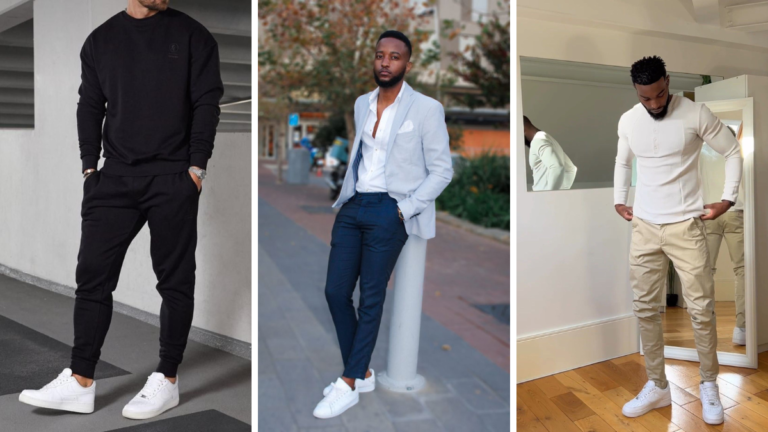
There’s something quietly powerful about a man who understands neutral colors. While everyone else is chasing trends and loud prints, you’re building a wardrobe that works effortlessly—morning meetings, weekend brunches, date nights, all of it. Neutral colors aren’t boring; they’re the foundation of intentional style. They’re what separate guys who look put-together from guys who look like they’re trying too hard.
In this guide, you’ll discover how to layer textures, play with proportions, and mix tones in ways that make neutral outfits feel anything but basic. Whether you’re starting from scratch or refining your aesthetic, mastering neutrals means you’ll never stare at your closet feeling like you have nothing to wear. This is about building a style that’s timeless, versatile, and unmistakably yours.
Understanding Neutral Colors in Modern Men’s Fashion
Neutral colors are your whites, blacks, grays, beiges, tans, browns, navy, and olive. Think of them as the backbone of any solid wardrobe—the pieces that always work together, that never clash, and that let you focus on fit and quality instead of color coordination anxiety. In modern menswear, neutrals have evolved beyond safe and conservative. They’re now the choice of stylish minimalists, creative professionals, and anyone who values ease without sacrificing impact.
The beauty of neutrals is their flexibility. A camel overcoat works over a charcoal suit or with distressed denim. White sneakers ground almost any outfit. Gray knitwear transitions seamlessly from office to off-duty. When you build your wardrobe around these tones, getting dressed becomes intuitive rather than stressful. You’re not matching—you’re layering depth, texture, and tone in ways that feel cohesive and considered.
Outfit Ideas: Neutral Combinations That Actually Work
The Elevated Basics Look
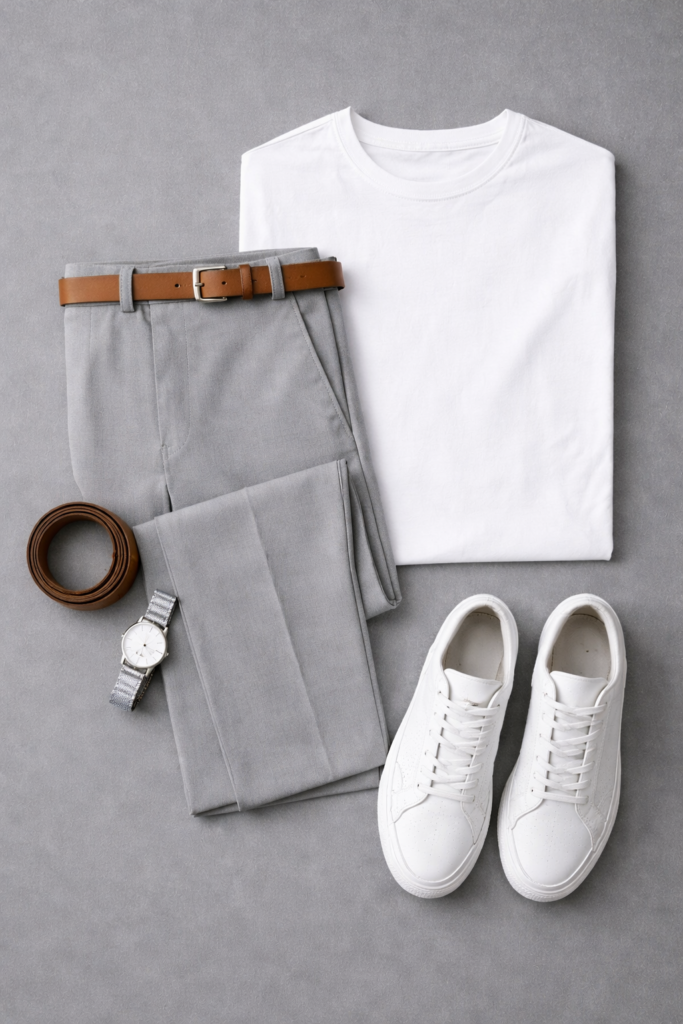
What to wear: White crew neck tee, light gray tailored trousers, white leather sneakers, tan leather belt, silver watch.
Why it works: This is proof that simple doesn’t mean lazy. The crisp white tee provides a clean foundation, while tailored trousers (not joggers, not chinos—tailored) add sophistication. The monochromatic upper half keeps things streamlined, and the tan belt adds just enough warmth to prevent the outfit from feeling sterile.
When to wear it: Coffee meetings, casual Fridays, weekend errands when you want to look like you have your life together. It’s effortless but polished—the kind of outfit that makes people assume you work in tech or design.
The Textured Layers Outfit
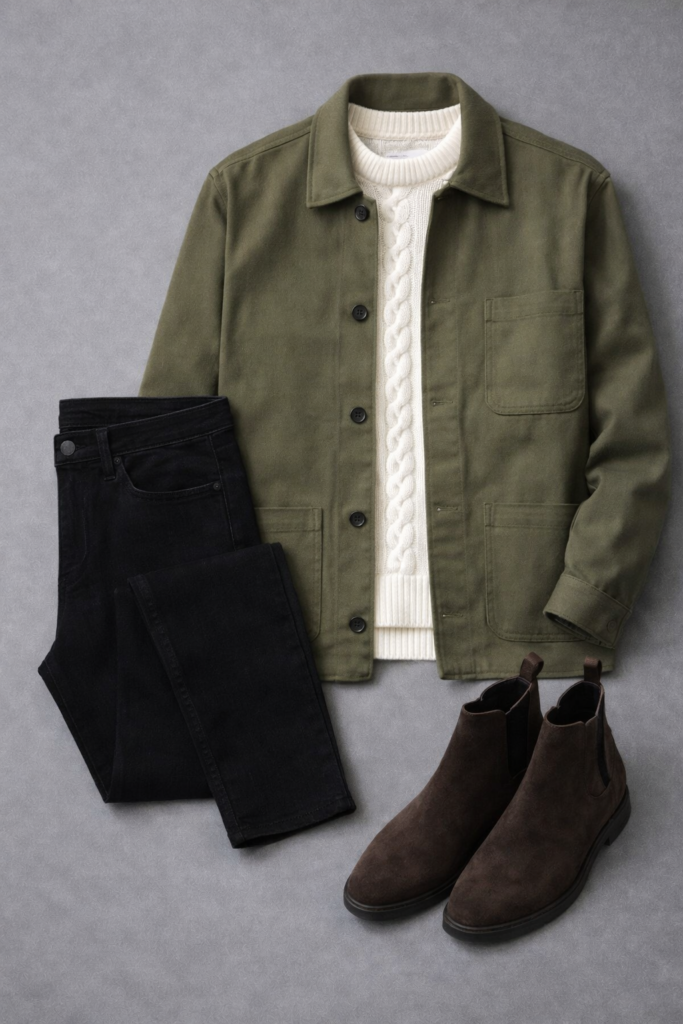
What to wear: Cream cable-knit sweater, olive chore coat, black slim-fit jeans, dark brown suede Chelsea boots.
Why it works: Texture is everything when you’re working with similar tones. The chunky cable knit creates visual interest, the structured chore coat adds dimension, and the suede boots introduce a tactile richness that elevates the entire look. The olive and cream combination feels earthy and intentional—not matchy, just cohesive.
When to wear it: Fall weekends, casual dinner dates, bookstore browsing, farmers market visits. This outfit whispers “I read fiction and make good coffee at home.”
The Monochrome Power Move
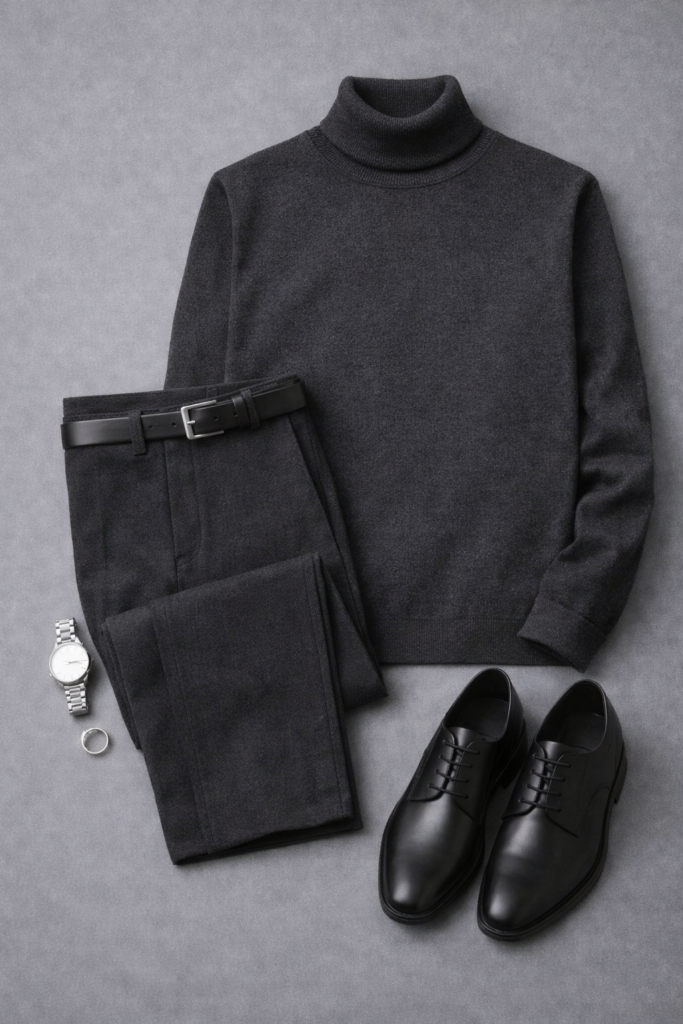
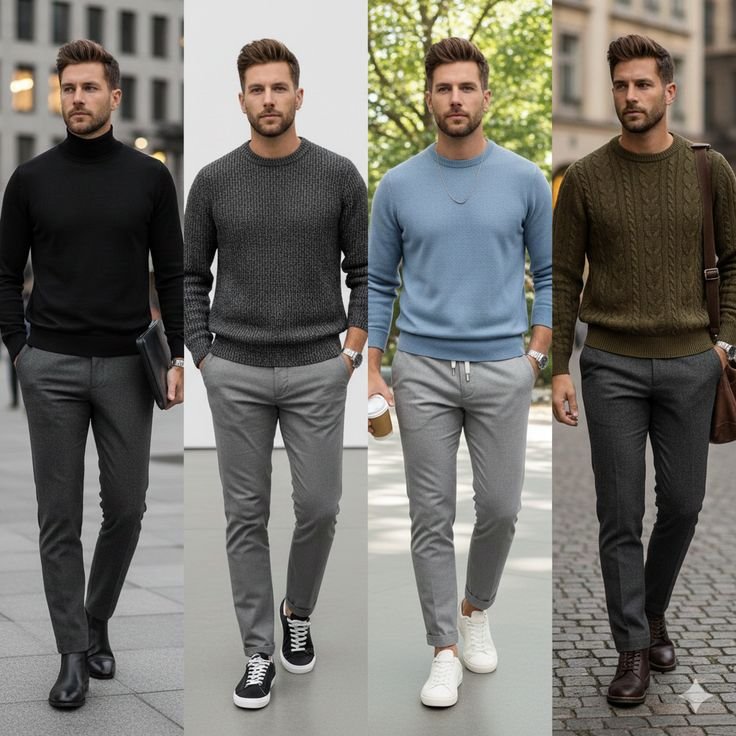
What to wear: Charcoal turtleneck, charcoal wool trousers, black leather dress shoes, black leather belt, simple silver accessories.
Why it works: Head-to-toe tonal dressing in dark neutrals creates an elongated silhouette that’s inherently sophisticated. The turtleneck adds a European flair, and keeping everything in the same color family makes you look taller and more put-together. It’s Steve Jobs meets contemporary minimalism.
When to wear it: Client presentations, gallery openings, upscale restaurants, any time you need to command respect without saying a word.
The Weekend Uniform
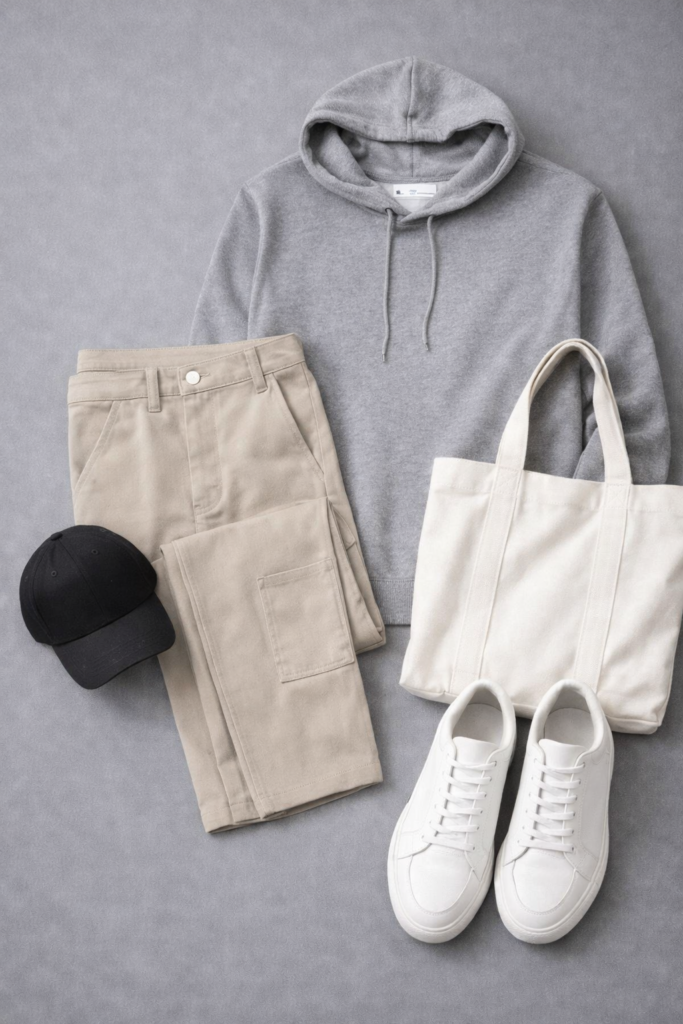
What to wear: Heather gray hoodie, beige carpenter pants, white minimalist sneakers, black baseball cap, canvas tote bag.
Why it works: This is streetwear sensibility with grown-up proportions. The carpenter pants bring structure and utilitarian cool, while the soft gray hoodie keeps things relaxed. White sneakers keep the look fresh instead of sloppy, and the beige-gray-white palette feels clean and modern.
When to wear it: Grocery runs, brunch with friends, casual hangouts, travel days. It’s comfortable enough for a six-hour flight but stylish enough for Instagram.
The Smart-Casual Essential
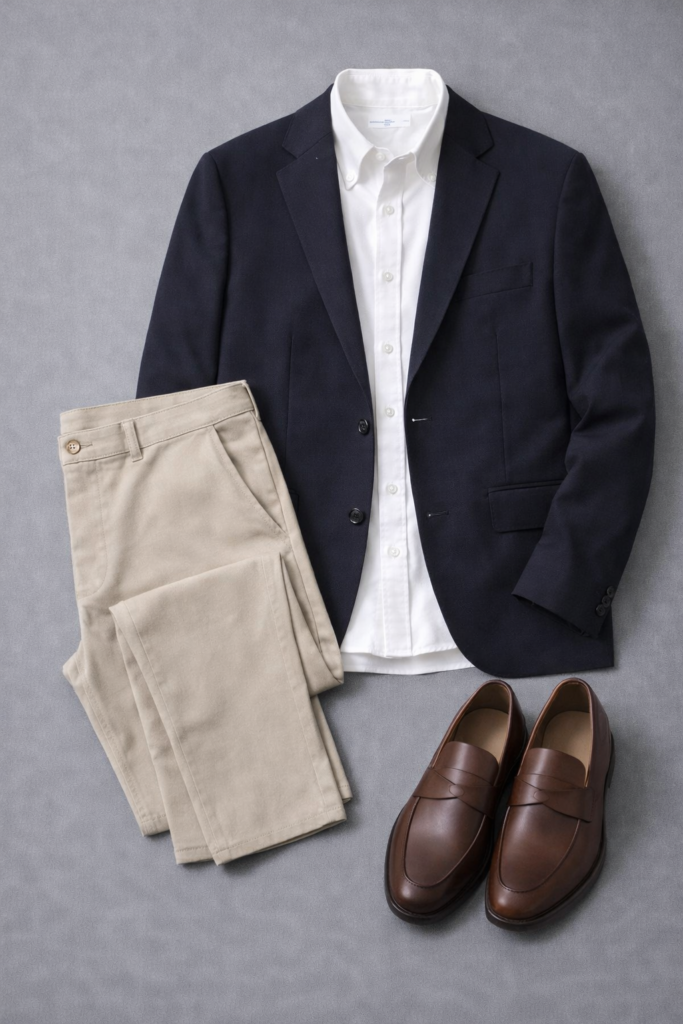
What to wear: Navy blazer, white Oxford shirt (untucked), light khaki chinos, brown leather loafers, no tie.
Why it works: This is the outfit that solves 90% of “what should I wear?” dilemmas. The navy blazer adds instant polish, the white shirt keeps things crisp, and the khaki chinos ground the look in approachability. Untucking the shirt and skipping the tie prevents it from feeling too corporate.
When to wear it: Business casual events, first dates, meeting your partner’s parents, lunch interviews, weddings when you’re not in the wedding party.
The Layered Earth Tones Look
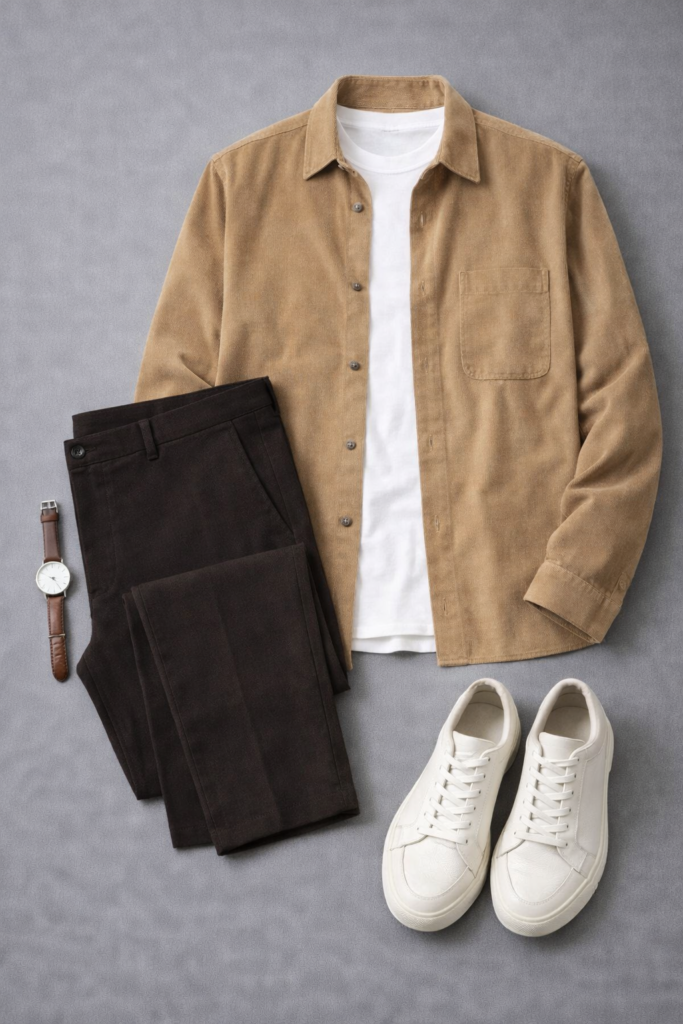
What to wear: White tee, tan corduroy shirt (worn open), dark brown trousers, cream sneakers, leather watch with brown strap.
Why it works: The corduroy shirt acts as a lightweight jacket, creating dimension without bulk. The warm brown and tan tones play beautifully together, while the white tee and cream sneakers add brightness that prevents the outfit from feeling too heavy. It’s autumn in outfit form.
When to wear it: Art walks, coffee shop work sessions, Sunday strolls, anywhere you want to look approachable but thoughtful.
The Modern Minimalist
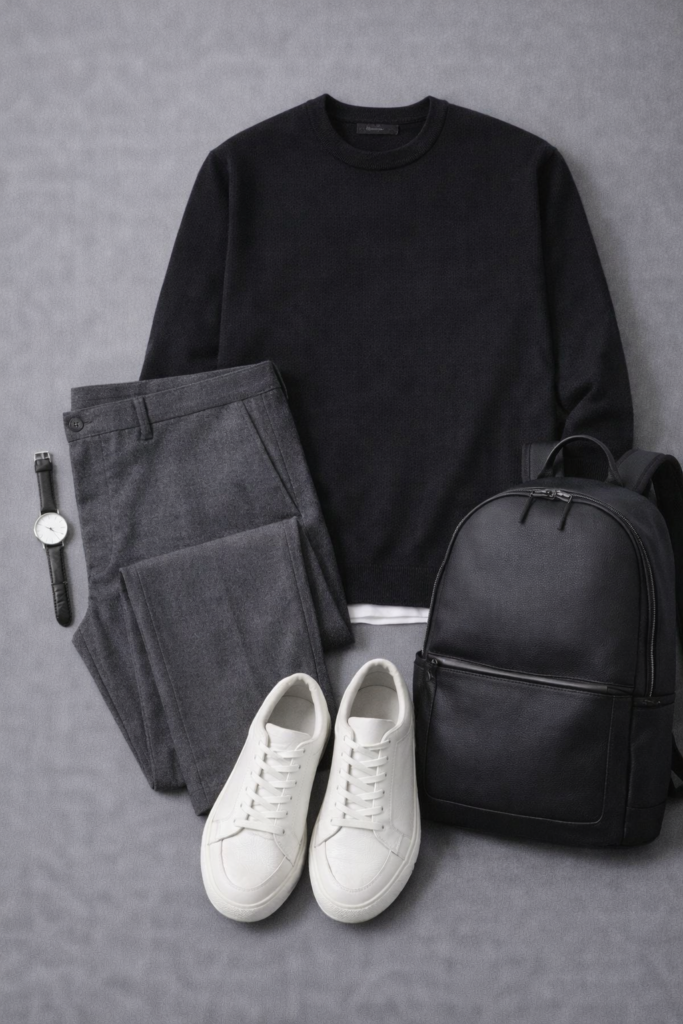
What to wear: Black merino wool sweater, gray wool trousers, white Common Projects–style sneakers, black leather watch, structured black backpack.
Why it works: This outfit proves that minimalism doesn’t mean boring. The quality of materials does the talking—merino wool drapes beautifully, gray wool trousers have movement and texture, and pristine white sneakers provide the perfect contrast. Everything fits just right, nothing screams for attention.
When to wear it: Creative agency meetings, design studios, co-working spaces, museum dates. It’s the uniform of people who’ve figured out their aesthetic.
The Casual Friday Classic
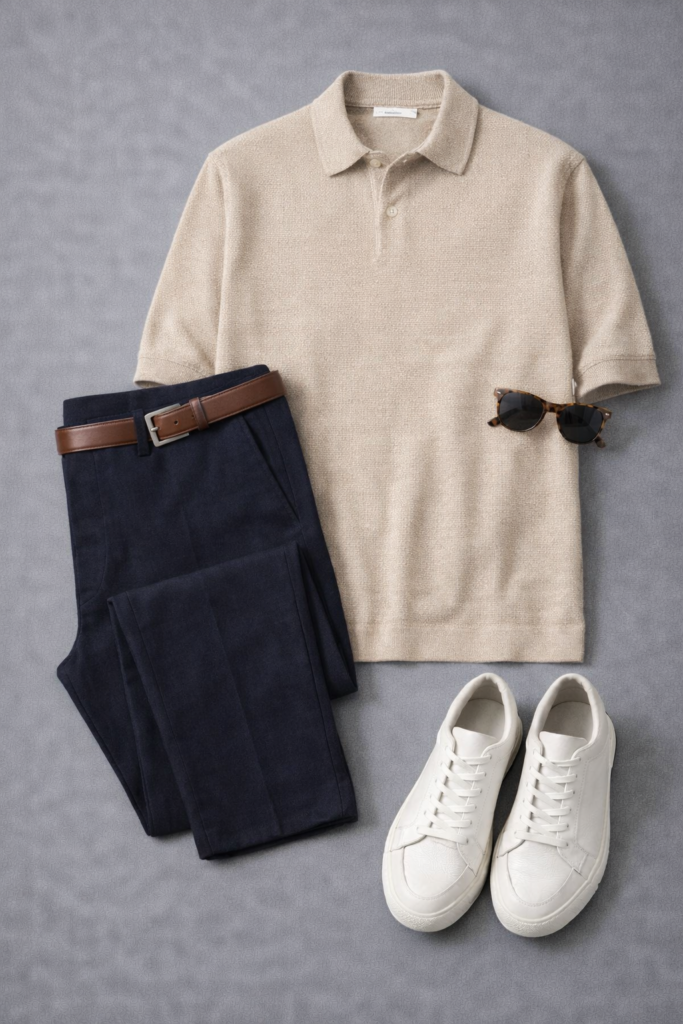
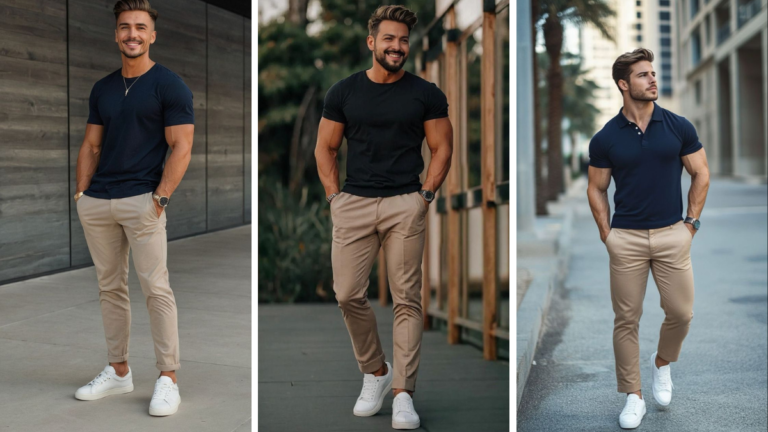
What to wear: Beige knit polo, navy chinos, white leather sneakers, brown leather belt, tortoiseshell sunglasses.
Why it works: The knit polo occupies that sweet spot between too casual and too dressy. Navy and beige is a foolproof combination that feels maritime and classic without being preppy. The white sneakers modernize what could otherwise feel dated.
When to wear it: Office casual days, lunch meetings, golf outings (yes, actually), spring and summer gatherings.
The Statement Outerwear Play
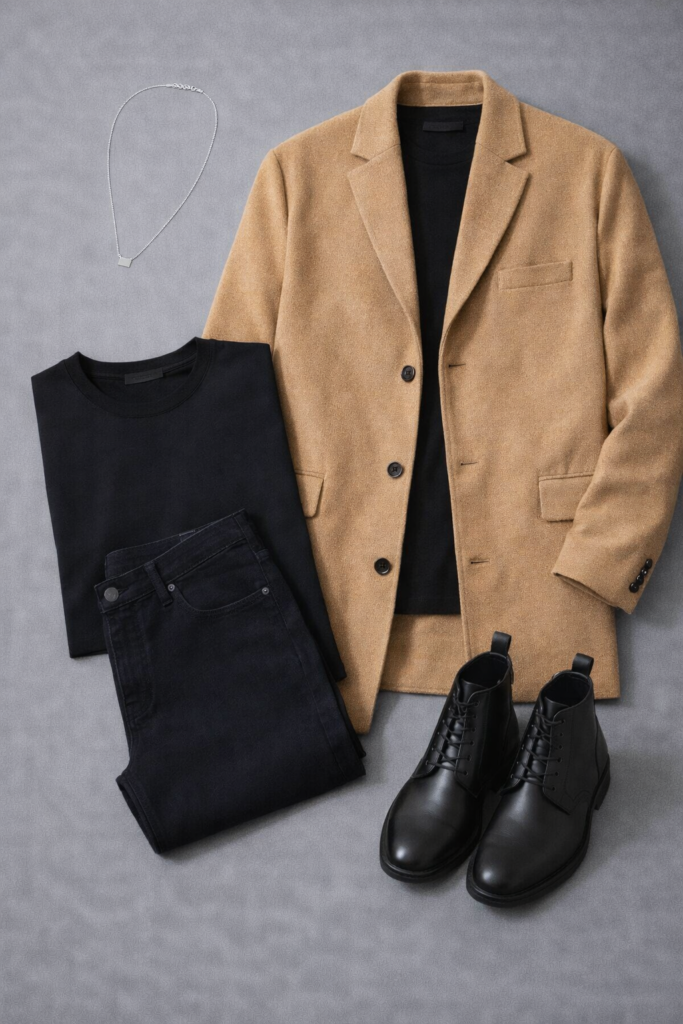
What to wear: Plain black tee, black jeans, camel wool overcoat, black leather boots, minimal silver necklace.
Why it works: When your outerwear is the statement, everything else should recede. The camel coat against all-black creates a striking contrast that’s editorial without trying too hard. The long coat adds drama and elongates your frame, while the simple base keeps attention where it belongs.
When to wear it: City walks, dinner reservations, theater nights, fall and winter evenings when you want to make an entrance.
The Relaxed Sophistication Outfit
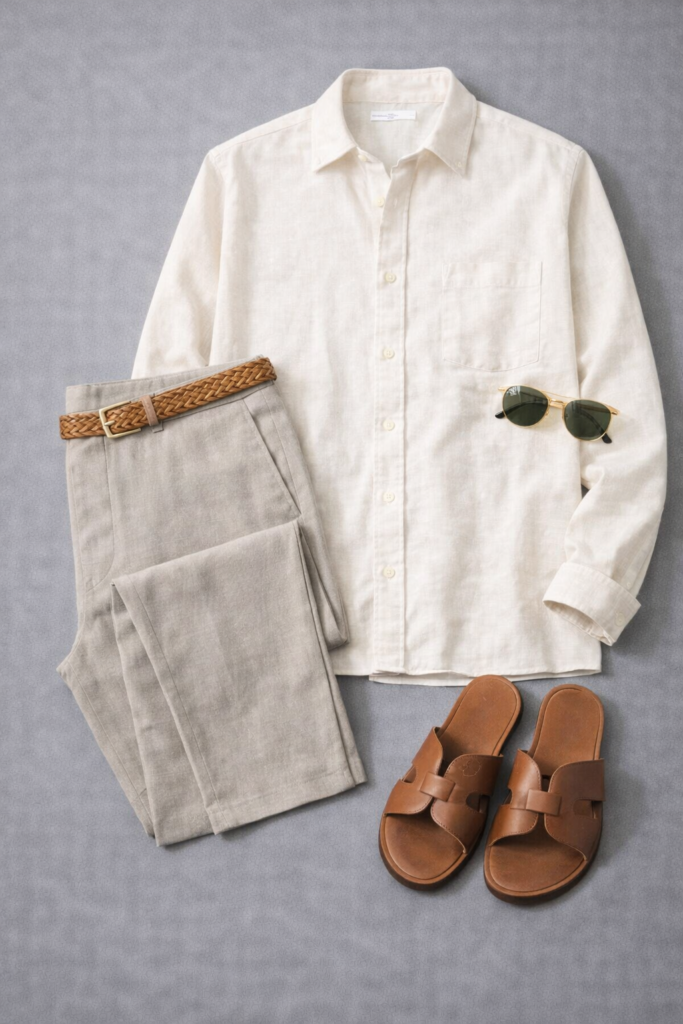
What to wear: Cream linen shirt, stone-colored linen trousers, tan leather sandals, woven leather belt, gold-rimmed sunglasses.
Why it works: Tonal linen dressing in warm neutrals feels effortlessly Mediterranean. The slight rumpled texture of linen reads as relaxed confidence, not sloppiness. The cream and stone palette keeps things light and breathable while still looking intentional.
When to wear it: Summer vacations, beach towns, outdoor dining, garden parties, anywhere warm where suits would be ridiculous.
The Winter Layers Look
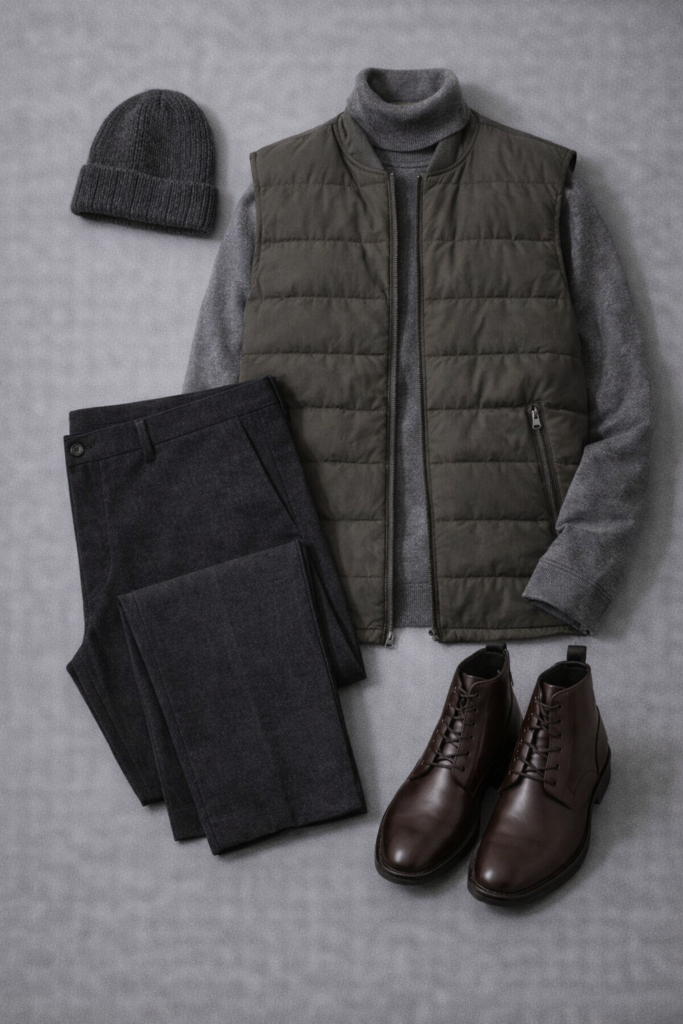
What to wear: Gray merino turtleneck, dark olive quilted vest, charcoal wool trousers, dark brown leather boots, charcoal wool beanie.
Why it works: Layering neutrals in different weights creates depth—the slim turtleneck, the structured vest, the substantial trousers. The olive vest breaks up what could be too much gray while still maintaining the neutral palette. Everything feels warm, textured, and purposefully assembled.
When to wear it: Cold-weather commutes, holiday markets, cabin weekends, outdoor winter events.
The Contemporary Classic
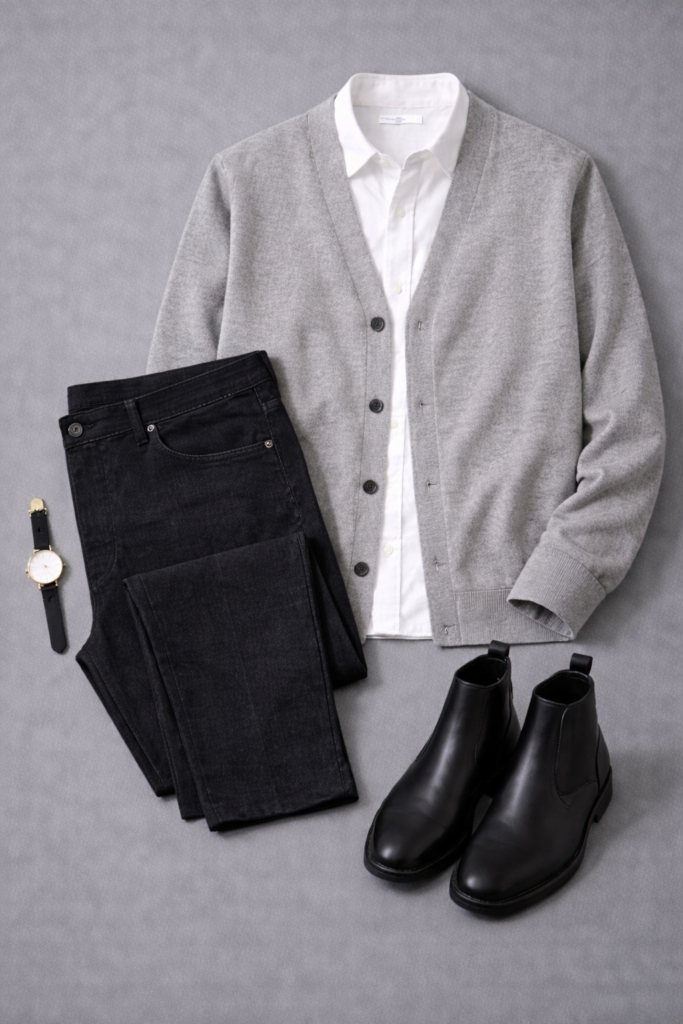
What to wear: White button-down shirt, gray cardigan, black denim, black leather Chelsea boots, simple gold watch.
Why it works: The cardigan softens the formality of the button-down without sacrificing sophistication. Black denim bridges casual and dressy, while Chelsea boots add just enough edge to prevent the outfit from feeling too safe. The gray cardigan is the unsung hero—it adds warmth and texture while maintaining the neutral palette.
When to wear it: Transitional weather, casual office environments, bookstore dates, wine bars, anytime you need versatile style.
Styling Tips for Mastering Neutral Colors
Play with different shades of the same color. Don’t be afraid to wear three different grays or two shades of beige in one outfit. Tonal dressing creates a sophisticated, elongated look that’s more interesting than perfectly matched pieces. A light gray tee under a charcoal blazer with medium gray trousers? That’s depth.
Let texture do the talking. When color won’t provide contrast, texture must. Mix smooth cotton with chunky knits, soft suede with crisp denim, matte fabrics with subtle sheen. A camel sweater and camel trousers could look flat, but a cable-knit camel sweater with brushed cotton camel chinos creates visual interest through texture alone.
Invest in quality over quantity. Neutrals show everything—poor construction, cheap fabric, bad fit. A well-made white tee in thick cotton will always look better than five thin, see-through ones. With neutrals, you can’t hide behind patterns or bold colors, so the quality of each piece becomes paramount.
Use accessories as subtle accent points. A cognac leather watch strap, tortoiseshell glasses, a silver ring—these small details add personality without disrupting your neutral palette. Think of accessories as seasoning: a little goes a long way.
Avoid common mistakes. Don’t wear black and navy together unless you really know what you’re doing (they often clash subtly). Don’t let everything be the exact same tone—you’ll look washed out. Don’t neglect fit—neutral outfits require proper tailoring to look intentional rather than lazy. And don’t be afraid of white or cream; they’re often more versatile than black.
Master the art of proportions. Oversized neutral pieces can look sloppy if not balanced correctly. Pair a relaxed beige overshirt with fitted black jeans. Wear a chunky cream sweater with slim gray trousers. The interplay of loose and fitted creates visual interest when color contrast is minimal.
Know when to add contrast. Sometimes neutrals need a break. A white sneaker against all-dark clothing, a tan belt with gray and navy, brown boots under black jeans—these contrast points guide the eye and prevent monotony.
Wardrobe Essentials for a Neutral Color Palette
White crew neck tees (3-4 quality ones). These are the foundation. Wear them alone, layer them, use them as undershirts. Look for thicker cotton that doesn’t go transparent.
Gray merino wool sweater. Versatile across three seasons, pairs with everything, dresses up or down effortlessly.
Black and navy chinos. Two pairs that handle 80% of your casual and smart-casual needs.
Beige or tan trousers. Essential for warmer months and for breaking up darker combinations.
White leather sneakers. The most versatile footwear in a neutral wardrobe. Keep them clean.
Brown leather boots (Chelsea or chukka). Add sophistication to casual outfits and work with nearly every neutral combination.
Navy or charcoal blazer. The piece that elevates everything else. Make sure it fits perfectly.
Camel or tan overcoat. A statement piece that works over suits and jeans alike.
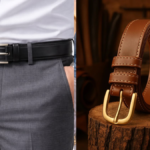
Black leather belt and brown leather belt. Match your leathers to your shoes—it’s a simple rule that makes a big difference.
Olive or navy outerwear (jacket or vest). Adds a subtle color variation while staying within the neutral family.
Mix these pieces freely. That’s the entire point of building a neutral wardrobe—you eliminate the mental load of “does this match?” and focus instead on fit, occasion, and how you feel.
Frequently Asked Questions
Can you wear black and brown together? Absolutely. The old rule against mixing black and brown is outdated. Dark brown boots with black jeans works perfectly. The key is confidence and contrast—don’t wear medium brown with black, as it can look muddy. Go darker or lighter with your browns. Chocolate brown leather with black denim? Sophisticated. Tan belt with black trousers? Great contrast. Just avoid matching shades that are too similar in depth.
What’s the best neutral color for beginners? Navy. It’s as versatile as black but slightly warmer and more approachable. Navy chinos, navy blazers, navy tees—they all work with white, gray, beige, brown, and even black. If you’re building a neutral wardrobe from scratch, start with navy and gray as your base colors, then add black, white, and earth tones.
How do I keep neutral outfits from looking boring? Focus on three things: texture, fit, and layering. A plain outfit in perfect-fitting clothes with interesting textures (knits, suede, different fabric weights) will always look better than a colorful outfit that fits poorly. Also, don’t underestimate the power of good grooming and a clean pair of shoes—these details elevate neutral looks significantly.
Should I avoid wearing all one color? Not at all—monochromatic neutral outfits are incredibly stylish when done right. All gray, all black, all beige—these can look sophisticated and intentional. The trick is varying the shades slightly (light gray tee with charcoal trousers) and mixing textures (smooth and textured fabrics together). Tonal dressing is actually easier than mixing multiple colors.
What shoes work best with neutral color outfits? White sneakers are the most versatile—they work with almost every neutral combination and add a fresh contrast point. Brown leather boots and shoes are second, perfect for adding warmth to grays and blacks. Black leather dress shoes for formal neutral outfits. Tan or beige suede shoes for summer neutrals. Honestly, if your outfit is entirely neutral, your shoe options are nearly unlimited. Focus on quality and condition over specific color.
Conclusion
Mastering neutral colors isn’t about playing it safe—it’s about building a foundation of style that’s endlessly adaptable, reliably sophisticated, and authentically you. When you understand how to layer tones, mix textures, and balance proportions within a neutral palette, you eliminate the noise and focus on what actually matters: fit, quality, and confidence. You’re not following trends; you’re creating a personal uniform that works for your life, your body, and your aesthetic. Start with the essentials, experiment with combinations that feel right, and don’t be afraid to wear the same great pieces in different ways. The most stylish men aren’t the ones with the loudest wardrobes—they’re the ones who’ve figured out what works and wear it with intention. Your neutral wardrobe is waiting. Build it thoughtfully, wear it confidently, and watch how simplicity becomes your signature.