
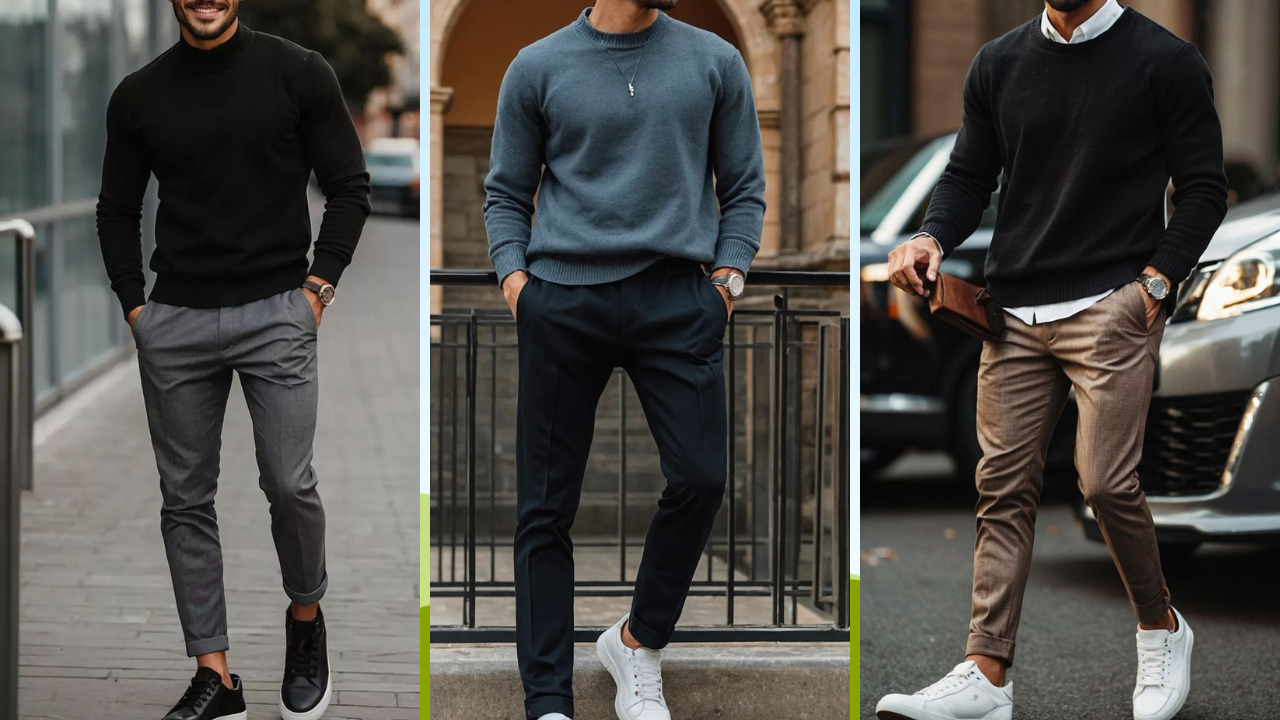
There’s something undeniably powerful about a well-executed monochrome outfit. Whether it’s head-to-toe black, crisp all-white, or varying shades of gray, single-color dressing creates an instant visual impact that’s hard to achieve with multi-colored looks.
You’ve probably noticed how monochrome outfits photograph beautifully, look effortlessly sophisticated, and somehow make the wearer appear more put-together—even when the individual pieces are relatively simple.
But why does this approach work so consistently? The answer lies in principles of visual design, psychology, body proportions, and the way our eyes process color and form.
In this comprehensive guide, we’ll explore the science and style behind monochrome dressing, break down the most effective monochrome color palettes, provide actionable outfit formulas you can use immediately, and reveal the styling secrets that take monochrome from basic to exceptional.
Whether you’re new to single-color dressing or looking to refine your approach, understanding why monochrome works will transform how you build outfits.
The Visual Science Behind Monochrome Dressing
How Our Eyes Process Single-Color Outfits
When you wear multiple colors, your viewer’s eye naturally moves from one color to another, creating visual fragmentation. Their brain has to process each color separately, which can make an outfit feel busy or disjointed—especially if the colors don’t harmonize well. Monochrome outfits eliminate this cognitive load. There’s no jarring transition between a blue shirt and brown pants, no competing color temperatures, no question of whether shades match or clash.
Instead, the eye travels smoothly from head to toe in one uninterrupted line. This creates what designers call “visual flow”—a seamless reading of your silhouette that allows the viewer to take in your entire outfit as a cohesive whole rather than separate pieces. The result is immediate visual impact and a sense of intentional sophistication that’s difficult to achieve with color-blocked looks.
This principle is why monochrome outfits photograph so well on social media and in fashion editorials. The camera captures that unbroken line, creating clean, striking images that stand out in a feed. There’s no color competition, no accidental clashing, just pure form and silhouette.

The Elongating Effect of Single Colors
One of monochrome’s most celebrated benefits is its ability to create a lengthening, streamlining effect on your body. When you wear one color from head to toe, there are no horizontal color breaks that visually divide your body into segments. Without these interruptions, your silhouette appears taller and leaner.
This is particularly effective with darker monochrome palettes—all-black or all-navy—which are naturally slimming and create strong vertical lines. But even lighter monochrome outfits in white, cream, or gray produce this elongating effect because the continuous color allows the eye to travel vertically without stopping.
For guys who want to appear taller or create a more streamlined silhouette, monochrome dressing is one of the most effective styling tools available. It’s essentially an optical illusion that works in your favor every single time.
The Psychology of Monochrome Style
Perceived Sophistication and Intentionality
There’s a reason luxury brands, fashion-forward individuals, and style influencers frequently default to monochrome looks: they read as sophisticated and deliberate. When someone wears an all-black outfit or head-to-toe white, it signals that they understand style principles and made an intentional choice rather than just grabbing whatever was clean.
Monochrome dressing requires confidence. It’s a bold statement that says “I don’t need multiple colors to create visual interest—my silhouette, proportions, and styling are enough.” This perceived confidence translates into how others view you. Psychologically, we associate single-color dressing with minimalism, modernism, and refined taste.
The monochrome approach also suggests you’re someone who values quality over quantity, coherence over chaos. In a world where most people wear multiple colors without much thought, choosing to dress monochromatically sets you apart as someone who cares about their appearance and understands the subtle art of style.
The Minimalist Mindset Connection
Monochrome dressing aligns perfectly with minimalist philosophy—the idea that less is more, that restraint is powerful, and that removing unnecessary elements reveals essential beauty. When you eliminate color variety from your outfit, you’re left with pure form: the shapes of your clothing, the textures of your fabrics, the proportions of your silhouette.
This reductionist approach forces you to focus on what actually matters in an outfit: fit, quality, and construction. A poorly fitting black tee looks just as bad in an all-black outfit as it would in a colorful one—maybe more so, because there’s nowhere to hide. Monochrome demands excellence in the basics, which ultimately elevates your entire wardrobe.
The minimalist connection also explains why monochrome feels timeless. Trends come and go, but the principles behind monochrome dressing—simplicity, cohesion, intentionality—remain constant. An all-black outfit photographed in 1990 looks just as cool as one photographed today, and will still look good in 2040.
All-Black: The Ultimate Monochrome Palette
Why Black Works for Everyone
All-black is the most popular monochrome palette, and for good reason. Black is universally flattering, inherently slimming, and conveys an air of mystery, power, and sophistication. It’s the color of artists, designers, musicians, and anyone who wants to project creative authority or urban cool.
Black is also incredibly forgiving. Small stains are less visible, fabric variations matter less, and you can mix different black pieces without worrying about whether they’re the exact same shade (unlike white or beige, where slight variations become obvious). This makes all-black one of the easiest monochrome palettes to execute successfully.
The versatility is unmatched. An all-black outfit can work for a gallery opening, a business meeting (with the right pieces), a casual weekend, or a night out. It transcends contexts and occasions in ways that other monochrome palettes sometimes can’t.
All-Black Outfit Formulas
The Casual All-Black: Black straight-leg jeans with a black crewneck sweatshirt or tee (slightly oversized for contemporary proportions) and black sneakers—either chunky retro runners or minimalist low-tops. Add a black baseball cap or beanie for extra street style points. This effortless combination works for everyday wear and looks infinitely cooler than jeans and a random colored shirt.
The Smart All-Black: Black wool trousers with a black merino crewneck sweater or black turtleneck, layered under a black blazer or overcoat. Finish with black Chelsea boots or leather oxfords. Add a silver watch for subtle metallic contrast. This outfit transitions seamlessly from professional settings to evening events, and the monochrome approach makes it feel more modern than a traditional suit.
The Textured All-Black: Black corduroy pants with a black cotton tee and a black leather jacket (bomber, biker, or café racer style). Add black leather boots—maybe with a slightly distressed finish for texture. The key here is texture variation: the ribbed corduroy, smooth cotton, and leather grain create visual interest within the monochrome palette.
Making All-Black Work
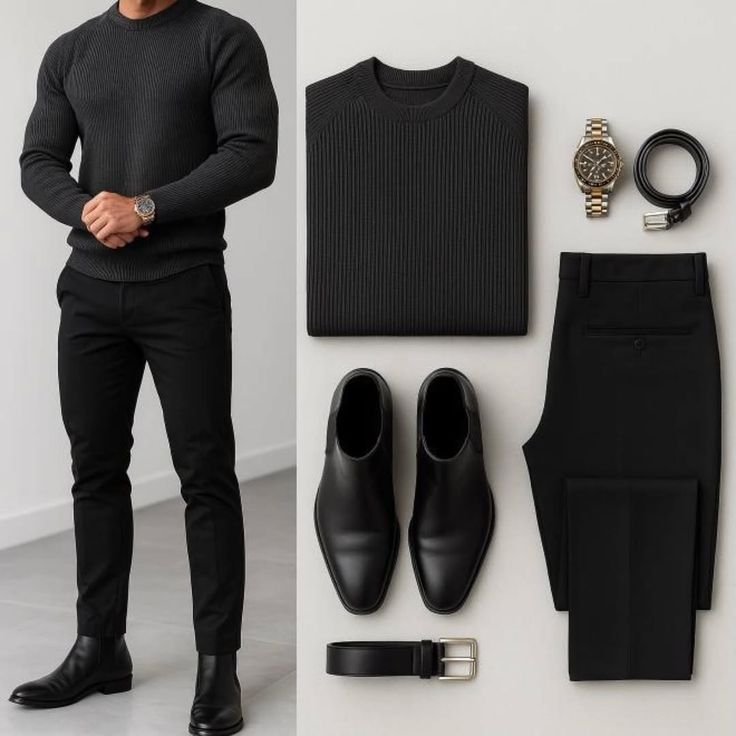
The secret to exceptional all-black outfits is texture and fabric variation. Without color to create contrast, you need different surfaces and materials to add depth. Pair matte cotton with glossy leather. Combine chunky knits with smooth wool. Mix rigid denim with flowing fabrics.
Fit and proportion become critical. Since there’s no color to define where one piece ends and another begins, the shapes of your clothing need to do that work. This is where oversized-on-top with fitted-on-bottom (or vice versa) becomes effective—the silhouette variation creates visual interest that color would normally provide.
Don’t be afraid of small metallic accents. A silver watch, simple chain, or belt buckle adds just enough contrast to prevent the outfit from feeling flat without breaking the monochrome effect. These subtle details catch light and create visual breaks that enhance rather than disrupt the all-black aesthetic.
All-White: Clean, Bold, and Challenging
The Power of All-White Outfits
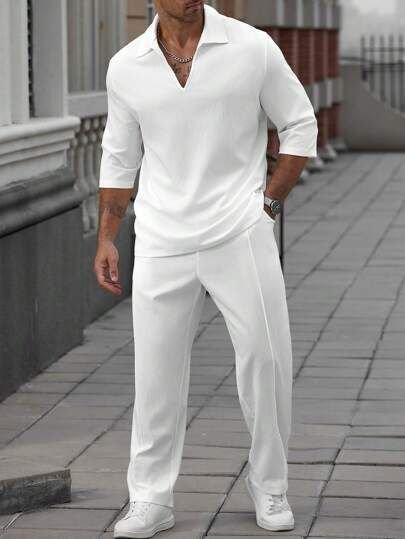
All-white is monochrome on hard mode—it’s more challenging to execute and maintain, but when done right, it’s absolutely stunning. White conveys cleanliness, freshness, minimalism, and confidence. It’s a bold choice that immediately draws attention and signals that you’re not afraid to stand out.
The psychological impact of all-white is different from all-black. Where black suggests mystery and edge, white suggests openness and modernism. It’s the color of summer, of pristine beaches, of architectural minimalism. All-white outfits photograph beautifully in bright, natural light, creating crisp, clean images that pop on social media.
The challenge, of course, is keeping white clothing clean and finding whites that actually match. Not all whites are created equal—some lean cream, others have blue undertones, and mixing them can look accidental rather than intentional. This difficulty is also what makes successful all-white outfits so impressive.
All-White Outfit Ideas
The Summer All-White: White linen trousers or chinos with a white linen button-down shirt (can be worn untucked for casual vibes) and white leather sneakers. Add a simple silver watch. This breezy, warm-weather combination feels effortlessly sophisticated—perfect for beach vacations, garden parties, or any summer occasion where you want to look polished but relaxed.
The Winter All-White: White or cream straight-leg jeans with a white cable-knit sweater and a white or cream wool overcoat. Add white leather boots or sneakers. This unexpected seasonal choice creates stunning visual contrast against winter’s typically dark palette and shows serious style confidence.
The Sporty All-White: White joggers or track pants with a white hoodie and white chunky sneakers. Keep everything relatively fitted—baggy all-white can look like pajamas. Add a white baseball cap. This athletic-inspired monochrome look works for casual weekends and creates a clean, modern aesthetic.
Navigating All-White Successfully
Stick to true whites or commit fully to cream/off-white—mixing the two usually looks accidental. If you’re building an all-white outfit, lay all pieces out together first to ensure they’re actually the same shade family. Slight variations become very obvious once you’re wearing everything.
Fabric quality matters enormously with white. Cheap, thin white tees show everything underneath and can look see-through in photos. Invest in heavyweight cotton, quality linen, and well-constructed pieces that maintain their color and shape. Wrinkles are also more visible in white, so choose fabrics that hold their structure.
Texture variation is just as important as it is in all-black. Pair smooth cotton with chunky knits, or combine crisp button-downs with flowing linen pants. These textural differences create depth and prevent all-white outfits from looking flat or washed out in photographs.
Grayscale: The Sophisticated Middle Ground
Why Gray Works So Well
Gray is monochrome’s most versatile player. It’s neutral enough to be universally flattering, sophisticated enough to look intentional, and forgiving enough to be practical for everyday wear. Unlike black (which can feel heavy in summer) or white (which requires constant maintenance), gray works year-round and is remarkably easy to style.
The beauty of grayscale dressing is that you can mix different shades—light gray, charcoal, medium gray—and create a tonal gradient that adds visual interest while maintaining monochrome cohesion. This gives you more flexibility than strict all-black or all-white, where everything needs to match exactly.
Gray also complements all skin tones and hair colors, making it one of the most universally flattering monochrome choices. It’s professional enough for work environments that find all-black too edgy, but still fashion-forward enough to look intentional and stylish.
Grayscale Outfit Combinations
The Tonal Gray Gradient: Light gray trousers with a medium gray crewneck sweater and a charcoal overcoat. Add white or light gray sneakers. This gradient approach creates depth and dimension while maintaining monochrome cohesion. The varying shades guide the eye vertically, creating that elongating effect while being more visually interesting than single-shade gray.
The All-Charcoal Look: Dark charcoal jeans with a charcoal sweater or hoodie and a charcoal wool coat. Add black or charcoal boots. This darker gray approach has similar slimming and sophistication benefits as all-black but feels slightly softer and more approachable. It’s an excellent choice for guys who find all-black too severe but want that streamlined, monochrome effect.
The Light Gray Summer Fit: Light gray chinos or linen pants with a light gray tee or polo and light gray sneakers. Add a medium gray lightweight jacket if needed. This monochrome approach works beautifully for warm weather, offering the sophistication of single-color dressing without the heat absorption of black or the maintenance challenges of white.
Styling Grayscale Effectively
Mixing different gray tones is the secret to exceptional grayscale outfits. Don’t try to match grays exactly—instead, intentionally combine light, medium, and dark shades to create visual layers and depth. This tonal approach feels sophisticated and shows style awareness.
Texture becomes especially important in grayscale because you’re working with inherently neutral, somewhat flat colors. Pair smooth wool with chunky cable knits, combine matte cotton with subtle sheen, or mix rough textures like tweed with smooth fabrics. These variations catch light differently and create visual interest within your monochrome palette.
Metallic accents work beautifully with gray. Silver jewelry and accessories feel naturally cohesive with grayscale palettes, while even gold can work with warmer grays. A simple watch, belt buckle, or chain adds just enough contrast without disrupting the monochrome effect.
Navy: The Underrated Monochrome Choice
Why All-Navy Deserves More Attention
Navy is monochrome’s best-kept secret. It combines the slimming, sophisticated qualities of black with slightly more warmth and approachability. All-navy outfits look polished and intentional without feeling as stark or severe as all-black, making them excellent for professional contexts and daytime wear.
Navy is also incredibly versatile across seasons. It works beautifully in summer (especially in lighter weight fabrics like linen or cotton), feels appropriate for fall and winter, and transitions seamlessly between casual and smart-casual contexts. An all-navy outfit can work for the office, weekend errands, or evening events depending on the specific pieces and styling.
The reason navy doesn’t get as much monochrome love as black might be practical: matching navy shades is challenging. Navy varies significantly between brands and fabrics—some lean almost black, others have purple or green undertones. But when you nail the matching, all-navy creates a uniquely sophisticated aesthetic that stands out from the all-black crowd.
All-Navy Outfit Ideas
The Smart-Casual Navy: Navy chinos with a navy crewneck sweater and a navy blazer or harrington jacket. Add brown leather shoes and belt for classic contrast (technically breaking monochrome but creating a timeless, preppy look), or stay fully monochromatic with navy sneakers or suede loafers. This outfit works for business-casual offices, dates, or any occasion requiring polished but not formal attire.
The Casual All-Navy: Navy jeans with a navy tee or henley and a navy denim or canvas jacket. Finish with navy sneakers or white sneakers for subtle contrast. This double- or triple-navy approach creates visual cohesion while feeling relaxed and approachable. The denim texture variation prevents the outfit from looking flat.
The Layered Navy Look: Navy trousers with a lighter navy tee, medium navy cardigan or overshirt, and a darker navy overcoat. This tonal layering approach—moving from light to dark—creates depth and dimension while maintaining monochrome integrity. Add brown or navy footwear depending on how strictly monochrome you want to go.
Making All-Navy Work
Try to match your navy shades as closely as possible, or intentionally create a tonal gradient from light to dark navy. The middle ground—slightly mismatched navies that aren’t different enough to look intentional—is where all-navy outfits fail. Commit to either matching or clearly contrasting shades.
Texture variation is your friend. Pair navy denim with navy wool, combine matte navy cotton with navy leather, or mix smooth navy fabrics with textured navy knits. These material differences create visual interest and help distinguish between pieces even when colors are very similar.
The brown leather accent—shoes, belt, or bag—is a classic way to elevate all-navy outfits if you’re willing to technically break the monochrome rule. The warm brown against cool navy creates timeless, sophisticated contrast that’s been working in menswear for decades. But staying strictly monochrome with navy footwear creates a more modern, fashion-forward aesthetic.
Earth Tones: Monochrome in Natural Colors
Beige, Tan, and Camel Monochrome
Earth-tone monochrome—all-beige, all-tan, or all-camel—is having a major moment in contemporary menswear. These warm, natural shades create sophisticated monochrome outfits that feel approachable, modern, and distinctly different from the typical black-white-gray monochrome spectrum.
The appeal of earth-tone monochrome is its organic quality. These colors feel grounded and natural rather than stark or artificial. An all-beige outfit has a relaxed elegance that all-black can’t achieve—it’s sophisticated without being severe, minimal without being cold.
Earth-tone monochrome also photographs beautifully, especially in natural light and outdoor settings. The warm tones complement most skin colors, create gorgeous contrast with greenery or architectural backgrounds, and feel inherently Instagram-friendly.
Earth-Tone Monochrome Outfits
The All-Beige Look: Beige or tan chinos with a cream or oatmeal crewneck sweater and a camel or tan overcoat. Add tan suede boots or white sneakers. This warm, cohesive palette feels sophisticated and contemporary—perfect for fall and spring when earth tones harmonize with the natural environment.
The Camel Layers: Camel wool trousers with a lighter tan turtleneck and a camel or brown overcoat. Add brown leather shoes. This rich, warm monochrome approach exudes quiet luxury and works beautifully for professional settings that allow business casual or smart casual dress.
The Sand and Cream Combination: Cream or off-white trousers with a sandy beige overshirt and a cream or light tan jacket. Finish with white or cream sneakers. This lighter earth-tone palette works wonderfully for summer and creates a breezy, sophisticated aesthetic that’s perfect for warm weather.
Styling Earth-Tone Monochrome
Don’t worry about matching earth tones exactly—in fact, tonal variation makes these outfits more interesting. Combine light cream with deeper camel, or pair sandy beige with rich brown. The natural color family allows for flexibility that strict black or white doesn’t.
Texture is crucial. Earth tones can look flat in photographs, so incorporating different materials—corduroy, wool, suede, linen, cotton—creates depth and visual interest. The interplay of matte and textured surfaces catches light differently and prevents monochrome earth-tone outfits from appearing washed out.
White or cream sneakers work beautifully as a slightly lighter accent that maintains the warm, natural palette without fully breaking monochrome. Alternatively, brown leather footwear deepens the earth-tone story and adds richness to the overall look.
The Role of Texture in Monochrome Success
Why Material Variation Matters
When you remove color as a source of visual interest, texture becomes absolutely critical. Different fabrics catch and reflect light in unique ways—smooth cotton has subtle sheen, chunky knits create shadow and depth, leather adds edge and contrast, suede provides soft texture, and technical materials often have their own distinctive surface quality.
In a colorful outfit, you can get away with uniform textures because the colors themselves create visual variation. But in monochrome, if everything is the same material—say, all smooth cotton—the outfit looks flat and one-dimensional. Your silhouette becomes a solid block of color without depth or interest.
Texture variation transforms monochrome from simple to sophisticated. It’s the difference between “I’m wearing all black” and “I’m wearing a carefully curated all-black outfit with intentional texture play.” The latter shows style awareness and creates outfits that photograph beautifully and look considered in person.
Effective Texture Combinations
Smooth and Chunky: Pair smooth wool trousers with a chunky cable-knit sweater. The contrast between the sleek bottom and textured top creates visual balance and interest. Add a smooth leather jacket and you’ve created three distinct textures within your monochrome palette.
Matte and Sheen: Combine matte cotton or wool with fabrics that have subtle sheen—like certain polyester blends, satin-finish cotton, or polished leather. The interplay between light-absorbing and light-reflecting surfaces adds dimension to monochrome outfits without introducing color.
Rough and Refined: Mix rough textures like corduroy, tweed, or canvas with refined materials like merino wool or smooth cotton. This high-low texture contrast creates sophistication—you’re showing awareness of both rugged and polished elements.
Layered Textures: In a monochrome outfit with multiple layers, make each layer a different texture. Smooth cotton tee, ribbed knit sweater, quilted vest, and waxed canvas jacket—all in the same color family but each contributing unique textural interest.
Proportion and Fit in Monochrome Styling
Why Silhouette Matters More Without Color
In multi-colored outfits, different colors naturally define where garments begin and end. A blue shirt over brown pants has a clear visual boundary created by color contrast. In monochrome outfits, that color boundary disappears—everything blends into one continuous color field.
This means the shapes of your clothing become the primary way viewers understand your outfit’s structure. Proportion—the relationship between fitted and loose, short and long, slim and wide—becomes critical for creating visual interest and defining your silhouette.
Poor proportions in a monochrome outfit are more obvious than they would be with color variation. An oversized top with oversized bottom can look like a shapeless blob in monochrome, whereas color contrast might have saved it. Understanding how to balance proportions is essential for monochrome success.
Proportional Strategies for Monochrome
Fitted Top, Relaxed Bottom: Wear a well-fitted tee or sweater with wider-leg trousers or relaxed jeans. This creates clear silhouette definition—the fitted top shows your frame while the relaxed bottom adds interesting volume and contemporary style.
Oversized Top, Tapered Bottom: An oversized hoodie or sweater paired with slim or tapered pants creates dynamic contrast. The volume on top balances against the sleekness on bottom, and the proportional difference is immediately visible even within a single-color outfit.
Layered Lengths: Play with hem lengths in your layers. A longer coat over a shorter jacket over a standard-length shirt creates visual layers even when everything is the same color. The varying hemlines define each piece and add architectural interest to your silhouette.
Balanced Volume: Alternatively, embrace similar proportions throughout—relaxed top with relaxed bottom, or fitted pieces throughout. This creates a cohesive, streamlined effect that can work beautifully in monochrome, especially all-black or all-navy.
Accessories and Breaking Points in Monochrome
Strategic Use of Metallic Accents
Pure monochrome means one color only, but strategic metallic accents—watches, jewelry, belt buckles, hardware—can enhance rather than disrupt the monochrome aesthetic. These small touches add visual interest and catch light without introducing competing colors.
Silver works beautifully with cool-toned monochromes: black, gray, navy, and white. A silver watch, simple chain, or belt with silver hardware adds subtle sophistication. Gold complements warmer monochromes like beige, tan, brown, and camel, creating cohesive warmth.
The key is restraint. One or two small metallic accents enhance monochrome outfits; too many create visual clutter and distract from the clean, unified aesthetic you’re trying to achieve. Think minimal rather than maximal.
When to Break Monochrome (and How)
Sometimes strategically breaking monochrome with one contrasting element creates even more impact than strict single-color dressing. This is advanced styling, but when done well, it’s incredibly effective.
The Shoe Break: An all-black outfit with white sneakers, or all-white with black boots. The footwear contrast grounds the monochrome outfit and creates a clear visual endpoint, which can actually enhance the elongating effect rather than disrupt it.
The Outerwear Exception: Wearing a contrasting coat over a monochrome base—like a camel coat over all-black, or a black leather jacket over all-white. The coat becomes a statement piece while the monochrome base provides cohesive foundation.
The Pop Accent: One small color accent in an otherwise monochrome outfit—a colored beanie with all-gray, a bright watch strap with all-navy. This focused pop of color draws attention and creates a memorable visual detail without overwhelming the monochrome base.
Seasonal Monochrome Strategies
Summer Monochrome Approaches
Summer monochrome requires lighter fabrics and often lighter colors. All-white, cream, light gray, and sandy beige become go-to palettes. Linen, lightweight cotton, and breathable technical fabrics are essential for maintaining the monochrome aesthetic without overheating.
An ideal summer monochrome: cream linen trousers with a white linen shirt and cream sneakers. The light, natural materials keep you cool while the monochrome approach looks intentional and sophisticated. Add sunglasses and a simple watch—the minimalism feels perfect for summer.
Avoid heavy all-black in summer heat unless you’re in air conditioning. If you want darker summer monochrome, opt for all-navy in breathable fabrics, which maintains sophistication without the heat absorption of black.
Winter Monochrome Layering
Winter is monochrome’s playground because layering opportunities abound. Multiple garments in the same color create rich, complex outfits where texture variation truly shines.
A winter monochrome example: charcoal wool trousers, dark gray merino turtleneck, charcoal wool blazer, and a charcoal overcoat. Each layer adds warmth while maintaining monochrome cohesion. The varying textures—smooth wool, knit merino, structured blazer, heavy coat—create depth and visual interest.
Winter whites can be stunning if you’re willing to maintain them. An all-cream or off-white outfit with wool trousers, cable-knit sweater, and long overcoat creates unexpected seasonal sophistication that stands out against winter’s typically dark palette.
Common Monochrome Mistakes to Avoid
Ignoring Texture Variation
The biggest monochrome mistake is wearing identical fabrics throughout. All smooth cotton or all basic jersey creates flat, uninteresting outfits that waste monochrome’s potential. Always incorporate at least two different textures—three or more is even better.
Even if you’re on a budget, you can create texture variation: denim jeans with a cotton tee and a quilted jacket, or corduroy pants with a knit sweater. Different textures are often available at the same price points as uniform ones.
Poor Fit and Proportion
Ill-fitting monochrome is especially unflattering because there’s no color contrast to disguise proportional problems. A too-long sweater over too-baggy pants becomes a shapeless blob in monochrome. Prioritize fit and consider proportional balance—if one piece is oversized, balance it with something more fitted.
Mismatched Shades (When Trying to Match)
If you’re attempting strict monochrome—like all-black or all-white—noticeably different shades look accidental rather than intentional. A faded black tee with fresh black jeans creates awkward contrast. Either embrace tonal variation intentionally (like grayscale gradients) or ensure your pieces actually match.
Over-Accessorizing
Monochrome outfits benefit from restraint. Too many accessories—multiple bracelets, necklaces, rings, bags—disrupt the clean simplicity that makes monochrome effective. Keep accessories minimal and intentional.
FAQ: Monochrome Outfits
Why do monochrome outfits make you look taller?
Monochrome creates an uninterrupted vertical line from head to toe with no color breaks that visually segment your body into shorter sections. This continuous color allows the eye to travel vertically without stopping, creating the perception of greater height. Darker monochromes like all-black are particularly effective because dark colors are naturally receding and slimming.
Can you wear different shades of the same color in a monochrome outfit?
Absolutely, and this is often more interesting than trying to match everything exactly. Tonal monochrome—wearing light, medium, and dark versions of the same color—creates depth and dimension while maintaining cohesion. Think light gray trousers, medium gray sweater, and charcoal coat. The key is making the shade variation look intentional rather than accidental.
What’s the easiest monochrome color to start with?
All-black is the most forgiving and easiest to execute. Different blacks are more similar than different whites or grays, it’s slimming and universally flattering, and you can wear it year-round for virtually any casual or smart-casual occasion. Once comfortable with all-black, experiment with navy, gray, or earth tones.
How do you keep monochrome outfits from looking boring?
Texture variation is your best tool—mix smooth and rough fabrics, matte and sheen, structured and flowing. Play with proportions by combining fitted and oversized pieces. Layer multiple garments to create depth. Add subtle metallic accents through watches or jewelry. And ensure perfect fit—well-fitting monochrome never looks boring.
Can monochrome work for professional/business settings?
Absolutely. All-navy is excellent for business casual, all-charcoal or all-black (with tailored pieces) works for many modern offices, and even all-gray can be professional. The key is choosing appropriate garment types—tailored trousers, button-down shirts, blazers, dress shoes—within your monochrome palette. Monochrome can actually look more polished and modern than traditional suited approaches.
Mastering Your Monochrome Style
Monochrome dressing isn’t just a trend or styling trick—it’s a fundamental approach to building outfits that consistently work. The principles behind why monochrome looks good—visual flow, elongating effects, perceived sophistication, reduced cognitive load—are timeless. These advantages don’t expire or go out of fashion.
What makes monochrome particularly powerful is its accessibility. You don’t need expensive designer pieces or a massive wardrobe to execute effective monochrome outfits. You need understanding: how to balance proportions, why texture matters, which colors work for which occasions, and how to refine your personal monochrome approach.
Start with one monochrome palette that appeals to you—probably all-black if you’re new to this—and build from there. Pay attention to how monochrome outfits make you feel, how they photograph, and how people respond to them. Experiment with different textures, try tonal variations, play with proportions. As you develop confidence, expand into other monochrome palettes.
The beauty of understanding why monochrome works is that it gives you a reliable framework for getting dressed. On days when you’re rushed, monochrome simplifies decision-making. On days when you want to look sharp, monochrome delivers consistent results. And on days when you’re feeling creative, monochrome provides a canvas for experimenting with texture, proportion, and silhouette.
Remember that monochrome isn’t about rigid rules—it’s about understanding the principles and applying them in ways that feel authentic to you. Some guys will gravitate toward all-black exclusively. Others will prefer rotating between multiple monochrome palettes. Some will strictly adhere to single colors, while others will use mostly-monochrome with strategic breaks. All approaches are valid.
What matters is that you’re dressing with intention, understanding why your choices work, and building outfits that make you feel confident and look cohesive. Monochrome gives you the tools to do exactly that, every single day. The sophistication, versatility, and visual impact of monochrome dressing are available to anyone willing to embrace the approach—and now you understand exactly why it works so well.