How to Wear Loafers Without Socks Like a Pro
The sockless loafer is one of those looks that either reads as effortlessly European or like you forgot to finish getting dressed.
There’s not much middle ground. And the frustrating thing is that the difference between those two outcomes isn’t the shoe — it’s everything around it: the trouser length, the fit, the loafer style, and a few practical details about foot hygiene that nobody wants to bring up but that absolutely need to be addressed.
Wearing loafers without socks has been a cornerstone of relaxed tailoring and smart-casual dressing since at least the 1950s, when the Italian sprezzatura aesthetic began influencing menswear globally.
It signals ease, confidence, and a certain kind of sartorial awareness that men who overthink their outfits rarely achieve. Done wrong, it signals that you found those shoes at the back of your wardrobe.
This article covers the complete picture: which loafers to wear barefoot, which trousers work and which don’t, how to handle the practical reality of wearing shoes without socks, and the specific combinations that make the look land every time.
Get this right and it becomes one of the most useful things in your warm-weather wardrobe.
The Foundation: Which Loafers Work Sockless and Which Don’t
Not every loafer is designed to be worn without socks, and the construction matters more than most men realise.
1. Penny Loafers in Leather or Suede — The Starting Point for Everyone
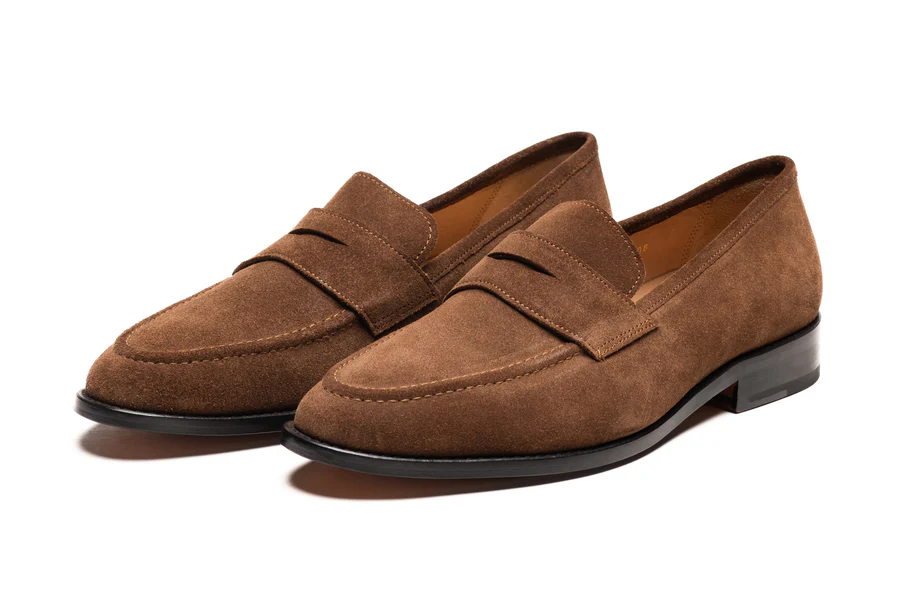
The penny loafer — named for the American tradition of slipping a penny into the strap across the vamp — is the most forgiving loafer style for sockless wear.
The relatively low cut around the ankle means there’s no stiff upper digging into your heel or Achilles, and the traditional last (typically a rounded or slightly tapered toe) sits naturally on the foot without needing the sock-cushion buffer that some more aggressive silhouettes require.
In tan or medium-brown leather, a penny loafer sockless with chinos or tailored trousers is one of the most reliably elegant casual looks in men’s dressing.
Meermin (mid-range, ~$200), Loake (~$250), and G.H. Bass (~$130–$160) all make excellent penny loafers at different price points.
Avoid anything with a very square or very pointed toe — neither reads as relaxed, and relaxed is the entire point of this look.
Styling tip: Tan leather penny loafer + stone or cream chinos + white linen shirt, untucked, sleeves rolled. This combination has worked in every warm climate on earth for sixty years. It will keep working.
This is the first loafer I put on any client who says they want to try sockless dressing. It’s the lowest-risk entry point and has the widest range of pairings.
2. Suede Loafers — The Texture Upgrade That Changes the Character of the Look
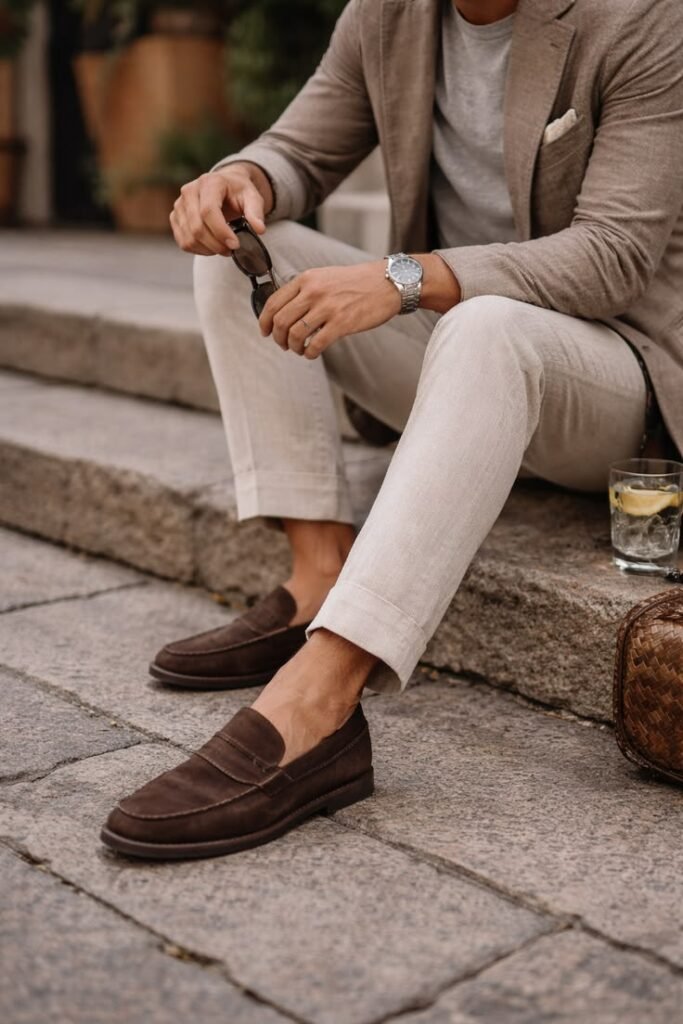
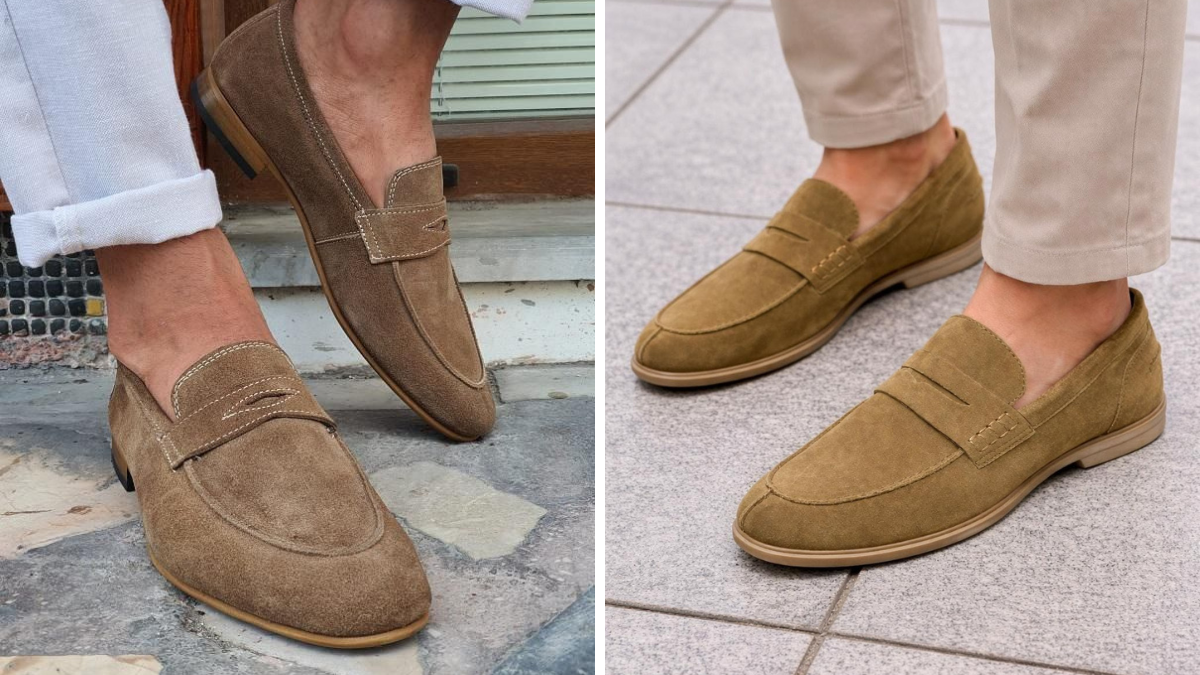
Suede loafers worn sockless have a slightly softer, more relaxed visual character than leather — the napped finish absorbs light rather than reflecting it, which reads as less formal and more weekend-appropriate.
A chocolate brown or tan suede loafer is also more forgiving of slight wear and minor marks than a polished leather one, which matters when you’re wearing it without socks in summer conditions.
The practical consideration with suede sockless: suede absorbs sweat and moisture more readily than smooth leather, which can cause the interior to deteriorate faster and develop odour more quickly.
This isn’t a reason to avoid it — it’s a reason to rotate pairs more frequently and use a shoe deodoriser after each wear.
Styling tip: Chocolate suede penny loafer + mid-grey or charcoal tailored trousers + cream knit. The suede softens what could otherwise be a quite sharp combination, keeping it relaxed rather than formal.
3. Horsebit Loafers — The Statement Version With Stricter Rules
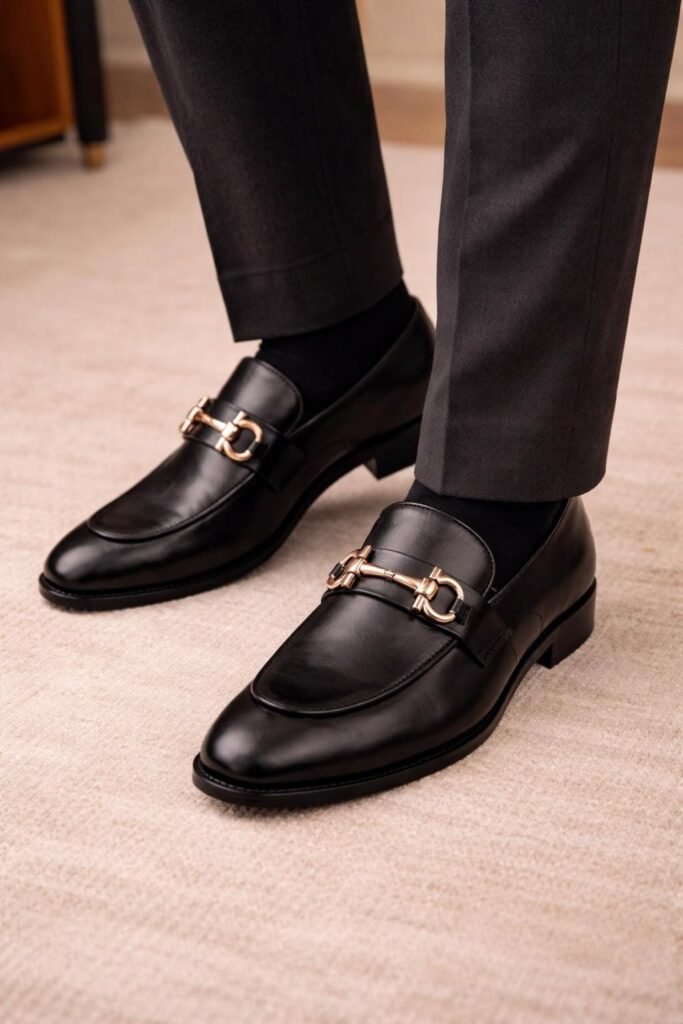
The horsebit loafer — with its distinctive metal bar-and-ring hardware across the vamp — is the most recognisable loafer silhouette in the world, largely because of the Gucci Horsebit 1953, which has been in continuous production since, as the name suggests, 1953. Worn sockless, it reads as confident and fashion-aware, but the construction and silhouette of most horsebit loafers mean the rules about what you wear with them are tighter.
The hardware adds visual weight at the foot, which means the clothing above the ankle needs to be kept simple. Wide-leg trousers or very casual pieces will look incongruous with the slightly more formal energy of a horsebit loafer.
Tailored trousers, well-fitted chinos, or Bermuda-length shorts in a clean fabric are the right contexts.
Budget alternatives to Gucci: Mango (~$100), ASOS Design (~$60–$80), and Massimo Dutti (~$150) all produce horsebit-inspired loafers that share enough of the silhouette without the four-figure price tag.
Styling tip: Black horsebit loafer + slim navy suit trousers (no jacket) + open-collar white shirt, sockless at a summer smart-casual event. The loafer bridges the gap between the formality of the trouser and the informality of the open collar.
4. Tassel Loafers — The Old-School Option That’s Back, and Worth Considering
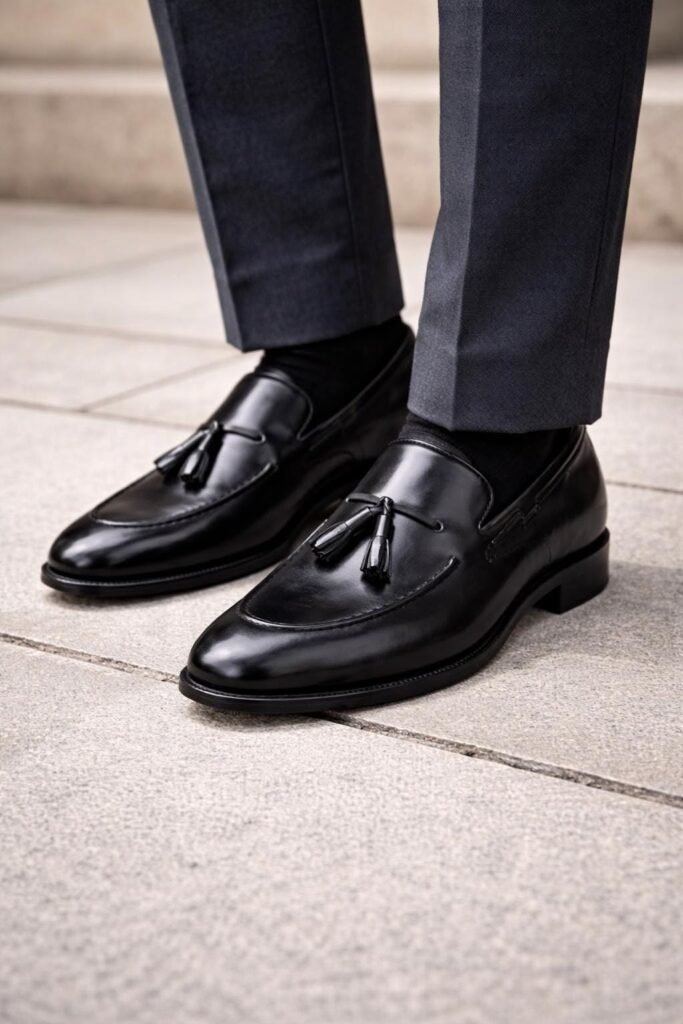
The tassel loafer fell out of favour for about a decade and is now firmly back in circulation — partly driven by the broader revival of preppy and Ivy League aesthetics in menswear.
The leather tassels at the vamp are a polarising detail, but worn with the right fits they read as deliberately considered rather than accidental.
Tassel loafers sockless work best with tailored or semi-tailored pieces — chinos, linen trousers, suit separates.
They’re harder to pull off with very casual fits because the formal heritage of the silhouette creates a tension that’s difficult to resolve. Burgundy or tan leather are the most versatile colourway.
I avoided tassel loafers for years because they felt too old-school. Then I wore a pair of burgundy ones with stone linen trousers in Seville and immediately understood. Context changes everything with this shoe.
Trouser Pairings: The Details That Make or Break It
5. Cropped or Slightly Shortened Trousers — The Single Most Important Rule
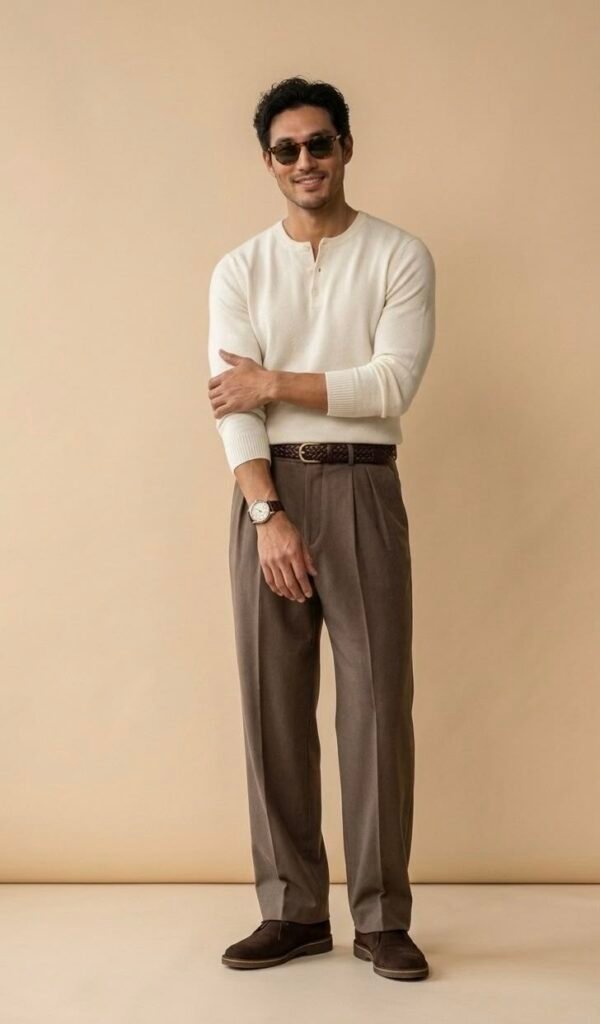
If you take one thing from this entire article, make it this: when wearing loafers without socks, the trouser hem needs to end above the ankle bone.
Not flooding, not ankle-grazing — above. The exposed ankle is what creates the visual breathing room that makes the sockless look elegant rather than accidental.
Cover it with a full trouser break, and you lose the entire point of not wearing socks. The shoe becomes invisible, the ankle disappears, and the look collapses.
How much ankle? Roughly 1–3 cm above the ankle bone is the sweet spot for most trouser and loafer combinations. More than that and you’re edging into ankle-grazer territory, which has its own very specific context. Less and the trousers start to obscure the top of the shoes.
Practical tip: If your trousers are too long and you don’t want to tailor them immediately, a single clean cuff (2–3 cm, folded once, sitting flat) achieves the same visual effect. The cuff also adds a deliberate horizontal break that draws attention to the shoe below it — which is exactly what you want.
6. Linen Trousers — The Sockless Loafer’s Natural Habitat
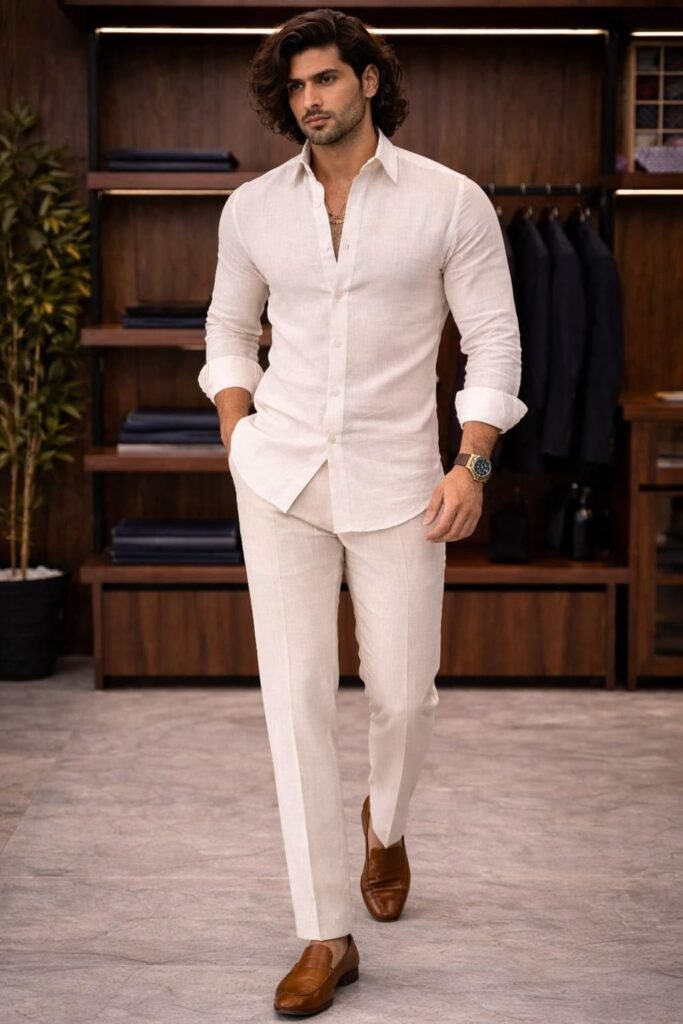
Linen is the single best trouser fabric for sockless loafer dressing, and the reason is physical: linen is one of the most breathable natural fibres available, with a hollow fibre structure that allows air circulation far superior to cotton or wool.
On a warm day, linen trousers with sockless loafers will keep you noticeably cooler than any other trouser-and-shoe combination. That comfort shows in how you carry yourself.
The wrinkle factor of linen is real but overstated. A medium-weight linen (around 180–220 gsm) in stone, cream, white, or navy will hold its shape adequately for a full day of wear.
Uniqlo’s Premium Linen trousers (~$50) are the easiest entry point; Saman Amel and Luca Faloni produce higher-end options if you want something with more structure.
Read also: How to Match Shoes With Any Outfit (Men’s Guide)
7. Chinos in the Right Weight — The Year-Round Alternative
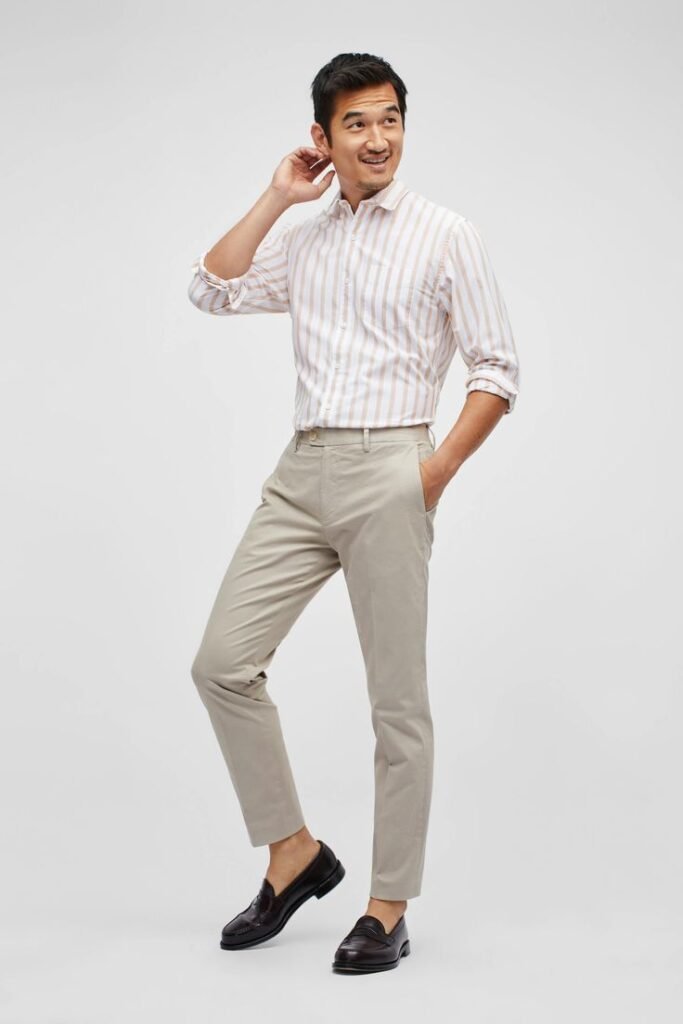
Chinos in a mid-weight cotton twill (around 220–260 gsm) are the most versatile trouser for sockless loafer dressing because they work in seasons where linen is too lightweight. Stone, ecru, olive, and navy are the colours with the widest pairing range — they sit alongside almost every loafer colour without clashing.
The specific detail to get right with chinos is the hem length. Chinos tend to be cut longer than linen trousers, so check the break before wearing sockless. A slight taper through the leg also helps — a very wide-leg chino with a loafer can look disproportionate, especially if the loafer is a sleek silhouette.
Styling tip: Olive chinos cropped one inch above the ankle + tan suede penny loafer sockless + white or ecru shirt with the collar open and sleeves rolled. This is a complete, considered look from April through September.
8. Tailored Suit Trousers — When the Sockless Loafer Goes to Work
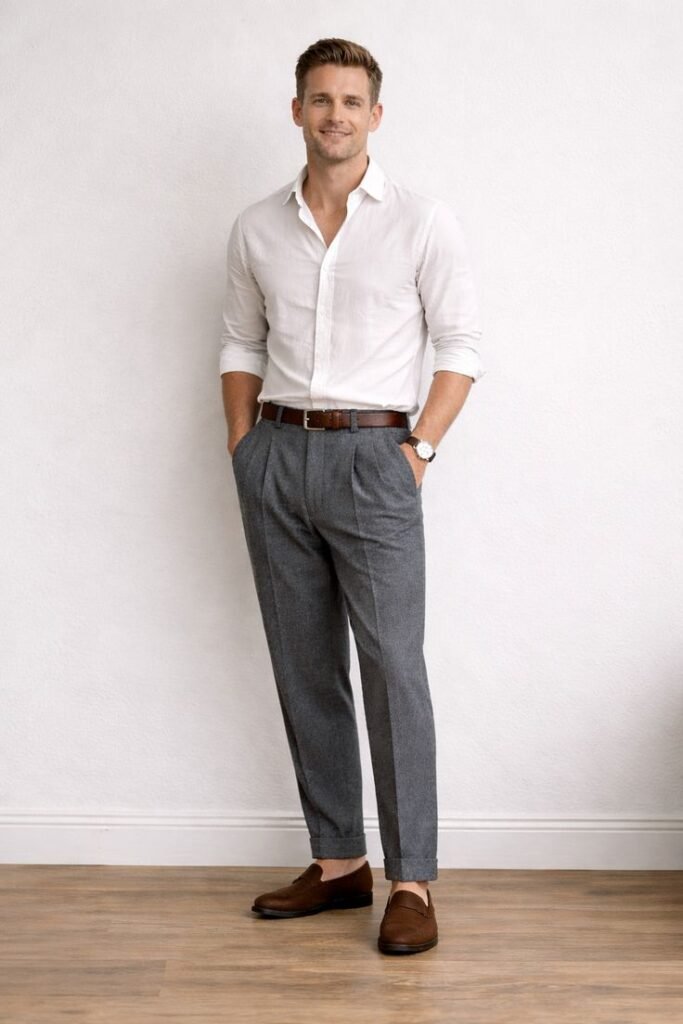
This is the more adventurous version, and it works when the context is right: a warm-weather business casual environment, a creative industry office, or a smart-casual event where showing up in a full suit would be overdressed.
Slim or tapered navy or charcoal suit trousers worn with a cream or white linen shirt (untucked or half-tucked) and a tan or black leather loafer sockless is an Italian menswear staple that crosses over into workwear more smoothly than most men expect.
The key is that the trousers need to be genuinely tailored — not just “dress trousers” but well-fitted ones with a clean break point above the loafer. Too much fabric pooling at the ankle kills the look.
💡 Pro Tip
“The part nobody talks about with sockless loafer dressing is the inside of the shoe. After two or three wears without socks, moisture builds up, material breaks down, and odour develops — even if you can’t smell it yourself. Use Lumi Outdoors Shoe Deodoriser or Sof Sole Fresh Fogger (both under $15) after every wear, and rotate between at least two pairs so each shoe gets 48 hours to dry out between uses. A loafer that smells bad undermines everything about the look — and you won’t know until it’s too late.”
The Practical Reality: Hygiene, Comfort, and Common Objections
9. No-Show Socks — The Legitimate Cheat That Most Men Use
Let me be real with you: the majority of men who appear to be wearing loafers without socks are actually wearing no-show socks. And there’s nothing wrong with this. A high-quality no-show sock — one that genuinely doesn’t creep up above the shoe line — protects the lining of the shoe, manages sweat, and prevents the minor discomfort of leather or suede rubbing directly on skin before the shoe has broken in.
The key words are “high-quality” and “genuinely doesn’t creep up.” Cheap no-show socks migrate upward within an hour. Falke Hidden socks (~$18–$20 a pair), Invisible Socks by Bombas (~$14), and Stance No Show (~$16) all have silicone grip strips at the heel that hold the sock in place across a full day of walking. These are the ones worth buying. Anything from a multipack that doesn’t have a heel grip will show eventually.
Practical tip: Wear the shoe with no-show socks until it’s properly broken in (typically 8–10 wears), then transition to genuinely sockless if that’s your preference. The break-in period is when blisters are most likely, and avoiding them saves weeks of discomfort.
10. Breaking In New Loafers Before Going Sockless
New leather loafers need time before they’re comfortable without socks. The heel cup, the vamp stitching, and the insole edge all need to soften against the specific shape of your foot — a process that takes 8–12 wears depending on the leather quality and the construction. Rush this and you’ll have blisters at the Achilles and along the side of the foot that make the shoe unwearable for days.
Apply a leather conditioner — Leather Honey ($16) or Bick 4 ($8) — to the interior of a new leather loafer before the first wear. It softens the lining leather and speeds the break-in process without compromising the structural integrity of the shoe.
Read also: Best Sneakers for Men With Wide Feet
11. Foot Care — The Part of This Article Everyone Needs to Read but Won’t Want To
Wearing shoes without socks means your feet are on display — or at least in close proximity to being on display — in a way that they aren’t when hidden by socks and trousers. Cracked heels, dry skin, uncut nails: all of these things become relevant in a way they simply aren’t when you’re in boots and wool socks. This isn’t about vanity for its own sake. It’s about the fact that a man who clearly looks after himself reads differently from one who clearly doesn’t.
A pumice stone used weekly in the shower, a heel balm applied nightly (during loafer season at minimum), and properly trimmed and clean nails are the non-negotiable basics. CeraVe Healing Ointment ($13) or O’Keeffe’s Healthy Feet ($9) applied to the heels before sleep, regularly through spring and summer, will prevent cracking before it starts. This takes three minutes before bed. Do it.
Complete Outfit Formulas That Work
12. The Summer Smart-Casual Formula: Linen Trousers + Horsebit Loafer + Open Shirt
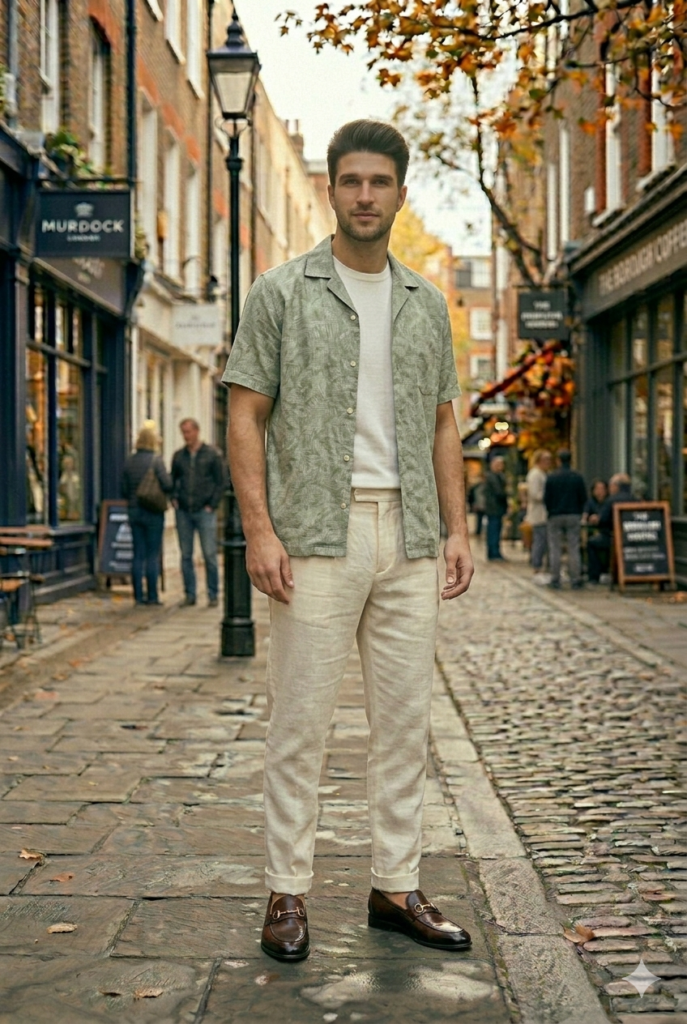
Stone linen trousers with a 1–2 cm ankle break + black or tan horsebit loafer sockless + white or pale blue linen or chambray shirt, open collar, sleeves rolled to just below the elbow. Add a lightweight unstructured blazer if the situation calls for it and remove it when it doesn’t. This is summer smart-casual at its most complete — it works from a creative office to a wedding drinks reception to a rooftop dinner.
13. The Weekend Formula: Shorts + Penny Loafer + Clean Tee
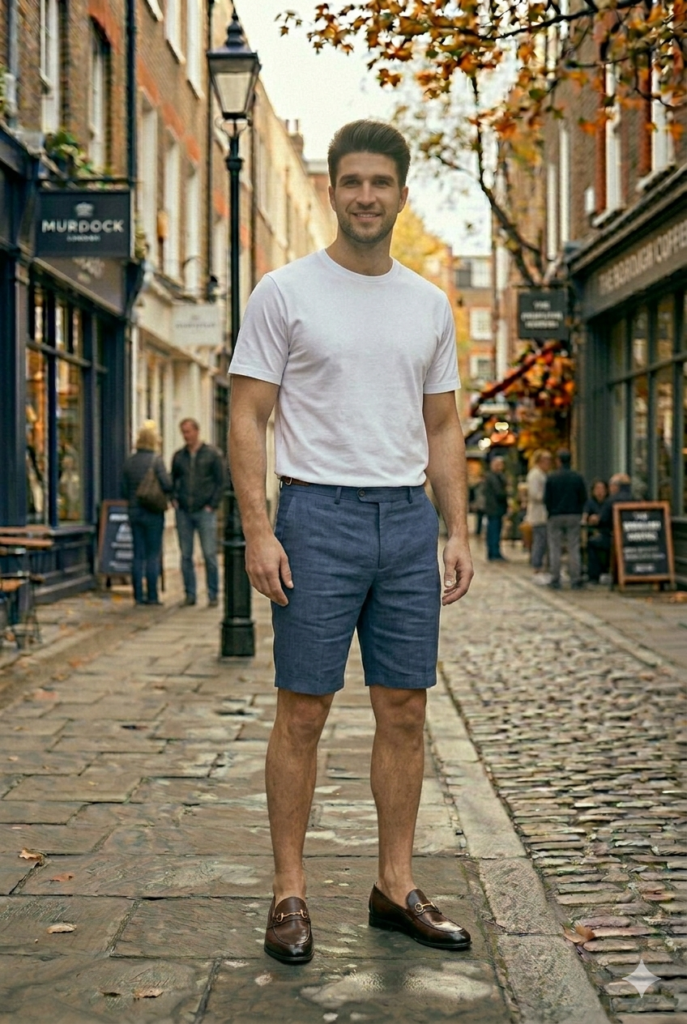
This is the casual version, and the detail that makes or breaks it is the shorts length. Bermuda-length shorts — ending just above or at the knee — create the right visual proportion with a loafer. Anything shorter and the shoe feels too formal for the context; anything longer and you’ve lost the visual logic of the sockless ankle.
Mid-grey, stone, or navy Bermuda shorts + white or off-white heavyweight tee + tan leather or suede penny loafer sockless. Clean, finished, and appropriate for almost every casual warm-weather context.
Styling tip: Match the leather tone of the loafer to a belt if you’re wearing one. No belt is also fine with this formula — and with shorter shorts, often looks cleaner.
The Takeaway
Wearing loafers without socks isn’t about being sockless — it’s about building an outfit where the exposed ankle is an intentional part of the visual logic, not an afterthought. Get the trouser length right. Choose the right loafer for the context. Take care of the practical details that most style guides ignore. Do all of that and the look works every single time.
Start with a tan leather penny loafer, stone chinos cropped above the ankle, and a good pair of no-show socks until the shoe is broken in. That’s the formula. Build from there.
What loafer are you working with — and what are you struggling to pair it with? Drop it in the comments and I’ll give you a specific answer.
Read also: