The Best Casual Jackets for Men to Own Right Now
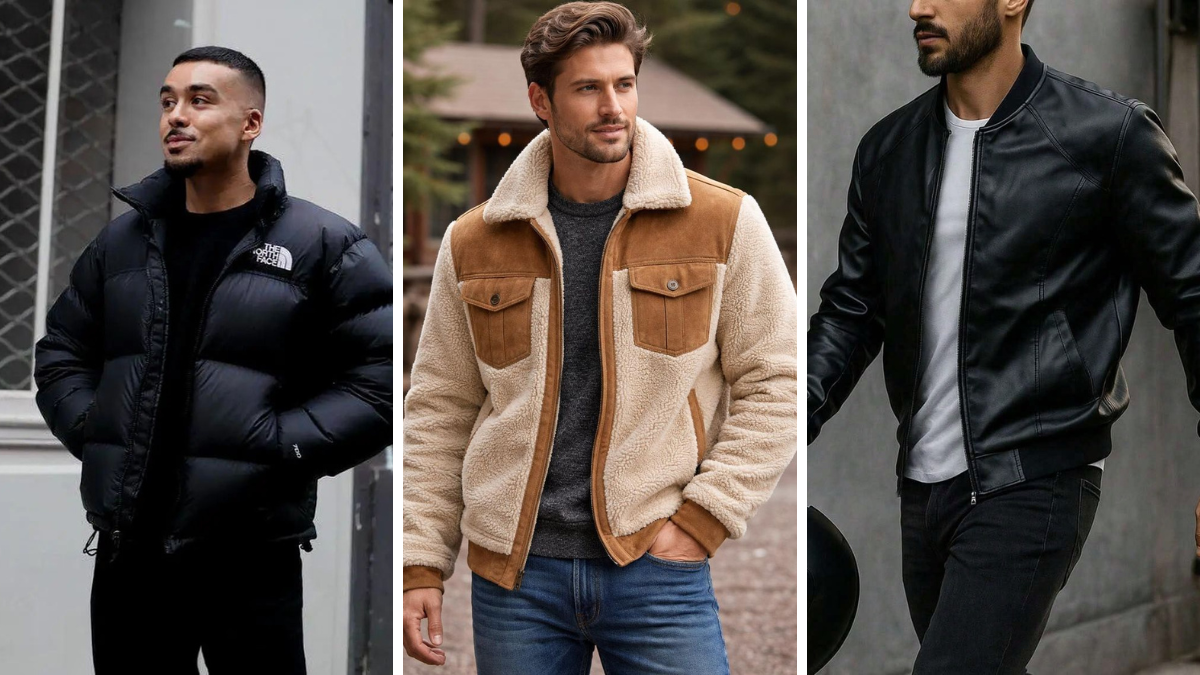
A great casual jacket is the single most transformative item in a man’s wardrobe. Not a suit jacket, not a parka built for an Arctic expedition — but a versatile, well-chosen casual outer layer that works across seasons, occasions, and the outfits you already own.
The kind of piece that takes a white tee and jeans from ordinary to intentional, or turns a simple weekend look into something that feels considered.
The challenge isn’t finding jackets — it’s knowing which ones are actually worth owning. There are hundreds of styles, cuts, and price points, and most men end up with a wardrobe full of outer layers that only work in one specific context: the fleece that’s only good for hiking, the blazer that only comes out for weddings, the rain jacket that lives permanently in a bag.
This guide cuts through the noise. You’ll find the 12 best casual jackets for men — the ones that earn their wardrobe space by working across multiple occasions — along with how to wear each one, what to look for when buying, and styling tips that make each jacket pull its full weight.
What Makes a Casual Jacket Worth Owning?
Before getting into specific styles, it’s worth establishing what separates a genuinely great casual jacket from one that just fills a rail. The best casual jackets share four qualities:
Versatility. A great casual jacket works with at least four or five different outfits you already own. If it only pairs with one specific look, it’s a costume piece, not a wardrobe essential.
Appropriate weight for the season. The best jackets bridge seasons — working in transitional weather and layering comfortably over lighter or heavier pieces depending on the time of year.
Fabric quality that justifies the price. Casual jackets take significant wear. A cheap outer layer shows its age quickly — pilling, fading, losing structure. Quality pays back in longevity and appearance.
A fit that works with layers underneath. Too tight and you can’t layer; too oversized and you look shapeless. The right casual jacket has enough room across the shoulders and chest for a mid-layer without swamping your frame.
With those criteria in mind, here are the 12 best casual jackets for men to own right now.
Quick Styling Tips for Casual Jackets
1. Match jacket weight to occasion. A heavy wax jacket at a smart-casual dinner reads wrong. A lightweight bomber at a winter trailhead reads wrong. Let the occasion and temperature guide the weight of your outer layer.
2. Build around neutral jackets first. Navy, olive, black, camel, and charcoal all coordinate naturally with the rest of a wardrobe. Bold colours and prints are statement pieces — own them second, not first.
3. The jacket sets the outfit’s register. A hoodie under a tailored overcoat reads smart. A tee under a denim jacket reads casual. Use your jacket to deliberately set the formality level of the whole look.
4. Fit at the shoulders is non-negotiable. On a jacket, the shoulder seam must sit at the edge of your shoulder. Everything else — length, chest, sleeves — can be adjusted by a tailor. The shoulder cannot.
5. Consider what’s underneath. Lightweight jackets (coach jackets, bombers) work directly over tees and shirts. Heavier or more structured jackets (overcoats, field jackets) expect a mid-layer — a hoodie, a knit, or a thick shirt — underneath.
6. Don’t underestimate care. A jacket that’s rarely cleaned loses its shape, smell, and fabric quality prematurely. Follow care labels — most quality casual jackets can be spot-cleaned or hand-washed, and many benefit from professional cleaning once or twice a season.
The 12 Best Casual Jackets for Men
1. The Denim Jacket
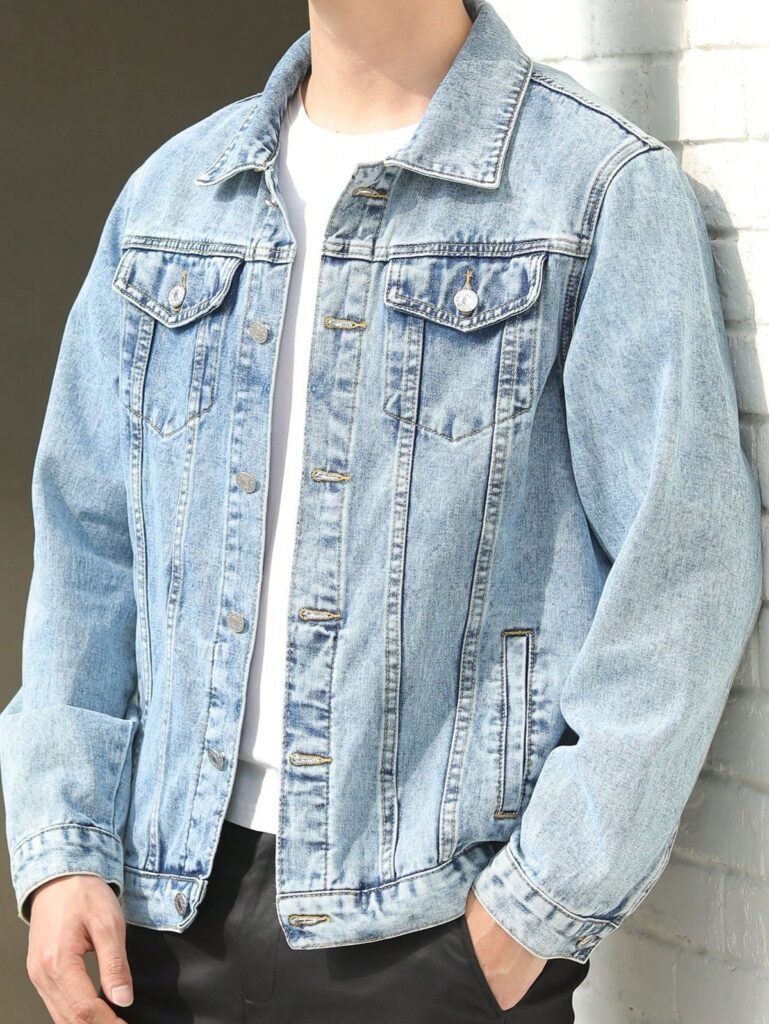
Best for: Casual everyday wear, layering, three-season versatility
If any single jacket could be called the universal casual essential for men, it’s the denim jacket. It has been a staple of men’s wardrobes since the 1950s — worn by everyone from ranch hands to rock stars — and it remains one of the most instinctively easy pieces to reach for because it works with almost everything.
The classic denim jacket is a medium-weight, structured outer layer that hits at the hip or just above it. In a mid or light wash, it pairs with chinos, cargos, trousers, and — with intention — even darker denim. In a black or dark wash, it takes on a more versatile, almost neutral quality that works across a broader colour range.
What to look for: A fit that’s clean across the shoulders and chest without pulling across the back. Avoid denim jackets that are too boxy or too long — the ideal length hits just below the waistband of your trousers. Rigid, raw denim gives a sharper look; washed denim has a more relaxed, lived-in quality.
How to wear it:
- Over a white tee + dark slim jeans + Chelsea boots → effortless casual evening
- Over a vintage band tee + straight jeans + boots → classic indie look
- Over a striped tee + chinos + white sneakers → smart casual weekend
- Over a grey hoodie + black cargos + chunky sneakers → streetwear layered
Style tip: A denim jacket can be customised with patches, pins, or embroidery to reflect your genuine personality — and that personalisation makes an already-strong piece feel uniquely yours.
2. The Bomber Jacket
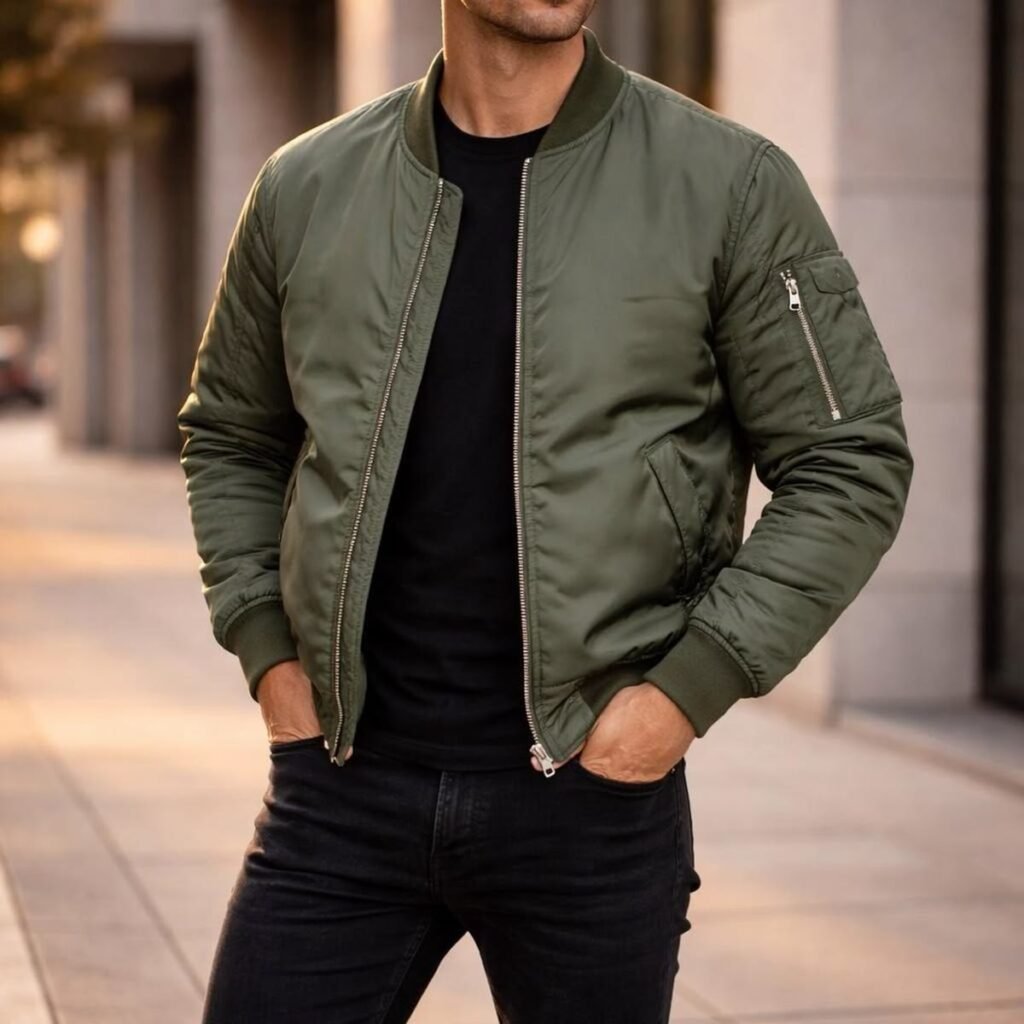
Best for: Streetwear, casual evenings, transitional weather
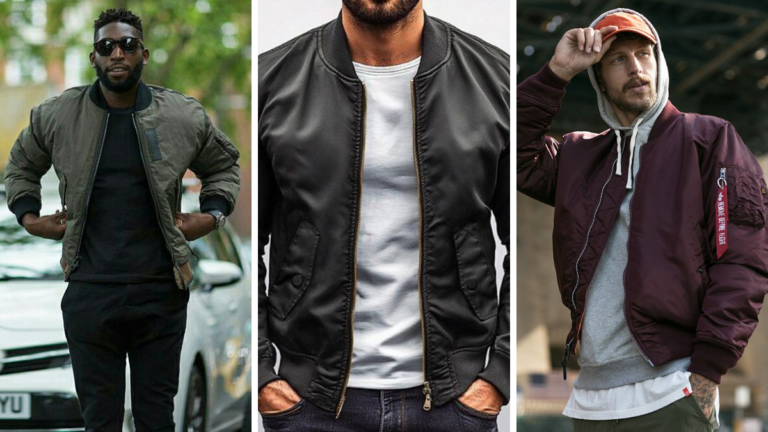
The bomber jacket — originally the MA-1 flight jacket worn by US Air Force pilots — has been a menswear staple since the 1960s. Its defining characteristics are a ribbed collar, cuffs, and hem; a zip front; and a silhouette that sits at the hip. It occupies a sweet spot between a casual jacket and a statement piece, and it has the rare quality of looking equally at home in streetwear contexts and smart-casual ones.
In black or olive, a bomber is one of the most versatile casual jackets you can own. In satin, suede, or a bolder colour, it becomes a statement piece — the centrepiece of an outfit rather than a supporting player.
What to look for: A fit that’s clean through the chest and shoulders with the hem hitting at the natural waist or just below — not mid-thigh. The ribbed hem should sit flat and snug, not flare outward. Avoid bombers with excessive zips, patches, or hardware unless that aesthetic is intentional.
How to wear it:
- Over a black tee + slim dark jeans + white sneakers → clean streetwear
- Over a white Oxford + navy chinos + loafers → unexpected smart-casual
- Over a roll-neck + straight trousers + Chelsea boots → fashion-forward evening
- Over a hoodie + cargos + trail runners → layered athleisure
Style tip: A satin bomber in a deep jewel tone — cobalt, burgundy, forest green — is one of the most impactful statement jacket choices a man can make, and it costs significantly less than most statement outerwear.
3. The Field Jacket
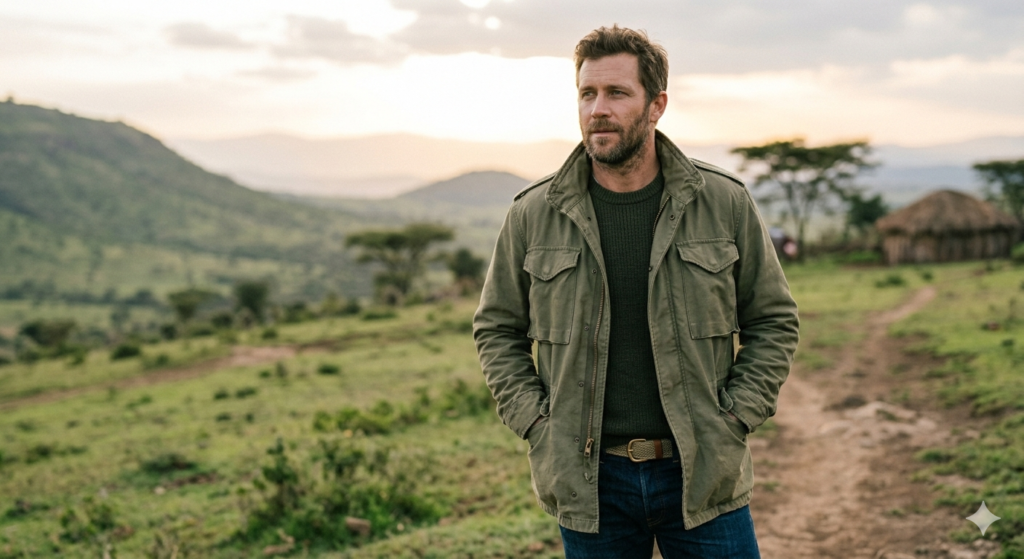
Best for: Autumn, transitional weather, outdoorsy casual, layering
The field jacket — derived from the M-65 military jacket issued to US soldiers from the 1960s onwards — is a structured, slightly longer casual jacket typically made from a cotton-nylon blend with a button or zip front and multiple utility pockets. In olive drab, it’s one of the most recognisable jackets in menswear; in khaki, stone, or navy, it adapts into a more versatile everyday outer layer.
Unlike lighter jackets, the field jacket is built for function — but its clean, structured lines translate naturally into stylish casual wear. It layers well over thicker mid-layers, handles mild wind and rain with ease, and adds an outdoorsy, slightly rugged edge to almost any casual look.
What to look for: A fit that’s relaxed enough to layer over a thick knit or hoodie but not so oversized it loses shape. Four external pockets (two chest, two hip) are standard — make sure they sit flat and don’t add bulk. An olive or khaki colourway is the most versatile starting point.
How to wear it:
- Over a cream knit + navy chinos + tan boots → smart autumn casual
- Over a grey hoodie + dark jeans + white sneakers → everyday practical
- Over a flannel shirt + straight jeans + boots → rugged weekend layering
- Over a white tee + olive cargos + trail runners → utility streetwear
Style tip: A field jacket with the collar turned up adds a decisive, editorial quality to an otherwise simple outfit. It’s a small adjustment with a disproportionate visual impact.
4. The Overshirt (Shacket)
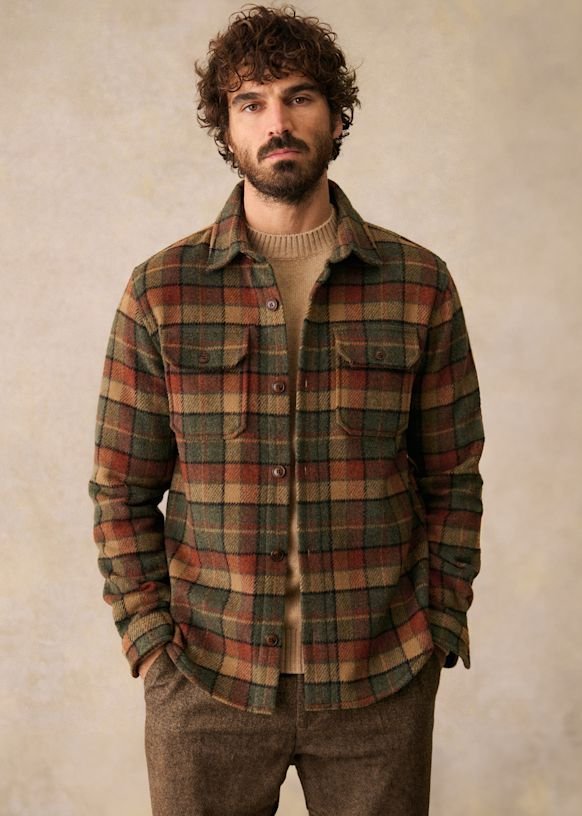
Best for: Year-round casual layering, transitional weather, smart casual
The overshirt — sometimes called a “shacket” (shirt-jacket) — sits in a uniquely useful category: it’s too heavy to be a shirt, too casual to be a jacket, and precisely that ambiguity is what makes it so versatile. Worn open over a tee or hoodie as a casual outer layer, or buttoned up as a standalone shirt in mild weather, it adapts to a wide range of occasions and temperatures.
Overshirts come in a broad range of fabrics — flannel, brushed cotton, waxed canvas, twill, fleece — and the fabric choice determines the season and register. A heavyweight flannel overshirt in a plaid or check is an autumn and winter essential. A lighter twill or poplin version works across spring and summer. A waxed canvas overshirt approaches the functionality of a light rain jacket.
What to look for: A slightly relaxed fit that allows comfortable layering over a hoodie or thick tee. Length should hit at or just below the hip — not mid-thigh. Chest pockets add utility and visual interest. Avoid synthetic fabrics that don’t breathe or drape well.
How to wear it:
- Open over a white tee + dark jeans + boots → effortless casual layering
- Buttoned over a plain tee + chinos + white sneakers → standalone casual shirt
- Over a slim hoodie + cargos + chunky boots → rugged streetwear
- Under a wool overcoat + dark trousers + Chelsea boots → winter triple-layer
Style tip: Tie an overshirt around your waist when the temperature rises — it adds texture and interest to a simple tee-and-jeans combination and has a comfortable, lived-in quality that works brilliantly at festivals, markets, and weekend outings.
5. The Harrington Jacket
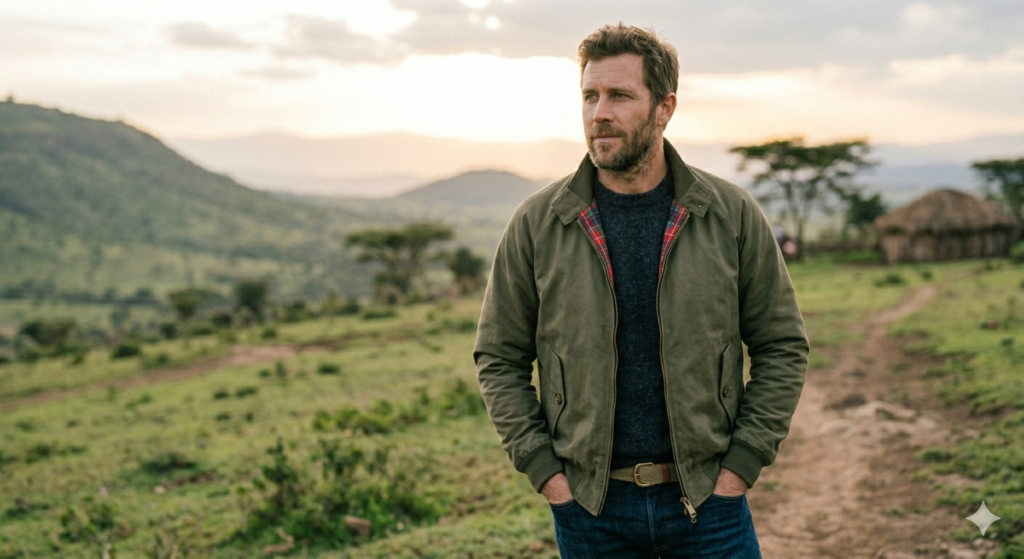
Best for: Smart casual, spring and autumn, Mod and prep-adjacent styles
The Harrington jacket — a lightweight, hip-length jacket with a stand-up collar, raglan sleeves, and a tartan lining — is one of British menswear’s most enduring contributions to casual dressing. Originally worn by everyone from Elvis Presley to Steve McQueen, it occupies a space between a casual zip-up and a proper outer layer, making it ideal for mild weather and smart-casual contexts where a heavier jacket would feel like too much.
In tan or camel, it reads classic and preppy. In olive or navy, it feels more contemporary and slightly more relaxed. The tartan lining — traditionally a red Royal Stewart tartan — adds a visual detail that distinguishes it from the more generic zip-up.
What to look for: A clean, slightly fitted silhouette that doesn’t feel boxy or oversized. The collar should sit flat when not turned up. Raglan sleeves allow easy movement and eliminate the shoulder seam. Look for a genuine tartan lining rather than a plain cotton interior.
How to wear it:
- Over a white polo + navy chinos + white sneakers → classic smart casual
- Over a Breton stripe tee + slim jeans + Chelsea boots → British casual
- Over a plain tee + dark slim jeans + white leather sneakers → clean everyday
- Over a fine knit + tailored trousers + loafers → polished transitional
Style tip: The Harrington jacket has a slight retro, Mod-adjacent quality that rewards period-inspired accessories — a simple watch, clean leather shoes, and a neatly fitted outfit underneath bring out the jacket’s character rather than fighting against it.
6. The Coach Jacket
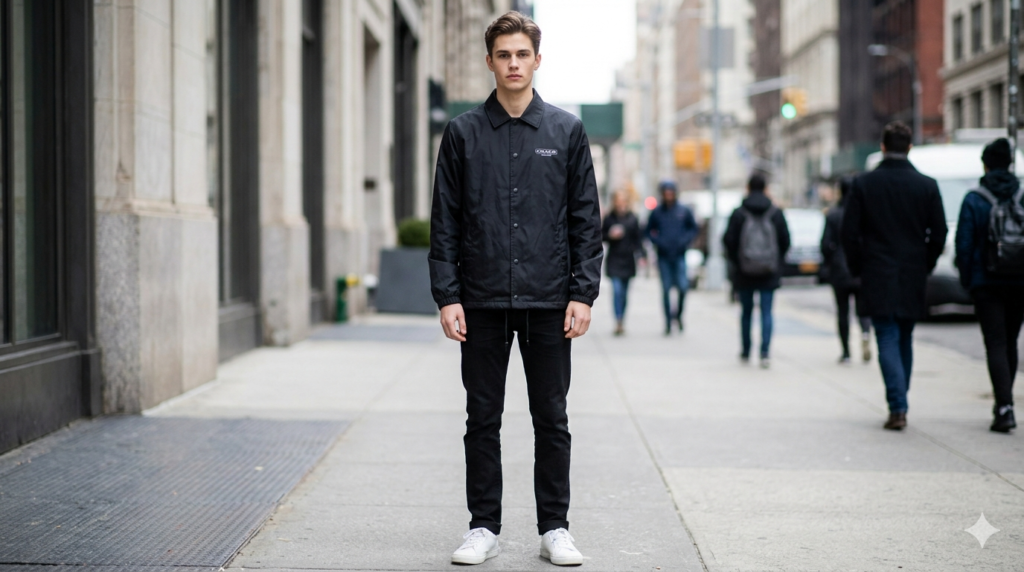
Best for: Streetwear, athletic-casual, spring and summer layering
The coach jacket — a lightweight, nylon or polyester outer layer with a zip front, elastic cuffs and hem, and a simple silhouette — has migrated from sports sidelines to mainstream menswear over the past decade and established itself as one of the most useful lightweight casual jackets available. It’s light enough to fold into a bag, practical enough to resist wind and light rain, and relaxed enough to work across a wide range of casual outfits.
In a single solid colour (black, navy, olive, burgundy), a coach jacket is clean and versatile. In a two-tone or logo-heavy version, it reads more streetwear-specific. The former is almost always the more useful starting point.
What to look for: A fit that’s slightly relaxed but not oversized — enough room for a light layer underneath. A stand collar or half-zip neckline. Minimal branding for maximum versatility. Packability is a bonus — look for a version that folds into its own pocket or a stuff sack.
How to wear it:
- Over a tonal tee + slim joggers + retro sneakers → clean athleisure
- Over a graphic tee + straight jeans + chunky sneakers → streetwear casual
- Over a lightweight knit + chinos + white sneakers → spring smart-casual
- Over a hoodie + cargos + trail runners → layered functional streetwear
Style tip: The coach jacket works particularly well in tonal or monochromatic outfits — a navy jacket over a navy tee and grey joggers, or an olive jacket over an olive tee and khaki cargos, creates an intentional, cohesive look that requires almost no styling thought.
7. The Leather Jacket
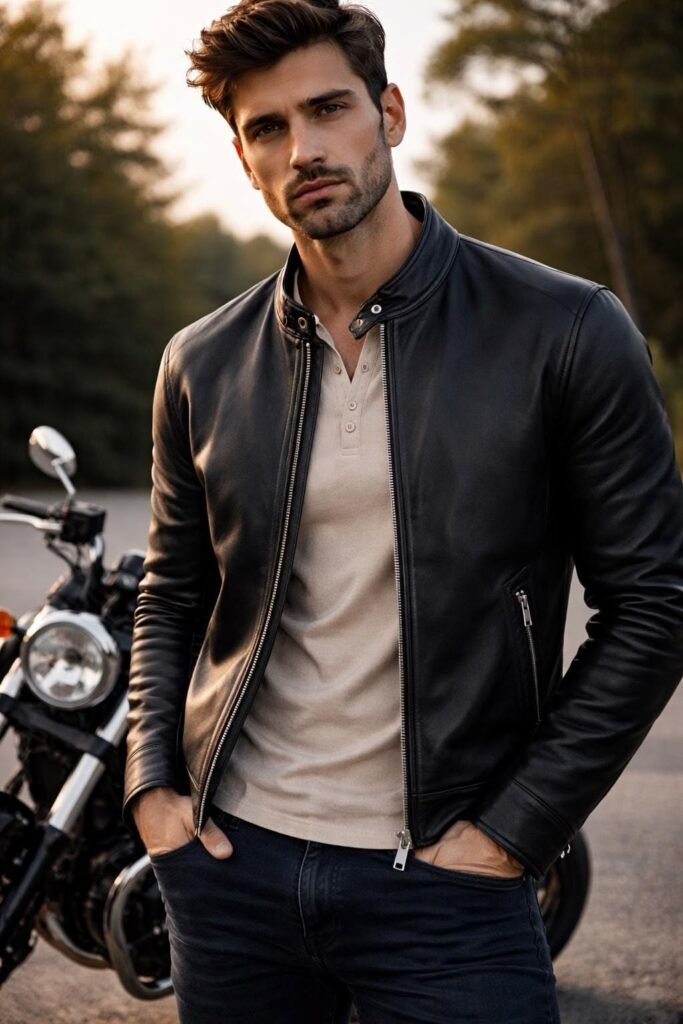
Best for: Evening casual, autumn, statement dressing, rock-adjacent style
Few items carry the cultural weight of a leather jacket. From Marlon Brando in The Wild One to every decade of rock and roll to the runways of every major fashion house — the leather jacket has maintained its status as one of the defining pieces of men’s style for over 70 years. And it earns that status because it genuinely works: it elevates simple outfits, adds an edge to smart ones, and improves with age in a way that almost no other jacket can.
The most universally wearable version is a slim-fit black leather jacket in a café racer, biker, or simple zip-front style. Avoid excessive zips, buckles, and hardware unless a specific aesthetic is the goal — cleaner is almost always stronger.
What to look for: Genuine leather (cowhide, lambskin, or goatskin) will always outperform faux leather in appearance, durability, and the way it ages. Lambskin is softer and more supple; cowhide is more durable and develops a better patina over time. A lining that allows the jacket to slide on easily over layers is a practical essential.
How to wear it:
- Over a black tee + slim black jeans + Chelsea boots → rock-and-roll minimal
- Over a white tee + dark jeans + white sneakers → the classic formula
- Over a roll-neck + straight trousers + boots → autumn evening statement
- Over a grey hoodie + dark cargos + chunky sneakers → streetwear edge
Style tip: A leather jacket takes time to break in — it stiffens slightly in cold weather and softens with wear. Don’t be deterred if it feels rigid at first. A well-made leather jacket becomes a more personal, characterful piece with every season you wear it.
8. The Puffer Jacket
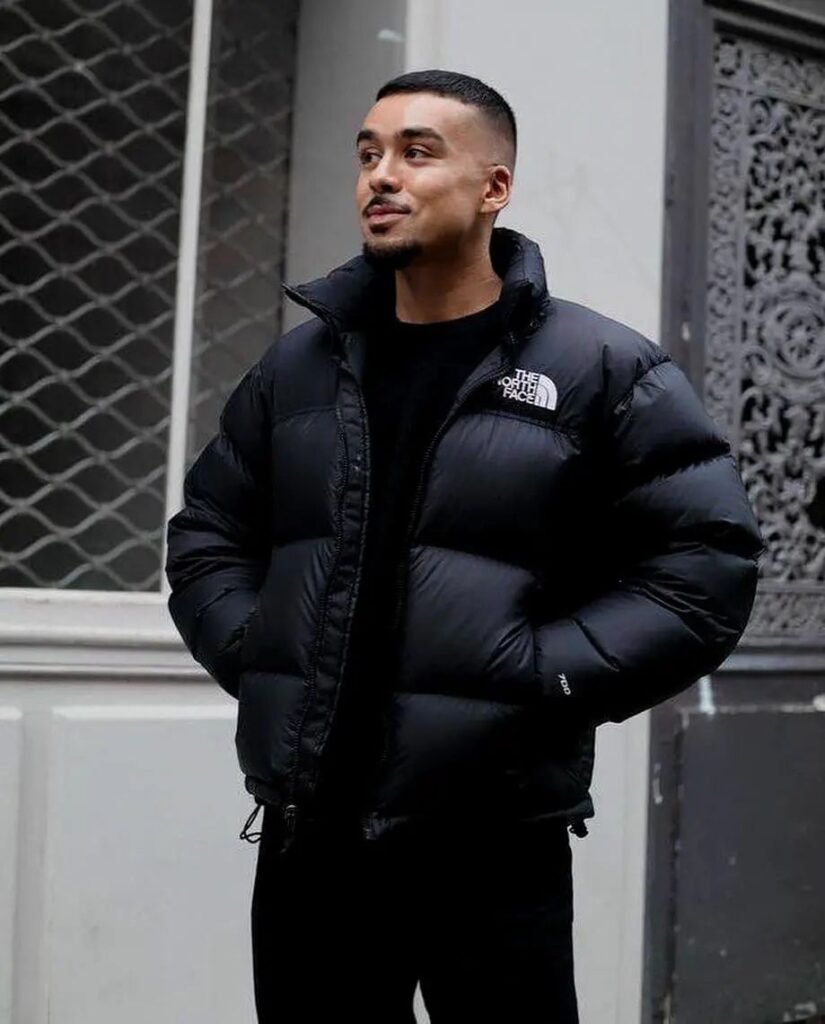
Best for: Winter, cold weather, casual warmth, athleisure
The puffer jacket — padded with down or synthetic fill and built to trap warmth efficiently — has become one of the most fashionable as well as most functional casual jackets in men’s wardrobes. The key distinction between a puffer that looks great and one that doesn’t is almost entirely in the fit and length. An oversized, mid-thigh puffer reads shapeless. A fitted, hip-length puffer reads intentional and sharp.
Stick to a fitted or slim silhouette, a length that hits at the hip or natural waist, and a solid neutral colour (black, navy, forest green, camel) for the most versatile option. Reserve oversized or longer puffers for extreme cold, not everyday wear.
What to look for: Down fill (700+ fill power) provides the best warmth-to-weight ratio. Synthetic fill is more affordable and performs better when damp. A baffled construction (the horizontal quilted lines) that lies flat rather than bubbling excessively. A hood is practical — look for one that doesn’t add bulk to the neck and collar area when stowed.
How to wear it:
- Over a white tee + slim dark jeans + white sneakers → clean winter casual
- Over a hoodie + slim joggers + trail runners → winter athleisure
- Over a roll-neck + tailored trousers + boots → elevated winter smart-casual
- Over a flannel + cargos + chunky boots → rugged cold-weather utility
Style tip: A puffer in a bold colour — cobalt blue, burnt orange, deep burgundy — is one of the most effective statement jacket choices for winter, especially when everything underneath is kept neutral and simple.
Read also: 15 Ways to Style an Oversized Hoodie for Men (That Actually Look Good)
9. The Wax Jacket
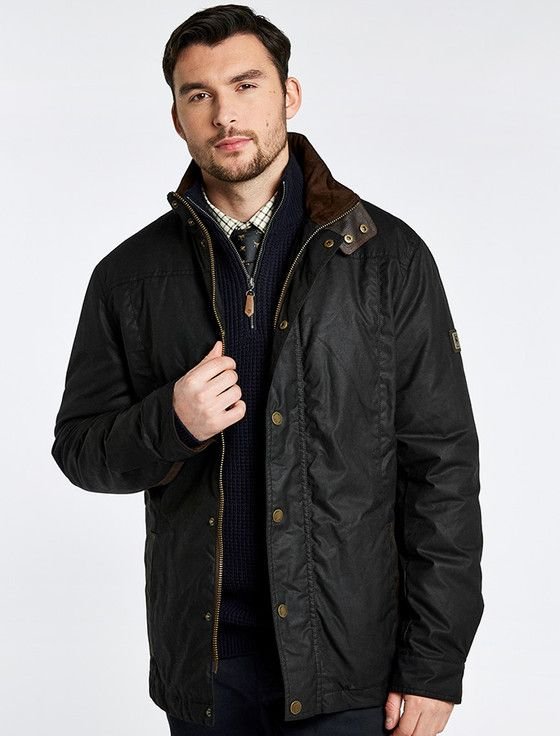
Best for: Countryside, outdoor casual, British heritage style, autumn and winter
The wax jacket — a cotton outer layer treated with paraffin wax for water resistance — is one of the most enduring pieces of British heritage outerwear. Originally designed for hunting and country pursuits, it has long since crossed into mainstream casual wear, where its distinctive silhouette, corduroy collar, and functional pocket placement give it a character that no other jacket quite replicates.
In olive, dark navy, or brown, a wax jacket pairs naturally with wool knitwear, flannel shirts, jeans, and boots — making it one of the most appropriate choices for countryside walks, outdoor markets, and any autumn or winter occasion with an earthy, outdoorsy register.
What to look for: Barbour, Belstaff, and Filson are the benchmark brands. Look for a full-length wax cotton outer with a corduroy or moleskin collar, storm cuffs, and a bellows chest pocket. Re-waxing (a simple process of applying a new wax coat) is recommended once a year to maintain water resistance.
How to wear it:
- Over a chunky knit + jeans + leather boots → classic British countryside
- Over a flannel shirt + cords + Wellington boots → rural weekend
- Over a crew-neck tee + dark chinos + brogues → smart country casual
- Over a roll-neck + straight jeans + Chelsea boots → heritage urban
Style tip: A wax jacket genuinely improves with age — the wax develops a patina and the cotton softens. Resist the urge to clean it excessively; a slightly worn, characterful wax jacket is infinitely more appealing than a pristine one.
10. The Fleece Jacket
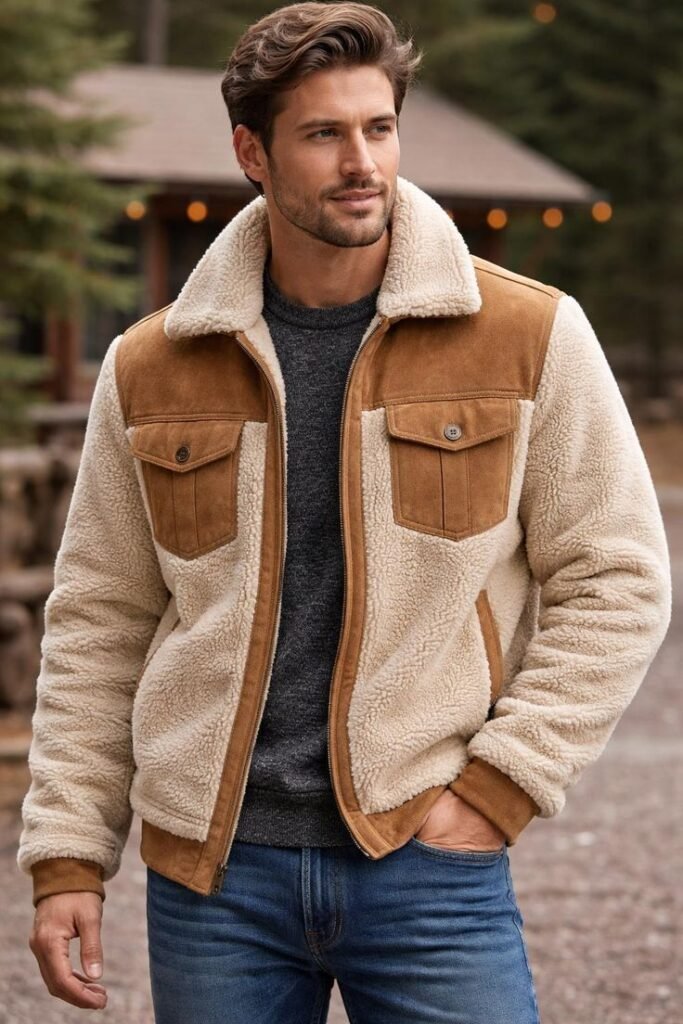
Best for: Layering, outdoor-casual, athleisure, mountain and adventure contexts
The fleece jacket has had a significant fashion rehabilitation over the past several years, moving from purely functional outdoor gear to a legitimate casual wardrobe piece in its own right. Worn as a mid-layer under a shell or overcoat, or as a standalone outer layer in mild temperatures, a well-chosen fleece is one of the most practical pieces a man can own.
The most versatile styles are a zip-up fleece in a clean solid colour, or a half-zip pullover in a neutral tone. Avoid fleece with heavy branding, excessive texturing, or novelty patterns unless the outdoor-functional aesthetic is specifically what you’re going for.
What to look for: A midweight fleece (200–300gsm) balances warmth and versatility. Look for flat-lock seams that don’t chafe under a jacket, a stand-up collar that provides neck warmth, and zippered pockets. Patagonia, Arc’teryx, and The North Face set the quality standard; Uniqlo offers excellent value at a lower price point.
How to wear it:
- Over a tee + slim jeans + trail runners → outdoor-casual everyday
- Under a wax jacket or field jacket + jeans + boots → practical layering
- Over a long-sleeve tee + joggers + chunky sneakers → clean athleisure
- Zip-up + tailored chinos + loafers → Ivy League outdoor-casual
Style tip: The half-zip fleece pullover (particularly in Patagonia’s Synchilla or similar styles) has reached the level of cultural ubiquity that makes it an ironic statement piece as much as a practical one — worn with tailored trousers and good shoes, it reads as considered rather than accidental.
11. The Quilted Jacket
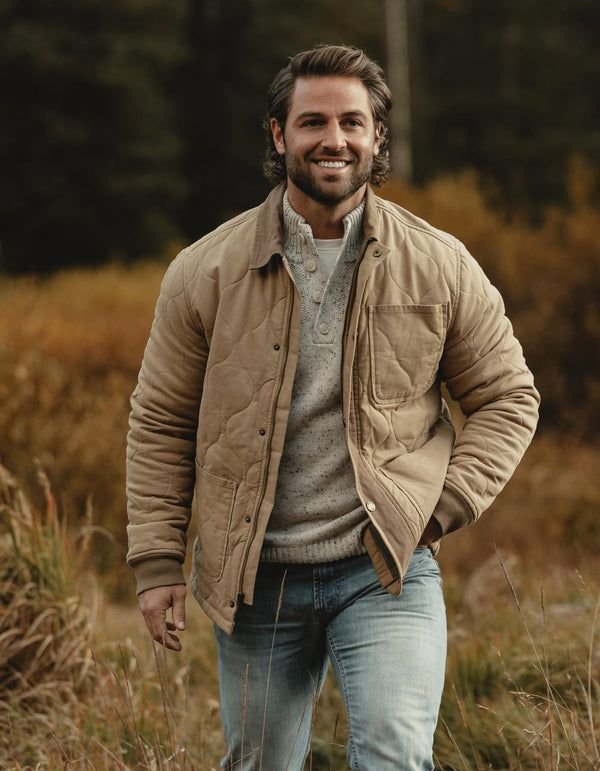
Best for: Smart-casual transitional weather, countryside, autumn, layering under overcoats
The quilted jacket — a lightweight outer layer with a diamond or box-stitched quilting pattern and a thin down or synthetic fill — sits in a precise sweet spot between a shirt and a proper winter coat. It’s warm enough for autumn and mild winter, light enough not to feel cumbersome, and smart enough to work in smart-casual contexts where a puffer or fleece would feel too casual.
In navy, olive, or dark green, a quilted jacket coordinates naturally with chinos, dark jeans, and tailored trousers. Its slight structure and clean quilting pattern give it a more polished quality than most casual jackets while remaining firmly in the casual wardrobe category.
What to look for: A fit that’s clean and relatively close to the body — quilted jackets that are too relaxed lose their smart-casual quality. A length that hits at the hip or just below. A full-length front zip and a stand collar for practicality. Snap or zip pockets that lie flat.
How to wear it:
- Over a white Oxford + navy chinos + tan boots → country smart-casual
- Over a knit sweater + jeans + brogues → elevated autumn weekend
- Under a wool overcoat + tailored trousers + Chelsea boots → sophisticated winter layering
- Over a tee + dark jeans + white sneakers → casual everyday autumn
Style tip: The quilted jacket is one of the best pieces to wear underneath a longer wool overcoat — the insulation adds warmth without the bulk of a full puffer, and the slim profile fits comfortably under most overcoat silhouettes.
12. The Windbreaker
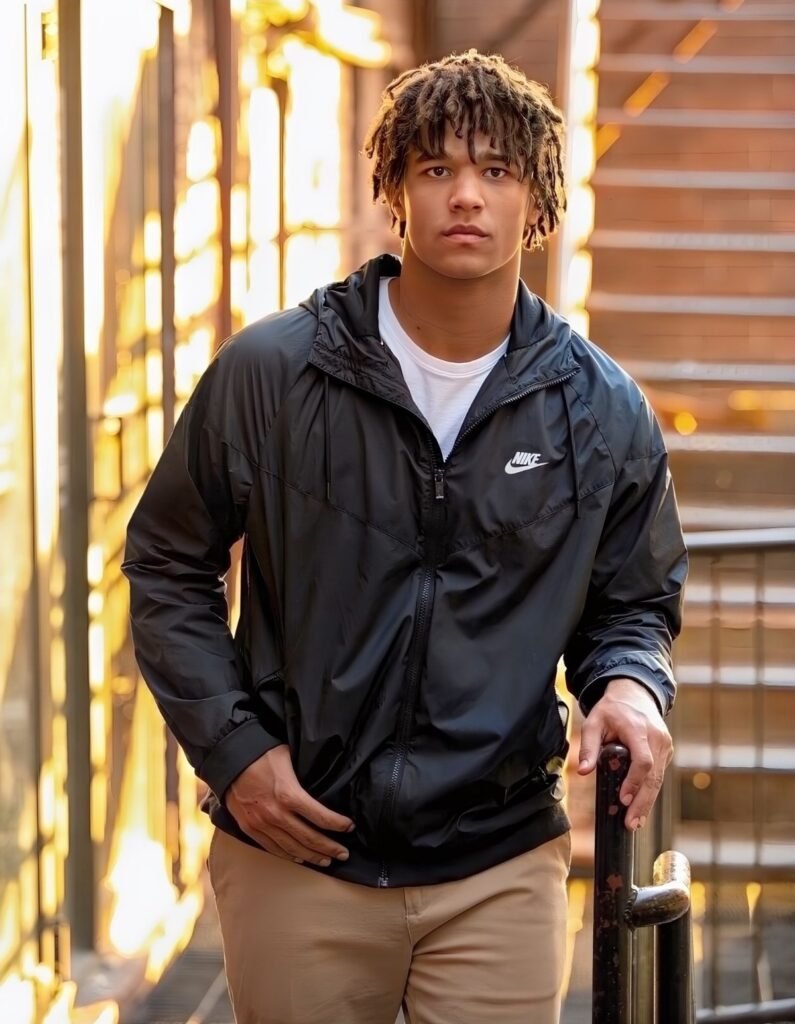
Best for: Spring and summer, light rain, activewear-adjacent casual, travel
The windbreaker — a lightweight, packable, wind and water-resistant outer layer — is the most practical casual jacket for unpredictable weather. In performance nylon or ripstop fabric, it handles spring showers and breezy summer evenings with ease while taking up minimal space in a bag. It’s the jacket you throw in with your luggage for a city trip and reach for more than anything else you packed.
The fashion-forward evolution of the windbreaker has moved it beyond purely functional territory — in clean solid colours with minimal branding, or in colour-block patterns that reference 90s sportswear, a quality windbreaker is now a legitimate style piece.
What to look for: A lightweight, packable fabric (ideally under 300g packed). Taped seams for genuine water resistance. A half-zip or full-zip front. A hood that stores in the collar when not in use. Minimal hardware and branding for maximum versatility. Colours: navy, black, olive, or a considered colour-block.
How to wear it:
- Over a tee + straight jeans + chunky sneakers → casual urban everyday
- Over a hoodie + slim joggers + trail runners → active athleisure
- Over a long-sleeve tee + chinos + white sneakers → practical smart casual
- Over a lightweight knit + dark jeans + boots → transitional smart-casual
Style tip: A windbreaker worn half-zipped with a hoodie underneath — hood of the hoodie out over the windbreaker collar — is one of the most instinctively cool casual layering moves available, requiring zero styling thought beyond putting both items on.
Mini Style Guide
Casual Jacket by Occasion
| Occasion | Best Jacket Choice |
|---|---|
| Everyday casual | Denim jacket, overshirt, coach jacket |
| Smart casual evening | Bomber, leather jacket, Harrington |
| Outdoor/countryside | Wax jacket, field jacket, quilted jacket |
| Cold weather | Puffer jacket, leather jacket (lined), quilted jacket |
| Transitional weather | Overshirt, Harrington, windbreaker, field jacket |
| Streetwear/athleisure | Bomber, coach jacket, windbreaker, fleece |
| Travel | Windbreaker, coach jacket, overshirt |
Best Casual Jacket Colours to Own
Start with: Black, navy, or olive — these three colours coordinate with the broadest range of outfits and work across the most occasions.
Add next: Camel or tan (particularly strong for overcoats and field jackets), grey (excellent for puffers and fleeces), and brown (ideal for leather and wax jackets).
Statement options: Burgundy, cobalt, forest green, and burnt orange add personality without being difficult to style — pair with neutral outfits underneath.
Common Jacket Mistakes to Avoid
- Buying a jacket that only works with one outfit. Every jacket in your wardrobe should earn its space by working with at least four or five different looks.
- Getting the shoulder fit wrong. This is the one measurement that can’t be tailored easily. Always check the shoulder seam before anything else.
- Owning too many jackets in the same weight category. A wardrobe of three bombers and no winter coat is not a wardrobe. Balance light, mid-weight, and heavy options.
- Neglecting care. Jackets need cleaning, conditioning (leather), re-waxing (wax jackets), and occasional professional care. A neglected jacket ages badly and quickly.
- Choosing trend over utility. A jacket that’s on-trend but doesn’t work with anything you own is a wasted purchase. Versatility first, always.
Frequently Asked Questions
What is the most versatile casual jacket for men? The denim jacket is the single most versatile casual jacket a man can own — it works across three seasons, coordinates with jeans, chinos, cargos, and tailored trousers, and suits casual through smart-casual occasions. The bomber jacket is a close second, with a slightly smarter, more fashion-forward quality that works well for evenings and streetwear contexts.
What casual jacket is best for autumn and winter? For autumn, a field jacket, wax jacket, or quilted jacket handles the transition well. For winter, a fitted puffer jacket or a lined leather jacket provides the necessary warmth while remaining in the casual wardrobe category. A wool overcoat worn over a mid-layer is the smartest cold-weather option.
How should a casual jacket fit? The shoulder seam should sit exactly at the edge of your shoulder. The chest should close comfortably without pulling. The sleeve should end at the wrist bone. Length is style-dependent, but most casual jackets hit at the hip — avoid anything that falls below the seat, as this reads more like a formal overcoat.
Is a leather jacket worth the investment? Yes — a well-made genuine leather jacket is one of the best fashion investments a man can make. It improves with age, lasts decades with reasonable care, and never goes truly out of style. A quality lambskin or cowhide leather jacket from a reputable brand will outperform ten cheap faux-leather alternatives in both appearance and longevity.
How many casual jackets does a man need? Three is an excellent starting point: one lightweight option for spring and summer (coach jacket, Harrington, or windbreaker), one mid-weight option for autumn (denim jacket, field jacket, or overshirt), and one warm option for winter (puffer, leather jacket, or quilted jacket under an overcoat). From there, additional jackets can fill specific stylistic or functional gaps.
Conclusion
The right casual jacket doesn’t just keep you warm — it finishes an outfit, sets the tone for a look, and does the heavy lifting of making even the simplest combination feel intentional. The 12 jackets in this guide cover every season, occasion, and style direction a man’s wardrobe might need to navigate.
If you’re building from scratch, start with a denim jacket and a fitted puffer — between them, they cover the majority of casual occasions across the year. Add a leather jacket or bomber when the budget allows, and a quality wax jacket or field jacket if your lifestyle calls for it.
Buy well, buy fewer, and choose pieces that work with what you already own. That’s the formula — and it applies to casual jackets more than almost anything else in a man’s wardrobe.
Read also: