How Many Suits Does a Man Actually Need?
This is one of those questions that sounds simple until you actually try to answer it.
How many suits does a man actually need? Ask a tailor, and he’ll say five. Ask a minimalist, and he’ll say one.

Ask most men in their 30s, and they’ll quietly admit they own two suits — one that fits, one that doesn’t — and neither gets worn enough to justify a third.
The honest answer depends on your life. Your job, your social calendar, where you live, and how often you genuinely need to dress formally all determine what a sensible suit wardrobe looks like. There is no universal number — but there are clear principles for figuring out yours.

This guide breaks down how many suits a man actually needs, which ones to buy first, what to spend at each stage, how to build a collection that earns its wardrobe space, and the mistakes most men make when buying suits. Whether you own zero or five, this is the framework for getting it right.
The Honest Answer: It Depends on Your Life
Before any specific number, a reality check. Suits are expensive to buy well, expensive to maintain, and largely useless if your lifestyle doesn’t call for them regularly. Owning three suits you never wear is worse than owning one you wear confidently.
Ask yourself these questions honestly:
- Do you work in an environment that requires a suit? Daily office wear, client-facing roles, law, finance, and similar professions justify a larger suit wardrobe. Creative industries, remote work, and casual offices do not.
- How many formal events do you attend per year? Weddings, funerals, black tie dinners, and formal presentations all call for a suit. If you attend fewer than four or five such events annually, one or two suits may genuinely be enough.
- Do you enjoy wearing suits? This matters. A man who feels confident and comfortable in a suit will find more occasions to wear one. A man who resents them will find every reason to avoid it.
With those answers in mind, here is the framework.
The Suit Wardrobe by Life Stage
The Minimal Wardrobe: One Suit
Who it’s for: Men with casual or creative jobs, those who rarely attend formal events, remote workers, or men just starting to build a wardrobe.
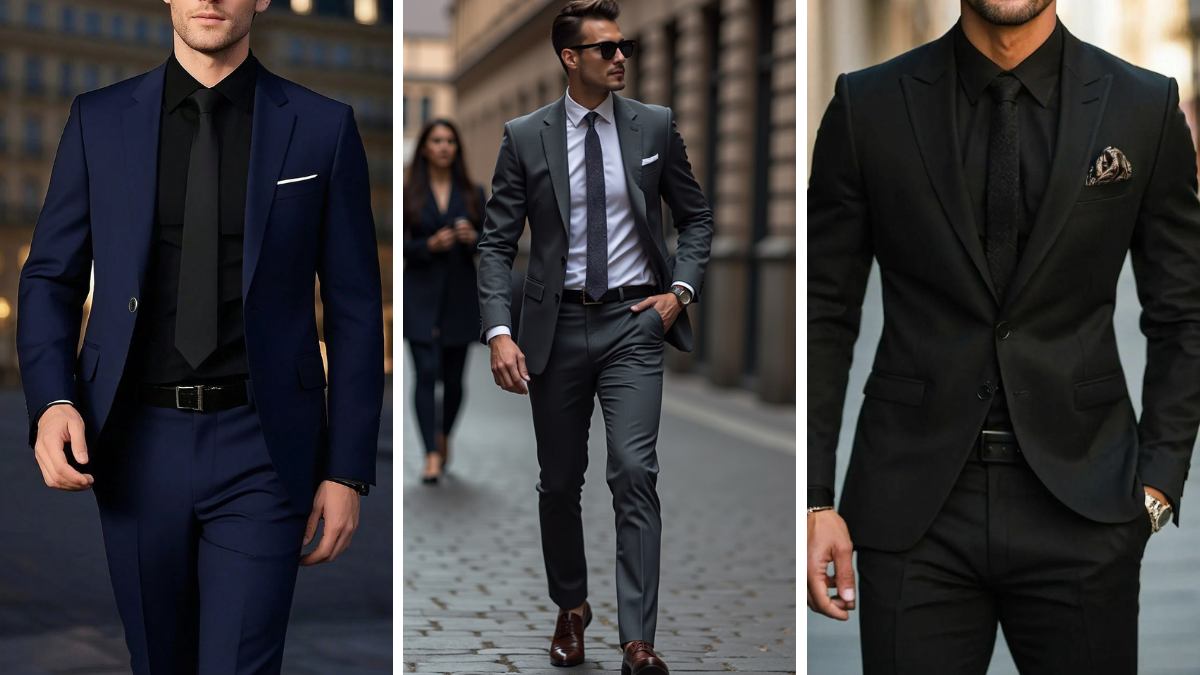
What to buy: A single navy suit in a mid-weight wool or wool-blend fabric. Navy is the most versatile suit colour in existence — it works for job interviews, weddings, funerals, business meetings, and formal dinners without being over or underdressed for any of them. It pairs with white, blue, grey, and cream shirts; it works with black, brown, and tan shoes; and it photographs well in any light.
The logic: One excellent, well-fitted navy suit is worth three mediocre ones. If you are only going to own one, make it the best single suit you can afford, fitted properly, in a fabric that lasts.
What to spend: £400–£900 for a quality off-the-peg suit from brands like Reiss, Hugo Boss, or Ted Baker. Consider a made-to-measure option from brands like SuitSupply, which delivers a genuinely well-fitted suit at a reasonable price point. A cheap suit that fits badly is worse than no suit at all.
The Functional Wardrobe: Two Suits
Who it’s for: Most men. The professional who attends occasional formal events, the man who interviews for jobs, attends weddings semi-regularly, and needs to look sharp a handful of times per year.
What to buy: Navy suit first (as above), followed by either:
- A charcoal grey suit — more formal than navy, more versatile than black. Charcoal grey is the suit of choice for high-stakes professional occasions: serious job interviews, board meetings, significant business presentations. It reads as authoritative and considered without the cold formality of black.
- A mid-grey suit — slightly less formal than charcoal, highly versatile across smart casual and formal settings. Pairs beautifully with navy and burgundy accessories.
The logic: Navy and charcoal grey together cover every occasion from a summer wedding to a serious professional meeting. They share accessories — shirts, ties, pocket squares — without looking repetitive, and they work in different seasons.
What to spend: Same principle applies. Invest in quality fabric and proper fit. Two suits at £400–£700 each, maintained well, will serve you for a decade or more.
The Complete Wardrobe: Three Suits
Who it’s for: Men who work in professional environments where suits are semi-regular, men who attend multiple formal events per year, or men who genuinely enjoy suit dressing and want options.
What to buy: Navy, charcoal grey, and one of the following depending on your lifestyle:
- A light grey or mid-grey suit for spring and summer events — a lighter weight fabric (cotton or light wool) in a softer grey reads as elegant and appropriate for warm-weather weddings and outdoor occasions
- A tan or camel suit — increasingly prevalent in modern menswear and outstanding for daytime summer events and smart casual occasions
- A black suit — more limited in versatility than most men realise (it reads as formal or funeral in most contexts), but essential for black tie adjacent events and the most formal professional settings
The logic: Three suits allow for genuine seasonal rotation and contextual variety. Navy for most occasions. Charcoal for formal professional. A third suit that reflects your specific lifestyle — whether that’s summer weddings, creative industry events, or simply wanting more colour in your formal wardrobe.
The Extended Wardrobe: Four or Five Suits
Who it’s for: Men who wear suits regularly — five days a week or close to it. Lawyers, bankers, professionals in formal industries, or men who simply love suit dressing as an expression of personal style.
At this level, add:
- A patterned suit — a subtle windowpane check, a herringbone, or a Prince of Wales check in grey or navy. Pattern adds personality and breaks the monotony of a week in solid colours without looking flashy.
- A seasonal suit — a lightweight linen or cotton suit for summer; a heavier flannel for winter. Fabric weight matters enormously when you’re wearing suits daily.
- A navy or grey blazer suit — separates that can be worn together or apart. A blazer that works as a standalone paired with different trousers dramatically expands your wardrobe options.
The logic: At four or five suits, you’re building a proper rotation that allows each suit to rest, breathe, and last significantly longer. Daily suit wearers who don’t rotate are destroying their garments through overuse regardless of quality.
The Suits Every Man Should Consider
The Navy Suit — Buy This First
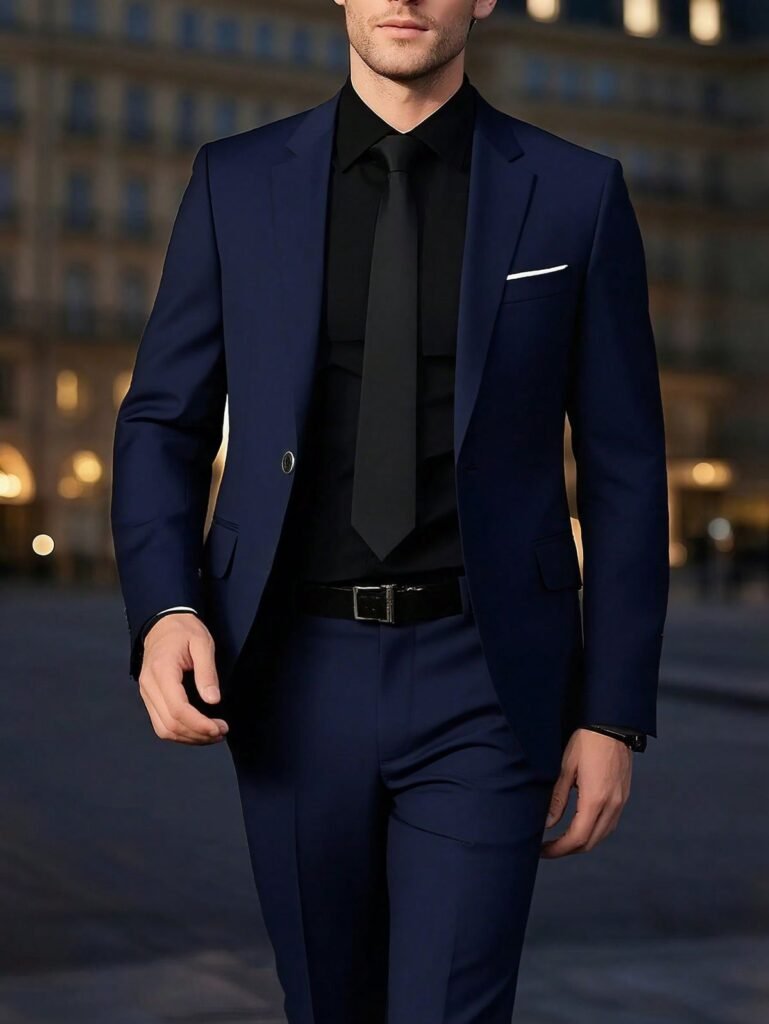
The navy suit is the single most important suit a man can own. It is not the most formal, not the most dramatic, and not the most fashion-forward. It is simply the most useful.
Navy works across a wider range of occasions, shirt colours, and shoe choices than any other suit. A well-fitted navy suit in a mid-weight wool makes its wearer look authoritative without being intimidating, dressed without being overdressed, and stylish without being trendy.
Best fabric: Mid-weight pure wool (270–320gsm) for year-round wear. Super 100s–130s wool for the best balance of durability and comfort.
Best fit: Slim to tailored fit with a clean chest, no excess fabric pooling at the waist, and trousers that sit at the natural waist and break cleanly at the shoe.
Wear it with: White Oxford shirt and black or tan Oxford shoes for formal. Light blue shirt open collar with brown loafers for smart casual. Navy suit trousers with a different jacket for extended wardrobe versatility.
The Charcoal Grey Suit — The Professional’s Choice
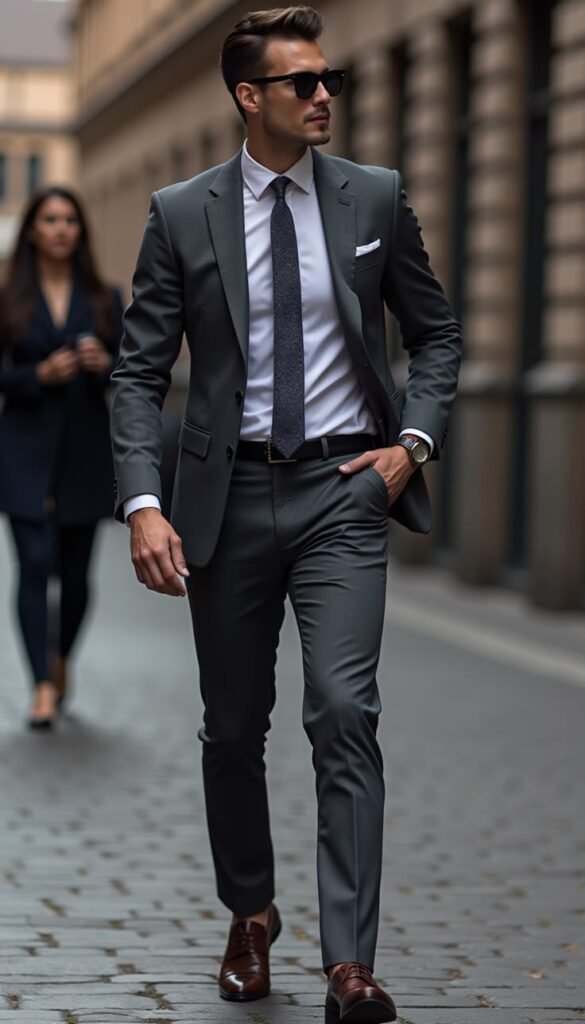
Charcoal grey is the suit you wear when navy feels too relaxed. It is more formal, more authoritative, and more serious — which makes it ideal for the highest-stakes professional occasions in a man’s life.
A charcoal grey suit with a white shirt and dark tie remains one of the most powerful professional looks in modern menswear. It is not flashy. It does not try to be interesting. It simply communicates competence and seriousness in a way few other outfits can match.
Best fabric: Pure wool or wool-blend. Slightly heavier weight than your navy suit — charcoal grey works better in cooler months and heavier fabric adds to the gravitas of the look.
Wear it with: White or pale blue shirt and a silk tie for formal professional. White shirt no tie with black Chelsea boots for modern smart. Never with brown shoes — charcoal grey demands black footwear.
The Mid or Light Grey Suit — The Social Suit
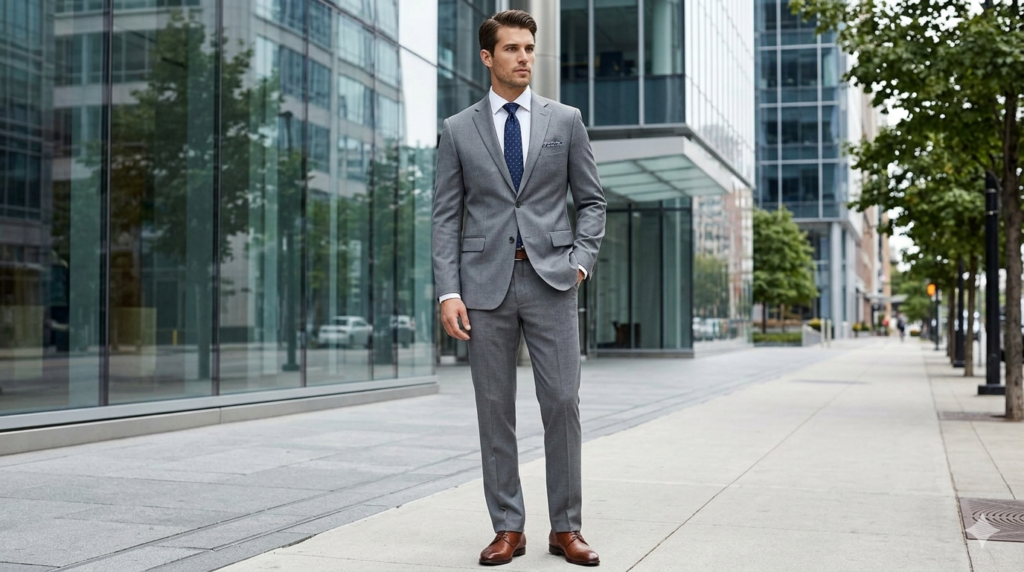
Grey in its lighter shades occupies a different emotional register than charcoal. Mid and light grey suits read as friendly, approachable, and social rather than authoritative. They are the right suit for summer weddings, smart casual evening events, and occasions where looking sharp matters but looking intimidating does not.
Light grey in a lighter wool or cotton fabric is one of the most elegant summer suit choices available and dramatically underused by most men.
Best fabric: Lightweight wool, cotton, or linen for summer. A mid-weight wool for year-round versatility.
Wear it with: White shirt and brown suede loafers or tan Oxford shoes. A pale blue or pink Oxford shirt for a more relaxed, social occasion. Avoid black shoes with light grey — the contrast is too harsh.
The Black Suit — Know When to Reach For It
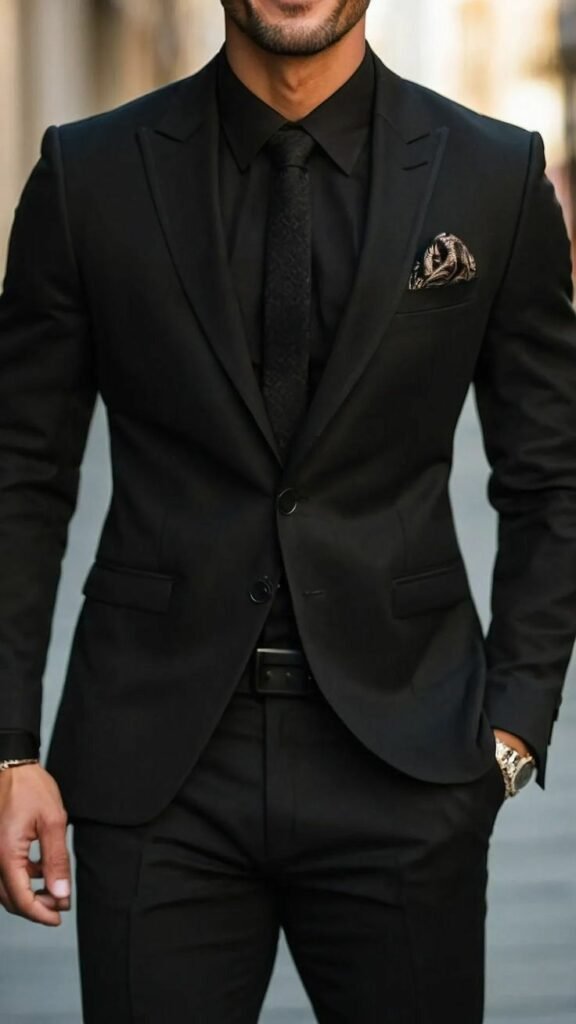
A point of honest clarification: the black suit is less versatile than most men believe. It reads as funeral, nightclub, or very formal in most contexts — which means it has a narrower range of appropriate occasions than navy or grey.
That said, there are contexts where only a black suit is correct. Funerals. Black tie optional events where a tuxedo feels excessive. Some formal evening occasions. And for men in certain industries — hospitality, entertainment, fashion — a sharp black suit is a wardrobe workhorse.
Best fabric: Mid-weight wool. Avoid anything with even a slight sheen — it immediately reads as cheap or nightclub-appropriate.
Wear it with: White shirt only for formal occasions. A black or charcoal grey tie for funerals. For more relaxed formal, wear open collar with a black rollneck underneath for a distinctly modern look.
The honest verdict: Most men do not need a black suit as their first or second purchase. Navy and grey serve more occasions more elegantly. Buy the black suit third or fourth, once your core wardrobe is built.
The Patterned Suit — For When You’re Ready
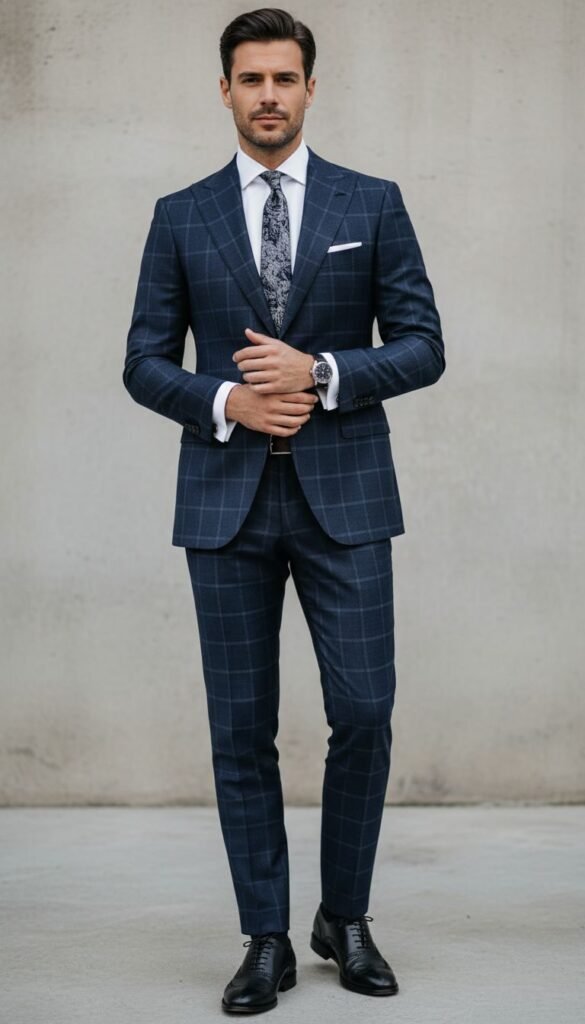
A patterned suit — windowpane check, herringbone, Prince of Wales check, or subtle glen plaid — is not an essential purchase. It is an enhancement. Once a man has his foundational suits in place, a well-chosen pattern adds personality, visual interest, and a note of genuine sartorial confidence that solid suits cannot deliver.
The key is subtlety. A bold check reads as costume or fancy dress. A fine windowpane in grey or navy reads as genuinely sophisticated.
What to look for: A pattern with a base colour that matches your existing suit wardrobe — a grey windowpane check or a navy herringbone both share accessories with your core suits, extending your wardrobe without requiring new investment in shirts, ties, and shoes.
What to Spend: A Realistic Guide
The question of budget is inseparable from the question of how many suits to own, because the relationship between price and quality in suits is more direct than in almost any other garment.
| Budget Level | What to Expect | Recommended Brands |
|---|---|---|
| Under £200 | Off-the-peg, synthetic or low-quality wool blend, limited longevity | Marks & Spencer, Zara (entry level only) |
| £200–£400 | Decent off-the-peg wool blend, adequate fit, reasonable durability | Next, River Island (top end), Moss Bros |
| £400–£700 | Quality wool construction, good fit, strong longevity with care | Reiss, Ted Baker, Hugo Boss, SuitSupply MTM |
| £700–£1,200 | Excellent wool fabric, refined construction, made-to-measure options | Paul Smith, Canali, SuitSupply Neapolitan |
| £1,200+ | Bespoke or high-end made-to-measure, exceptional fabric and longevity | Gieves & Hawkes, Timothy Everest, Henry Poole |
The principle: One excellent suit at £600 is worth more than three suits at £200 each. The cheap suit will look worn within two years; the quality suit, maintained properly, will last a decade or more.
Read also: The Only 3 Belts a Man Needs (And How to Wear Each One)
Fit: The Most Important Variable in the Room
Fit matters more in a suit than in any other garment a man wears. A £200 suit that fits perfectly looks better than a £2,000 suit that doesn’t. This is not an exaggeration.
The Non-Negotiable Fit Points
Shoulders: The shoulder seam must sit exactly at the edge of your shoulder — not hanging over, not pulling inward. Shoulder alterations are the most expensive and structurally complex of all suit alterations. If the shoulders don’t fit off-the-peg, the suit is not the right suit for your frame.
Chest: The jacket should close with one button without pulling or creating horizontal stress lines across the chest. There should be no excess fabric bunching at the lapels.
Waist suppression: A well-fitted suit jacket follows the natural taper of the male torso — it suppresses at the waist before the skirt flares gently. A jacket with no waist suppression looks boxy regardless of quality.
Jacket length: The hem should cover the seat fully and reach roughly the middle of your hand when your arms are hanging naturally. Too short looks trendy and dates quickly; too long looks borrowed.
Trouser rise: High-rise trousers sit at the natural waist and create a longer, cleaner leg line. Mid-rise is more common and acceptable. Avoid low-rise — it shortens the leg and creates an awkward silhouette under a jacket.
Trouser break: A slight half-break (the fabric just grazes the top of the shoe) is the current classic. No break (the trouser ends cleanly above the shoe) looks modern and is excellent for shorter men. A full break is old-fashioned and shortens the leg visually.
What Can and Cannot Be Altered
Easy to alter: Jacket sleeve length, jacket body (taking in the sides), trouser length, trouser waist.
Difficult and expensive: Shoulder width, jacket chest, jacket back.
Rule: If the shoulders and chest fit, everything else can usually be fixed for £50–£150 by a good tailor.
Mini Suit Style Guide
The Best Shirt and Shoe Combinations
Navy suit:
- White Oxford shirt + black Oxford shoes = classic formal
- Light blue shirt (no tie) + tan loafers = smart casual
- White shirt + brown suede Chelsea boots = modern smart casual
Charcoal grey suit:
- White shirt + black tie + black Oxford shoes = formal professional
- Pale blue shirt (no tie) + black Chelsea boots = modern formal
- White shirt + burgundy tie + black shoes = traditional authority
Light grey suit:
- White shirt + tan Oxford shoes = summer wedding classic
- Pale pink shirt + tan loafers = relaxed summer smart
- Blue chambray shirt + white trainers = very modern smart casual
How to Make One Suit Work Harder
If you own one suit, suit separates are a powerful way to extend its versatility. The jacket worn without the matching trousers — paired with dark jeans, chinos, or different trousers — becomes a blazer. The trousers worn without the jacket — with a quality Oxford shirt and loafers — become a smart trouser.
This approach only works if the fabric is versatile enough not to look obviously like half a suit. Solid navy and mid-grey suits work best as separates; a bold check or a distinctive pattern does not.
Seasonal Suit Fabrics
Spring/Summer: Lightweight wool (270gsm or lighter), cotton, linen, or a linen-wool blend. These breathe, drape, and keep you cooler in warm weather.
Autumn/Winter: Mid-to-heavy weight wool (300–380gsm), flannel, tweed, or a wool-cashmere blend. These provide warmth, structure, and the kind of satisfying weight that lighter suits lack.
Year-round: A mid-weight pure wool in the 290–320gsm range will see you through most of the year in a temperate climate. This is the best starting point if you’re buying your first suit.
Suit Care Essentials
- Suit hanger: Always hang suits on a wide, shaped hanger — never a wire hanger. Wire hangers distort the shoulder shape permanently.
- Suit brush: Brush down the suit after each wear to remove dust and debris before it settles into the fabric.
- Dry cleaning: Far less frequently than most men think. Over-dry-cleaning degrades the fabric. Brush, air, and spot-clean as your first line of care. Dry clean no more than once or twice a year.
- Rotation: If you wear suits regularly, rotate your pairs. Never wear the same suit two days consecutively — the fabric needs to recover and breathe.
- Storage: Store in a suit bag in a cool, dry wardrobe away from direct sunlight. If storing for a season, use a fabric garment bag, not a plastic dry-cleaning bag — plastic traps moisture.
Common Suit Mistakes Men Make
- ✕ Buying a suit that doesn’t fit off-the-peg and never getting it altered — a suit is not finished when you buy it; it’s finished when a tailor has fitted it to your body
- ✕ Buying black as the first suit — black is the least versatile option; navy or charcoal grey serves far more occasions
- ✕ Over-dry-cleaning — dry cleaning weakens suit fabric over time; use it sparingly and rely on brushing and airing instead
- ✕ Wearing the suit jacket and trousers at different rates — if you wear the jacket more often than the trousers (or vice versa), they fade and wear at different rates and stop matching
- ✕ Neglecting the trouser crease — a sharp, pressed trouser crease is one of the most underrated details in suit dressing; its absence is immediately noticeable
- ✕ Choosing fit over shoulder fit — shoulders must fit perfectly off-the-peg; everything else can be altered cheaply. The most common (and costly) mistake is buying a suit that fits everywhere except the shoulders and assuming a tailor can fix it
Frequently Asked Questions
How many suits does the average man need?
Most men need between one and three suits. One navy suit handles the vast majority of formal occasions for a man with a casual or semi-casual lifestyle. Two suits — navy and charcoal grey — cover almost everything. Three suits allow for seasonal variation and genuine versatility. More than three is only justified for men who wear suits regularly as part of their professional life.
Is one suit enough for a man?
Yes — if it’s the right suit, it fits properly, and it’s maintained well. A single navy suit in a quality mid-weight wool handles job interviews, weddings, funerals, business meetings, and formal dinners without looking wrong at any of them. The key is quality and fit. One excellent suit is always better than two mediocre ones.
What colour suit should a man buy first?
Navy blue, without question. Navy is the most versatile suit colour available — it works across more occasions, pairs with more shirts and shoes, and flatters more skin tones than any other suit colour. Charcoal grey is the best second purchase. Black should generally be the third or fourth choice, not the first.
How much should a man spend on a suit?
For a suit that fits well, holds its shape, and lasts with proper care, budget at minimum £400–£600 for off-the-peg, or £500–£800 for a made-to-measure option from brands like SuitSupply. Spending less than £200 typically means synthetic or low-quality wool blends that look cheap quickly. Think of it as cost-per-wear: a £600 suit worn twenty times a year for eight years costs less than £4 per wear.
Should I buy off-the-peg or made-to-measure?
For most men, a quality off-the-peg suit that’s been altered by a tailor represents the best balance of cost and fit. Made-to-measure is worth the investment if you have a non-standard body shape — broader shoulders, a longer torso, a larger chest relative to your waist — where off-the-peg consistently fails to fit well. Bespoke is for men who wear suits daily and view them as a long-term investment and personal expression.
Conclusion
The real answer to how many suits a man needs is this: exactly as many as your life genuinely calls for — no more, no fewer. For most men, that’s one or two. For professionals who wear suits regularly, it’s three to five. For everyone, the foundation is the same: a well-fitted navy suit, bought well, maintained properly, and worn with confidence.
Don’t buy suits to fill wardrobe space. Buy the ones that solve the actual occasions in your life, invest in fit and fabric over label and trend, and treat them with enough care to make them last. A great suit is not a fashion purchase. It is an investment in the version of yourself that shows up prepared.
Read also:
- The Only 3 Belts a Man Needs (And How to Wear Each One)
- The Best Casual Jackets for Men to Own Right Now
- 18 Flannel Shirt Outfit Ideas for Men That Look Intentional