Every Man Needs These 5 Pairs of Shoes — Here’s Why
Most men own too many shoes and not enough of the right shoes. Some trainers never get worn, dress shoes bought for one wedding and never touched again, and three pairs of black boots that all do roughly the same job.
Meanwhile, getting dressed for a smart casual dinner or a job interview still feels like a problem without a solution.
The truth is, you don’t need a wall of footwear. You need five considered pairs that cover every occasion in your life — and do it well.
Five pairs that work with your existing wardrobe, last for years, and take the decision-making out of getting dressed from the feet up.
This guide breaks down the 5 pairs of shoes every man needs, what to look for in each, what to spend, how to wear them, and the mistakes most men make when buying footwear. Whether you’re building from scratch or refining what you already own, this is the blueprint.
Why Shoes Matter More Than Most Men Realise
Before the list, a principle worth stating plainly: shoes are noticed more than almost any other part of a man’s outfit.
Research in social psychology has consistently found that people make accurate assessments of personality, income, and status from footwear alone — often before anything else. Whether that’s fair is a separate conversation.
What matters in practice is that the right shoes elevate a great outfit, and the wrong ones undermine one that would otherwise be excellent.
A perfectly fitted blazer and sharp chinos are quietly destroyed by the wrong footwear. The right shoe — clean, appropriate, well-maintained — makes everything above it look more intentional. Shoes are not a finishing touch. They are load-bearing.
The 5 Essential Pairs of Shoes Every Man Needs
1. White Leather Trainers — The Everyday Workhorse
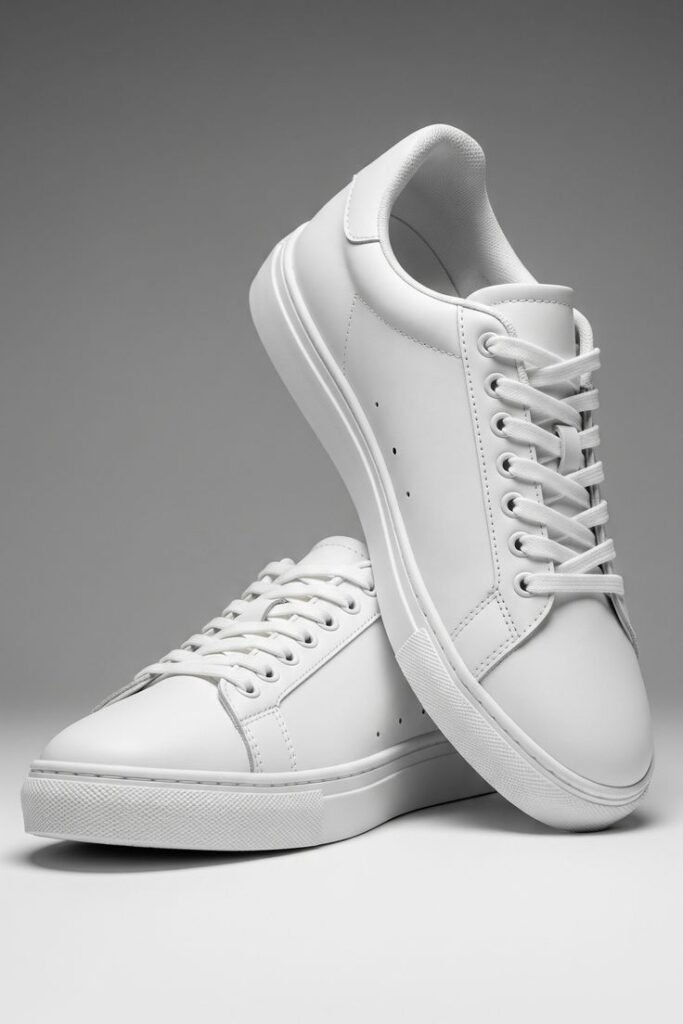
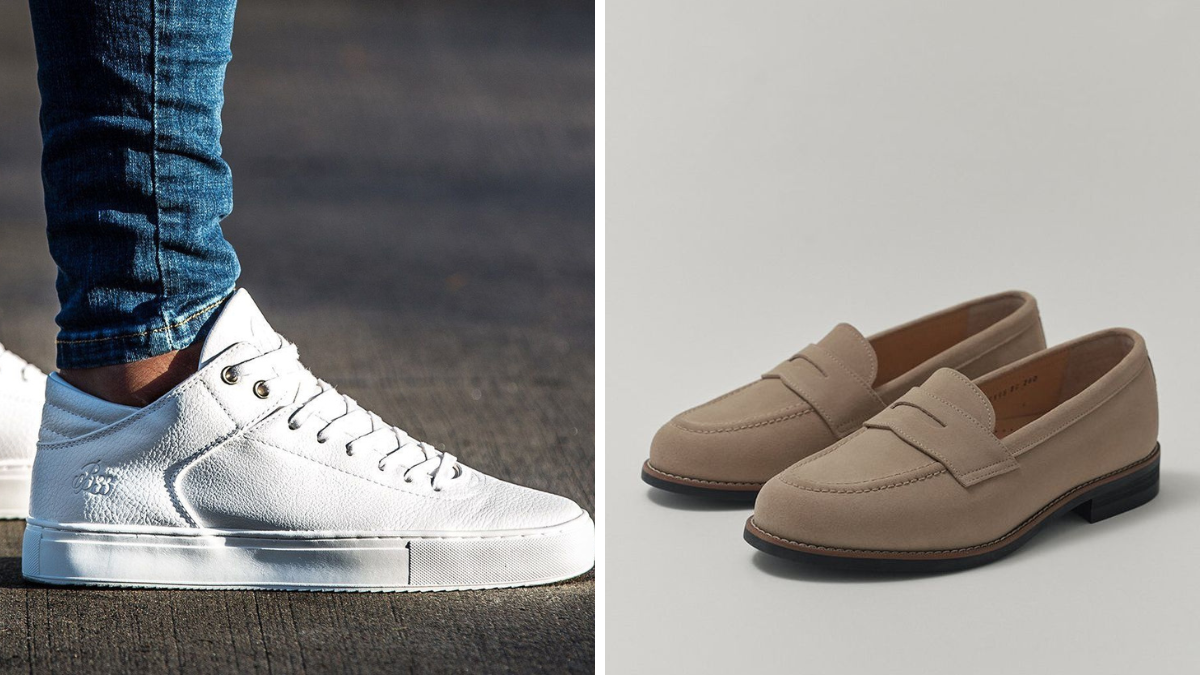
What they are: Clean, minimal, low-profile white leather trainers. Not chunky dad shoes. Not heavily branded streetwear. Just a sleek, well-made white leather trainer with a simple silhouette.
Why every man needs them: White leather trainers are the most versatile casual shoe in existence. They work with straight-leg jeans, chinos, casual trousers, shorts, and — in the right context — even tailored trousers for a smart casual occasion. They signal that you are neither trying too hard nor giving up entirely. They are the footwear equivalent of a white T-shirt: simple, effective, and irreplaceable.
In your 20s, you might have cycled through hyped sneaker releases. In your 30s, a single pair of clean white leather trainers does more work than a rotating roster of limited drops.
What to look for:
- Leather or high-quality leather-look upper (not canvas or mesh — they age poorly and look cheap faster)
- A low, slim profile — the slimmer the sole, the more versatile the shoe
- Minimal branding — a small logo is fine; a large branded tongue or heel tab limits outfit combinations
- A sole that can be cleaned easily
What to spend: £80–£300. Adidas Stan Smith and Adidas Gazelle sit at the accessible end and are genuinely excellent. Veja V-10 and New Balance 574 offer a slightly more premium feel at £100–£130. Common Projects Achilles Low at £300–£350 is the benchmark for the category — a true investment piece.
How to wear them:
- With straight-leg dark jeans and a white Oxford shirt — effortless smart casual
- With chinos and a polo — relaxed weekend confidence
- With tailored trousers and a crewneck knit — modern and considered
- With shorts and a simple tee — summer staple
Care tip: Buy a sneaker cleaning kit (Jason Markk or Crep Protect are both excellent) and clean them weekly. A worn, yellowed pair of white trainers looks like neglect. A clean pair looks like style.
Common mistake: Wearing white trainers in contexts that call for a leather shoe — formal dinners, job interviews, smart weddings. Versatile does not mean universal.
2. Chelsea Boots — The Smartest Thing in Your Shoe Wardrobe
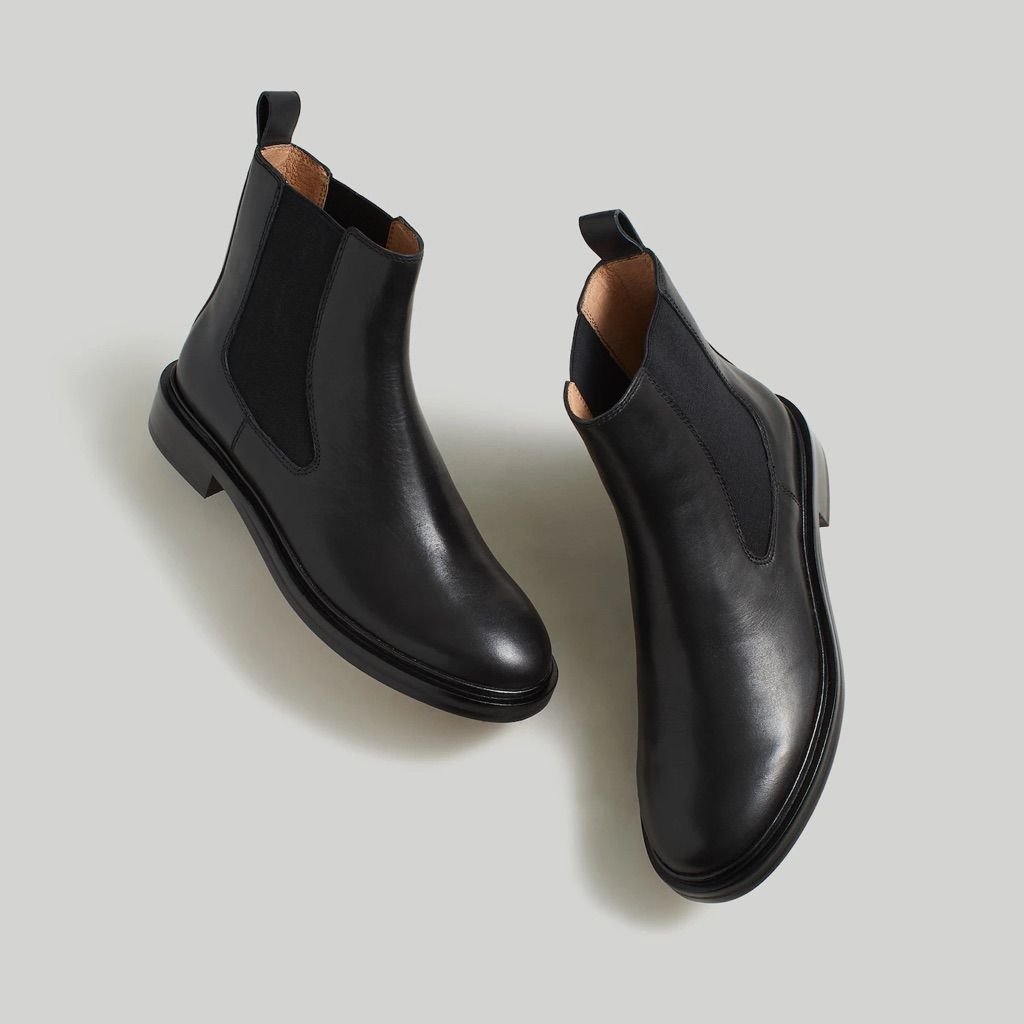
What they are: A pull-on ankle boot with an elastic side panel and no laces, typically in leather, with a low to moderate heel and a clean, uncluttered silhouette.
Why every man needs them: The Chelsea boot is, without question, the most important leather shoe a man in his 30s can own. It lives at the intersection of casual and formal in a way almost no other shoe achieves. It elevates jeans instantly. It works with tailored trousers without the formality of a full Oxford. It pairs with a suit. It handles smart casual events, evening occasions, job interviews, and most things in between with complete ease.
If white trainers are your casual foundation, Chelsea boots are your dressed-up anchor. Together, these two pairs alone solve roughly 70% of a man’s footwear needs.
What to look for:
- Full leather construction — synthetic uppers look cheap within months
- A slim to moderate heel (avoid anything too stacked or too flat)
- A toe shape that suits your preference — a slight almond or pointed toe reads more fashion-forward; a rounder toe is more classic and enduring
- Goodyear welted construction if possible — it means the sole can be replaced, extending the life of the boot significantly
- Colour: tan/cognac for maximum versatility; black for more formal dressing
What to spend: £120–£350. Clarks’ Chelsea range offers excellent value at the entry point. Thursday Boot Company, Grenson, and R.M. Williams deliver outstanding quality in the mid-to-premium range. A good pair of Chelsea boots bought once and maintained well will outlast ten cheap pairs.
How to wear them:
- With straight dark jeans and a blazer — the definitive smart casual men’s look
- With tailored chinos and a white Oxford — polished, authoritative, and easy
- With a wool suit — replace the traditional Oxford shoe for a more modern formal look
- With slim cords or casual trousers and a knitwear layer — relaxed but clearly considered
Care tip: Use a leather conditioner every few months and a matching shoe polish when scuffs appear. Store with cedar shoe trees — they maintain the shape, absorb moisture, and prevent creasing.
Common mistake: Buying Chelsea boots with a synthetic upper to save money. They crease, peel, and look worn within months. Leather only.
3. White or Tan Oxford Dress Shoes — For When It Actually Matters
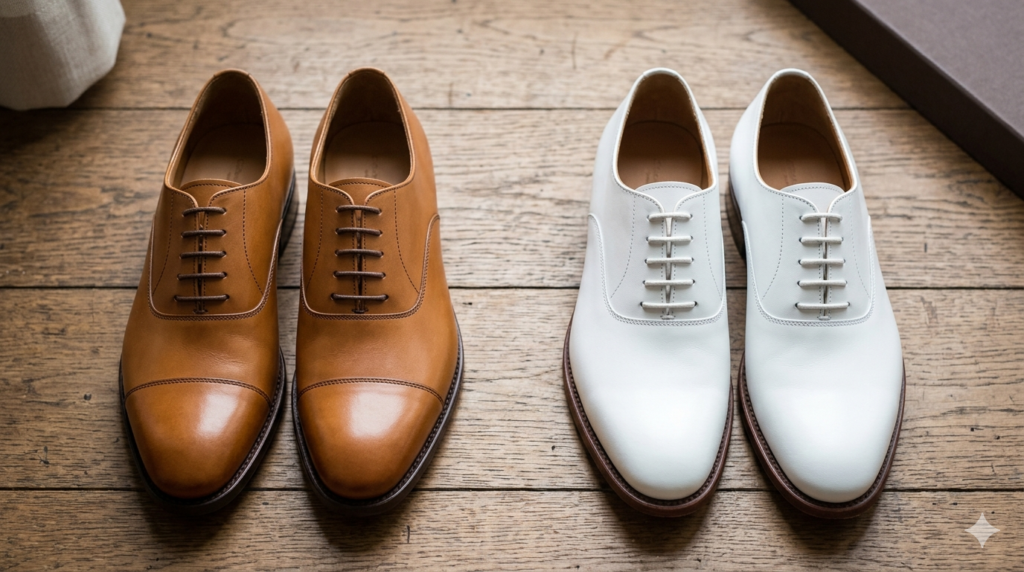
What they are: A formal lace-up leather shoe with a closed lacing system — the laces feed through eyelets set beneath the vamp, creating a clean, sleek line. The most formal shoe silhouette in classic menswear.
Why every man needs them: There are moments in every man’s life that require dressing properly. A job interview. A formal wedding. A black tie event. A funeral. A significant dinner. These are not the moments to improvise with smarter-than-usual trainers or lean on your Chelsea boots. These are the moments a pair of quality Oxford shoes makes the difference between looking prepared and looking like you almost made it.
Most men buy dress shoes reactively — the week before a wedding — and end up with a mediocre pair that never gets worn again. The smarter move is owning one excellent pair that you maintain and reach for whenever the occasion demands.
What to look for:
- Full leather upper and leather sole if possible (Goodyear welted is ideal)
- A clean, minimal design — avoid heavy brogueing for a first pair; a plain cap toe is the most versatile
- Black for maximum formality; dark tan or chocolate brown for smart casual formal
- A last (the shape) that suits your foot — neither too pointed nor too square
What to spend: This is worth genuine investment. £150–£400. Brands like Loake, Church’s, Grenson, and Tricker’s represent outstanding British shoe-making heritage. Second-hand Church’s or Crockett & Jones at a fraction of retail is an excellent strategy.
How to wear them:
- With a well-fitted suit — the default formal combination that never fails
- With tailored trousers and a blazer — elevated smart casual for important occasions
- With dark jeans and a pressed shirt — a high-effort smart casual look that earns real attention
Care tip: Rotate your Oxford shoes — never wear them two days in a row. Leather needs 24 hours to breathe and recover. Use shoe trees every time. Polish them before every significant occasion and condition them twice a year.
Common mistake: Relegating dress shoes to the back of the wardrobe until they’re needed urgently, then discovering they’re cracked, unconditioned, or have a damaged sole. Maintain them now; they’ll be there when it matters.
4. Loafers — The Smartest Casual Shoe You’re Probably Ignoring
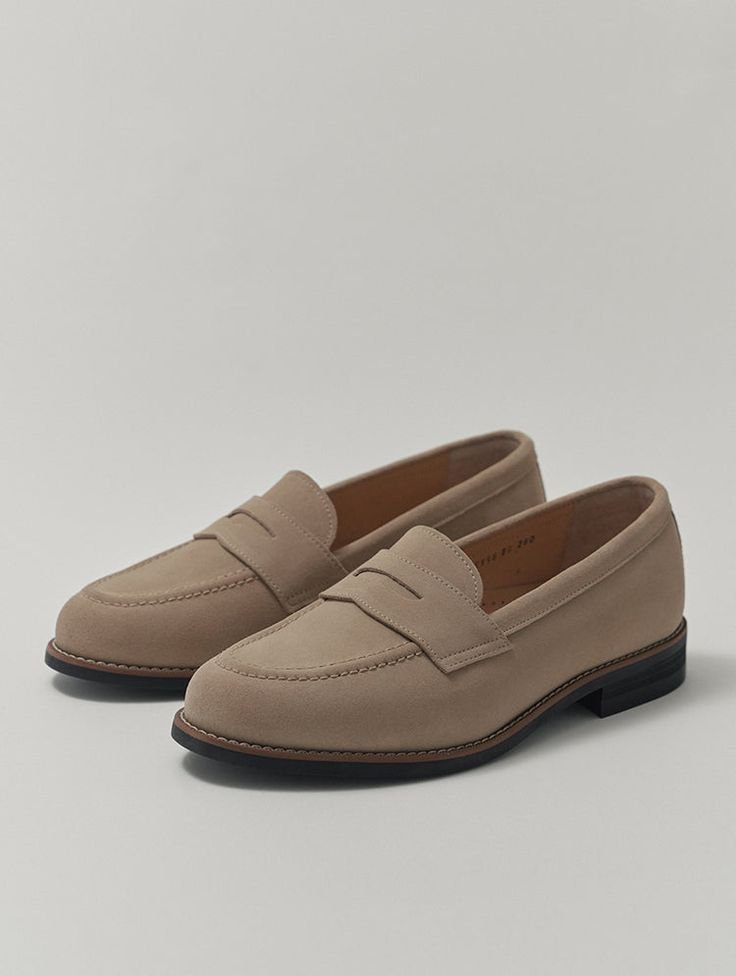
What they are: A slip-on leather shoe with no lacing, typically with a moccasin construction, available in penny loafer, tassel, or horsebit styles. The most effortlessly stylish shoe in a man’s arsenal when worn correctly.
Why every man needs them: Loafers occupy a unique position in the men’s footwear landscape that neither trainers nor boots can fill. They are relaxed enough to wear with jeans on a casual Friday but polished enough to wear with a suit to a smart occasion. They are the shoe that makes an outfit look nonchalant and considered at the same time — which is arguably the highest compliment you can give any piece of menswear.
More to the point, loafers are increasingly worn sockless or with no-show socks in warmer months — creating a clean, bare-ankle line that looks contemporary and deliberate. For summer dressing in particular, a loafer does things no other shoe can.
What to look for:
- Leather upper — suede loafers are beautiful but require more careful maintenance
- A classic penny loafer or horsebit style for the most versatile option
- Colours: tan, cognac, dark brown, and navy suede are all excellent
- A relatively slim profile — chunky loafers exist but the cleaner silhouette is more enduring
What to spend: £100–£250. Bass Weejuns are the classic American penny loafer at an accessible price point. Paraboot, G.H. Bass, and Tod’s represent various tiers of the premium market. A quality loafer is a long-term purchase.
How to wear them:
- With cropped or cuffed chinos and no-show socks — the definitive summer smart casual look
- With wide-leg linen trousers and a camp collar shirt — elevated resort dressing
- With dark jeans and a smart knit — easy evening wear
- With a light suit and no tie — the most sophisticated no-effort formal look
Care tip: Suede loafers need a suede brush and protector spray; leather loafers need conditioner and polish like any leather shoe. Stuff them with newspaper or shoe trees between wears to maintain shape.
Common mistake: Wearing loafers with socks that show. Either go sockless (or no-show socks) to maintain the clean ankle line, or embrace a visible sock as a deliberate style choice — a patterned sock with a loafer can look excellent. What doesn’t work is an accidental sports sock poking out of the shoe.
5. A Quality Casual Boot — For When the Weather Turns
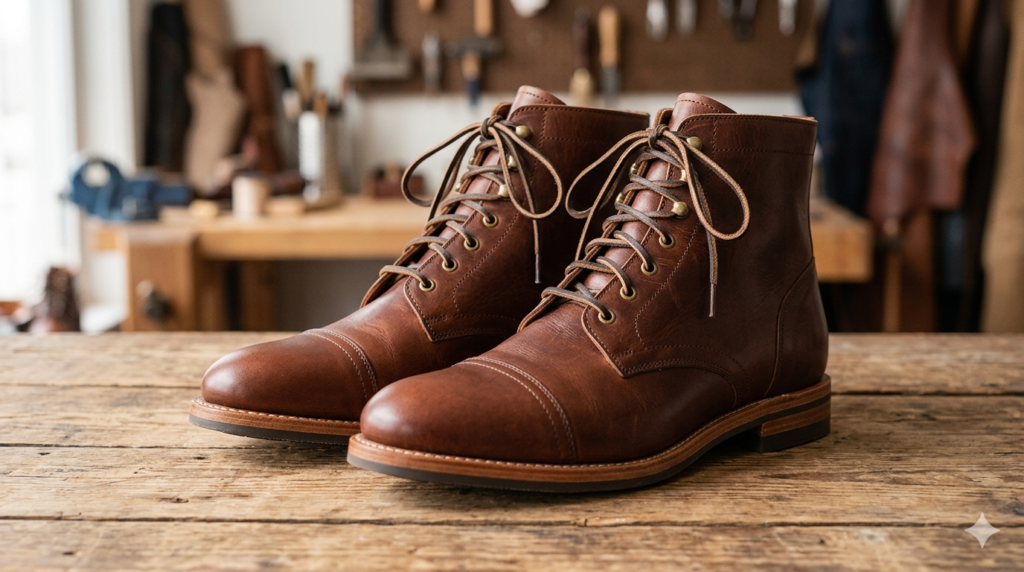
What they are: A durable, casual leather or suede ankle boot designed for everyday use in less-than-perfect weather. Desert boots, chukkas, work boots, or rugged leather ankle boots fall into this category.
Why every man needs them: White trainers handle fair-weather casual. Chelsea boots handle dressed-up occasions. But every man in a country with actual weather needs a boot that can handle cold pavements, light rain, weekend walks, and the general roughness of real life without looking like you’ve dressed for a hiking expedition.
A quality casual boot — especially in a crepe-soled desert boot or a sturdy leather work boot — fills the gap between the refined Chelsea and the everyday trainer in a way that feels entirely natural and masculine.
What to look for:
- Leather or suede construction — rubber-soled boots for weather resistance; crepe-soled for that classic desert boot aesthetic
- A clean, uncluttered silhouette — chunky lugged soles and heavy hardware lean more workwear than wardrobe staple
- Colours: tan, sand, chestnut brown, or olive leather work with the widest range of outfits
- Ankle height — a mid-ankle boot is the most versatile; anything above the ankle starts limiting outfit options
What to spend: £100–£250. Clarks Desert Boot (an icon for good reason), Red Wing Iron Rangers, Blundstone, and Thursday Boot Company all offer excellent options across the price spectrum.
How to wear them:
- With dark straight jeans, a heavy knit, and a wool coat — the definitive autumn look
- With cargo trousers or chinos and an overshirt — relaxed weekend confidence
- With a corduroy jacket and rolled jeans — effortless textural dressing
- With slim trousers and a crew-neck sweatshirt — casual but clearly considered
Care tip: Suede versions need a suede protector spray before first wear and re-application every few months. Leather versions need a waterproofing wax (Nikwax or Sno-Seal are both excellent). Clean mud and dirt immediately after wearing — don’t let it set.
Common mistake: Treating casual boots as indestructible. Even the most durable boots benefit from regular cleaning and conditioning. Neglected suede in particular looks bad quickly.
Mini Shoe Guide: Getting the Most From 5 Pairs
The Outfit-to-Shoe Matrix
| Occasion | Best Shoe Choice |
|---|---|
| Casual weekend | White leather trainers |
| Smart casual dinner | Chelsea boots or loafers |
| Office / work | Chelsea boots or Oxford shoes |
| Formal event / wedding | Oxford dress shoes |
| Cold weather / outdoors | Casual boot |
| Summer smart casual | Loafers (sockless) |
| Job interview | Oxford shoes or Chelsea boots |
| Date night | Chelsea boots or loafers |
How to Build Your Shoe Wardrobe Step by Step
If you’re starting from scratch or rationalising what you own:
- White leather trainers first — they handle daily casual wear immediately
- Add Chelsea boots — this combination alone covers most occasions
- Invest in Oxford shoes — for the formal occasions that demand them
- Add loafers — this unlocks a whole range of smart casual combinations, especially in warmer months
- Complete with a casual boot — this handles cold weather and rough conditions without compromising style
Shoe Care Essentials Every Man Should Own
- Cedar shoe trees — for every leather and suede pair. Non-negotiable.
- Leather conditioner — Leather Honey or Saphir Renovateur are both excellent
- Shoe polish — in colours that match your leather shoes
- Suede brush and eraser — for suede loafers and desert boots
- Sneaker cleaning kit — Jason Markk or Crep Protect
- Waterproofing spray — for suede and casual boots
- Soft polishing cloths — old T-shirt fabric works perfectly
The truth about shoe care: A £100 pair of well-maintained shoes looks better than a £400 pair that’s been neglected. Shoe care is not optional if you want footwear to work for you.
Common Shoe Mistakes Men Make
- ✕ Buying the wrong size — many men wear shoes half a size too large. Your shoe should hold your foot firmly without pinching; there should be a thumb’s width of space at the toe, no more
- ✕ Ignoring the heel counter — a shoe should hold your heel firmly with no slipping. Heel slip causes blisters and destroys the back of the shoe
- ✕ Wearing leather shoes two days in a row — leather needs rest. Rotate your pairs
- ✕ Buying cheap formal shoes — nothing undermines a suit faster than cheap leather with a plastic sole. One good pair beats three bad ones
- ✕ Neglecting sole maintenance — resole leather shoes before the welt is damaged. A good cobbler can restore an excellent pair; they can’t save a destroyed one
- ✕ Wearing the wrong shoe for the occasion — trainers at a formal dinner, dress shoes at a casual BBQ. Context is part of style
Frequently Asked Questions
What are the most essential shoes every man should own?
The five most essential pairs are white leather trainers (for daily casual wear), Chelsea boots (for smart casual and evening), Oxford dress shoes (for formal occasions), loafers (for effortless smart casual, especially in summer), and a quality casual boot (for cold and rough weather). These five pairs cover every occasion in a man’s life without overlap or redundancy.
How much should a man spend on shoes?
Spend in proportion to how often you’ll wear them and how long they need to last. White trainers: £80–£200. Chelsea boots: £120–£300. Oxford shoes: £150–£400. Loafers: £100–£250. Casual boots: £100–£250. The rule of cost-per-wear almost always favours spending more on quality footwear you’ll wear regularly.
How do I make my shoes last longer?
Use cedar shoe trees in leather shoes after every wear. Rotate pairs — never wear the same leather shoe two days consecutively. Clean and condition leather every few months. Polish before major occasions. Resole before the damage reaches the welt. Treat suede with protector spray before first wear. Store in a cool, dry place away from direct sunlight.
What colour shoes are most versatile for men?
Tan or cognac brown leather is the most versatile colour across Chelsea boots, Oxfords, and loafers — it pairs with navy, grey, camel, olive, and most neutral tones. White works for trainers specifically. Black is more formal and less flexible day-to-day. If you own one pair of leather shoes, make them tan or cognac.
Are expensive shoes worth it for men?
Yes — for leather shoes specifically. Quality leather shoes (Goodyear welted construction in particular) can last decades with proper care. A £300 pair resoled three times over fifteen years costs far less per wear than a £70 pair replaced annually. Invest in leather shoes and boots. Be more price-flexible on trainers and casual shoes where quality tiers are less dramatic.
Conclusion
Five pairs. That’s all it takes to have a complete, considered shoe wardrobe that handles every occasion with confidence. White leather trainers for your daily life. Chelsea boots for when it needs to look sharp. Oxford dress shoes for when it genuinely matters. Loafers for effortless warm-weather style. A rugged casual boot for when the weather and the moment call for it.
The men who dress best from the feet up are not the ones with the most shoes. They are the ones who own the right five, maintain them properly, and understand which pair belongs to which moment. Build the foundation. The rest is easy.
Read also:
- The Only 3 Belts a Man Needs (And How to Wear Each One)
- The Best Casual Jackets for Men to Own Right Now
- How Many Suits Does a Man Actually Need?