15 Winter Outfit Ideas for Men That Are Stylish and Warm
Most men treat winter dressing as a problem to solve rather than an opportunity to use. That’s a mistake. The cold months actually give you the best toolkit in menswear — layering, rich textures, wool, leather, and outerwear that can make or break an entire look. The truth is, winter outfit ideas for men that are both stylish and warm are easier to put together than most guys think. You just need to know which combinations work and which pieces are worth investing in.
In this guide, you’ll find 15 fully broken-down winter outfits for men, complete with layering advice, fabric recommendations, body type guidance, and when to wear each look. Whether you’re navigating a cold commute, a winter date night, a smart casual office, or a weekend in the city, there’s a look here that delivers on both warmth and style.
1. Overcoat + Roll-Neck + Tailored Trousers
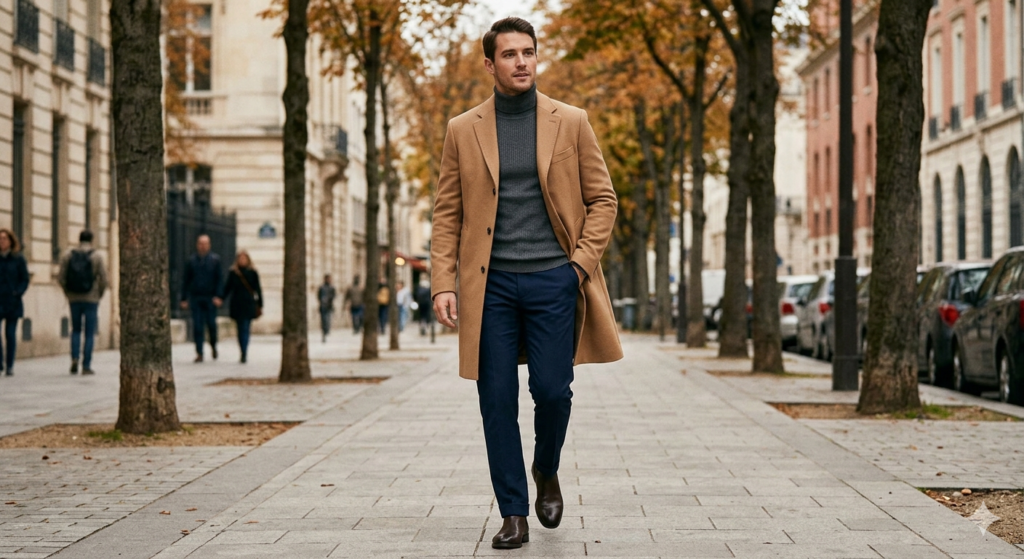
The Outfit: Long wool overcoat (camel, charcoal, or navy) + slim ribbed roll-neck (black or grey) + tailored straight-leg trousers + leather Chelsea boots
This is the gold standard of winter dressing for men. A long wool overcoat over a slim roll-neck and tailored trousers is one of those combinations that looks expensive regardless of what you actually spent. The silhouette is long and lean, the layering is minimal and deliberate, and every element serves a purpose.
The roll-neck does the work of a shirt and a scarf simultaneously — it keeps your neck warm while keeping the look clean under the coat. No visible collar, no clutter.
Choose an overcoat that falls to mid-thigh or below. Length equals elegance here, and a longer coat creates that sweeping silhouette that makes this outfit so striking in cold weather.
- Best for: All builds; especially striking on medium to tall frames
- Season: Winter, late Autumn
- When to wear: Work commutes, smart casual evenings, city days, dates, any occasion where you want to look effortlessly sharp
2. Shearling Jacket + Dark Jeans + Chelsea Boots
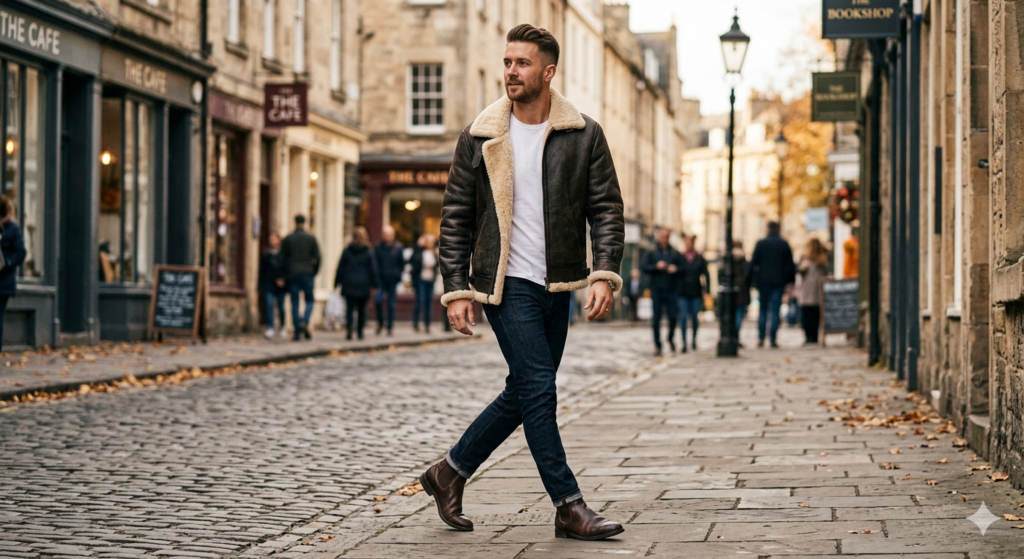
The Outfit: Shearling or sherpa-lined leather jacket + dark indigo or black slim jeans + plain grey or white crewneck tee + leather Chelsea boots
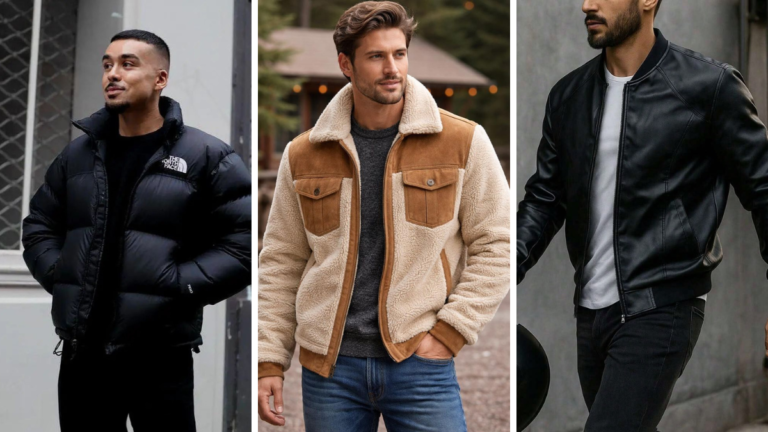
The shearling jacket is a winter wardrobe piece that solves the eternal problem of looking stylish without sacrificing warmth. The shearling lining provides genuine insulation while the leather exterior gives the jacket a rugged, premium feel that gets better with wear.
Keep everything else in the outfit simple and dark. The jacket is the statement piece — it doesn’t need competition. A plain tee or crewneck, dark jeans, and clean Chelsea boots keep the focus exactly where it should be.
Look for shearling that sits close to the body across the shoulders. A good shearling jacket should feel structured, not bulky. The collar up in the wind is both a practical and stylish move.
- Best for: Athletic and medium builds especially; adds presence on slim frames
- Season: Winter, cold Autumn
- When to wear: Casual weekend outings, evening socialising, day trips, cold-weather city exploring
3. Chunky Knit Sweater + Slim Chinos + Derby Shoes
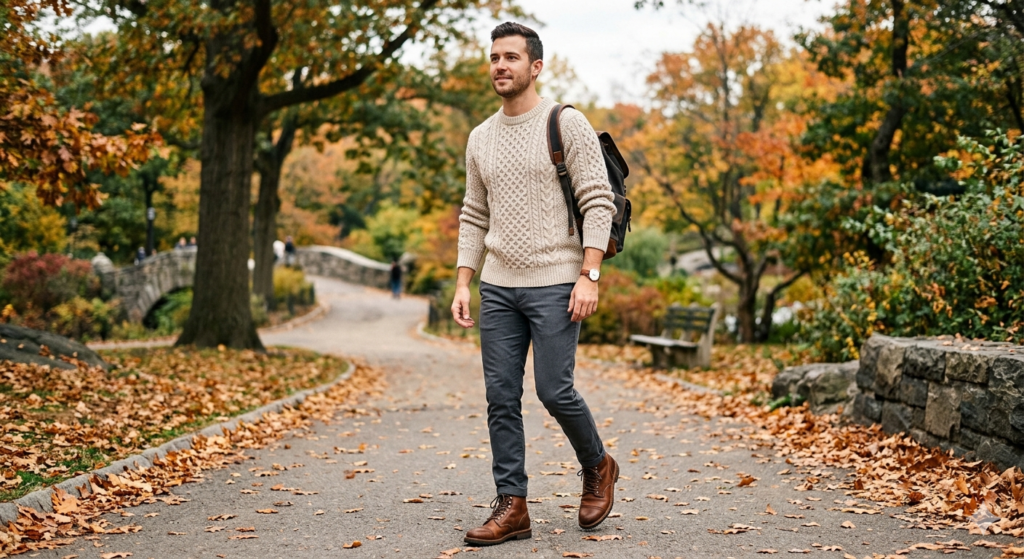
The Outfit: Heavyweight or cable-knit crewneck sweater (oatmeal, navy, or forest green) + slim chinos (charcoal or navy) + brown leather derby shoes or boots
A chunky knit sweater is winter’s most versatile piece. It provides real warmth through fabric weight alone, looks visually rich thanks to the texture, and works equally well in casual and smart-casual contexts depending on what you pair it with.
Slim chinos keep the bottom half clean and proportional — the bulk of the knit on top needs a slimmer silhouette below to maintain balance. Brown leather derby shoes add a classic, timeless finish that works beautifully against the natural tones of a thick knit.
Tuck the front of the sweater lightly into the chinos or leave it fully untucked — both work. Avoid wearing it baggy and untucked with wide trousers; the proportions collapse.
- Best for: All builds; especially good at adding visual weight to slim frames
- Season: Winter, Autumn
- When to wear: Office-casual days, weekend errands, casual dinners, everyday winter wear
4. Puffer Jacket Done Right
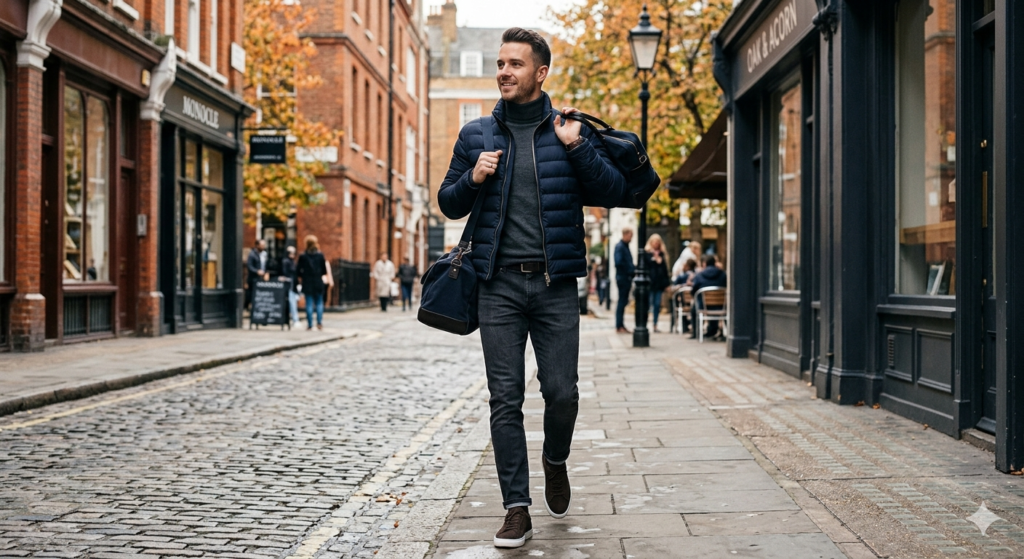
The Outfit: Slim or tailored-fit puffer jacket (not oversized) + slim dark trousers or jeans + merino crewneck or turtleneck + clean leather or suede trainers
The puffer jacket has a style reputation problem, but it’s entirely fixable. The issue is almost always fit — most men wear puffer jackets that are far too large, which creates a shapeless, bulky silhouette that reads more sleeping bag than outerwear.
A slim or tailored-fit puffer jacket changes everything. It provides the same warmth but maintains the shape of your body underneath. Pair it with slim dark trousers or fitted jeans, a thin merino layer underneath, and clean footwear. No chunky trainers, no baggy bottoms.
Stick to neutral, matte colours: black, navy, olive, or charcoal. Shiny or brightly coloured puffer fabrics are the second biggest issue after fit.
- Best for: All builds; slim-fit is key regardless of body type
- Season: Winter, cold Autumn
- When to wear: Everyday cold-weather use, commutes, outdoor occasions where warmth is the priority
5. Wool Blazer + Flannel Trousers + Turtleneck
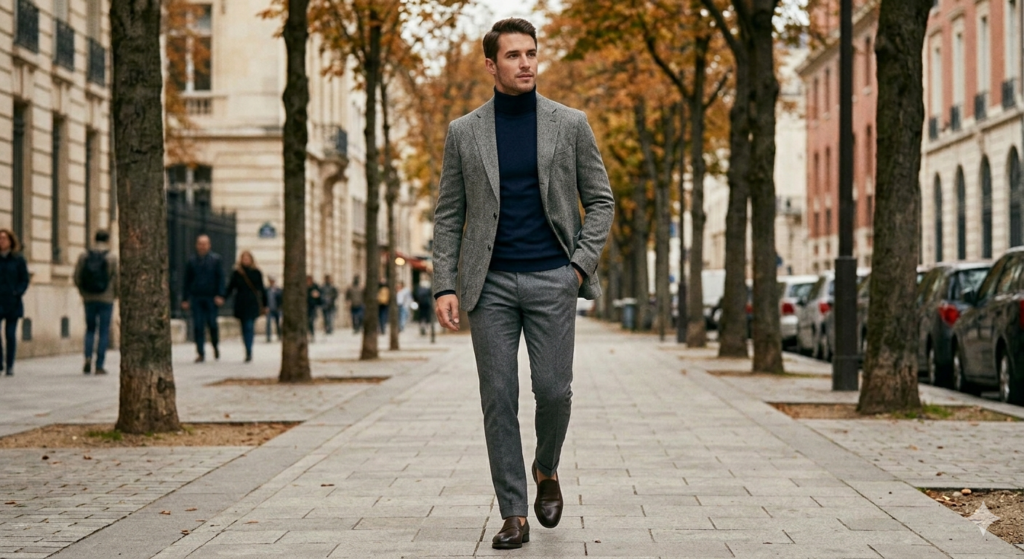
The Outfit: Tweed or wool blazer (herringbone, houndstooth, or plain) + flannel or wool slim trousers + fine-knit turtleneck (black, navy, or grey) + leather loafers or derby shoes
This is one of winter’s most underused combinations and one of its strongest. Replacing the traditional dress shirt and tie with a fine-knit turtleneck under a wool blazer is a modern, considered take on smart dressing that feels both warm and genuinely stylish.
The flannel or wool trouser adds a further layer of warmth and texture that standard cotton chinos simply can’t match in winter. The whole outfit becomes a study in complementary textures — smooth turtleneck, textured blazer, soft flannel trouser.
This is smart-casual territory that can push into business-casual depending on the blazer. Keep the turtleneck slim and fitted — a bulky knit under a blazer creates unwanted volume.
- Best for: Slim to medium builds
- Season: Winter, cool Autumn
- When to wear: Creative offices, smart dinners, gallery events, meetings where jeans feel too casual
6. Peacoat + Jeans + Leather Boots
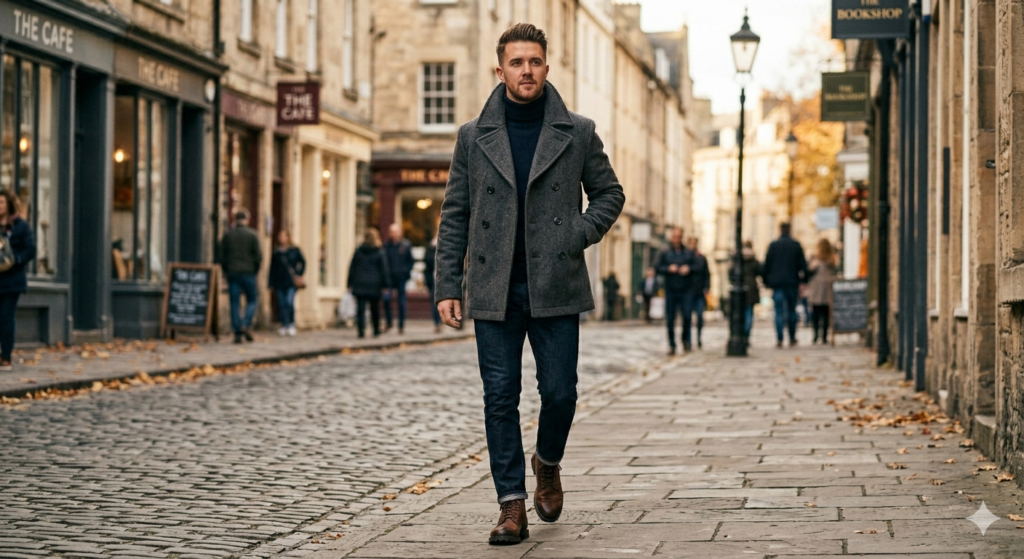
The Outfit: Double-breasted wool peacoat (navy, charcoal, or black) + slim or straight dark jeans + chunky leather boots (lace-up or side-zip) + crewneck or light roll-neck underneath
The peacoat is one of menswear’s most enduring winter pieces for good reason. It’s warm, structured, and looks sharp with minimal effort. The double-breasted front, broad lapels, and cropped-to-hip length give it a distinctly nautical heritage that translates beautifully into modern winter dressing.
Pair it with dark jeans and leather boots for the most reliable cold-weather casual formula there is. Let the peacoat do the heavy lifting — keep what’s underneath simple and fitted.
The key fit consideration: a peacoat should sit firmly at the shoulder with room for a light to mid-weight layer underneath. Too tight and it restricts movement; too loose and it loses its clean silhouette.
- Best for: All builds; particularly striking on athletic and medium frames
- Season: Winter, Autumn
- When to wear: Everyday casual, weekend outings, commutes, casual to smart-casual occasions
7. Layered Knits: Crewneck Over Collared Shirt
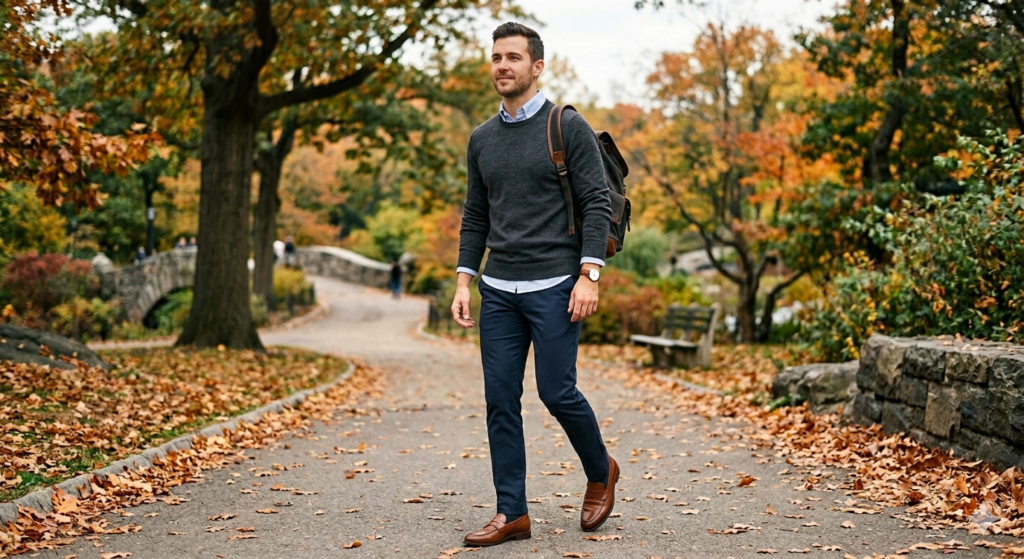
The Outfit: Fine-knit crewneck sweater (worn over) + Oxford or OCBD collared shirt (collar and cuffs visible) + slim tailored trousers + loafers or clean leather trainers
This is one of winter’s most elegant layering formulas, and it works because the contrast between the casual knit and the formal collar creates visual interest without any effort. The shirt collar sitting above the crewneck neckline is a small styling detail that immediately signals intentionality.
The shirt cuffs visible beyond the sweater sleeves are equally important — roll or fold them slightly so they show cleanly below the knitwear. This detail is what separates “guy in a sweater” from “guy who dresses well.”
Keep the shirt in classic colours: white, light blue, or Oxford stripe. The crewneck in a complementary neutral — grey, camel, navy.
- Best for: All builds
- Season: Winter, Autumn
- When to wear: Office-casual days, smart-casual occasions, dinners, any situation where you want to look polished without formal attire
8. Thermal Base Layer + Overshirt + Workwear Trousers
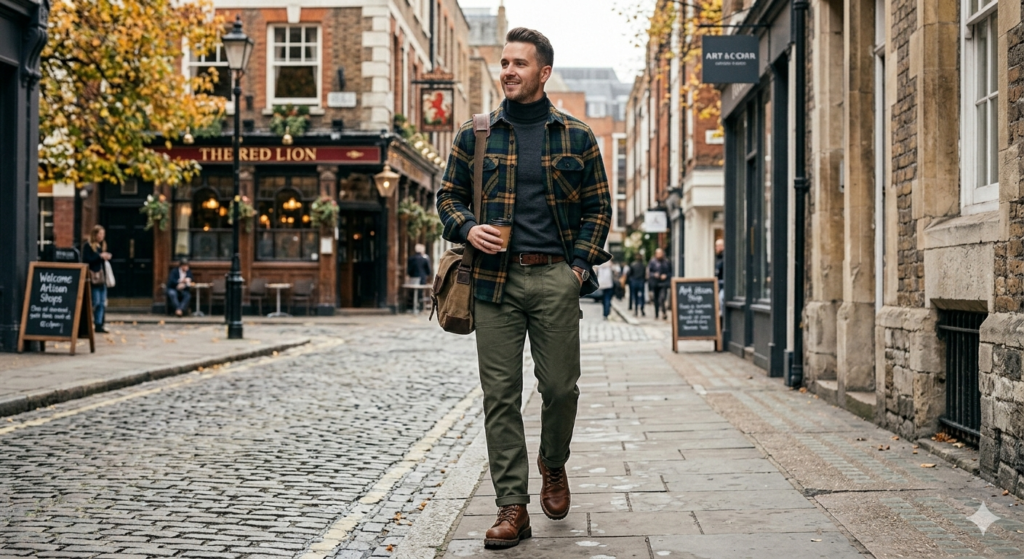
The Outfit: Thermal or merino long-sleeve base layer + heavyweight flannel or canvas overshirt + straight-cut workwear trousers (olive, tan, or charcoal) + chunky boots
This is a workwear-inspired winter outfit that looks deliberately rugged and considered at the same time. The layering here is genuinely functional: the thermal base layer traps body heat, the overshirt adds mid-layer warmth, and the workwear trousers are both durable and visual strong.
Wear the overshirt either fully buttoned or open over the base layer — both work. The base layer should be thin enough to sit completely flat under the overshirt without creating bulk.
Earth tones dominate this look: olive, tan, rust, and charcoal are the palette that makes it cohere. Add lace-up leather boots to tie the workwear aesthetic together.
- Best for: Athletic and medium builds; adds structure to slimmer frames
- Season: Winter, cold Autumn
- When to wear: Outdoor activities, weekend city exploring, casual creative environments, cold-weather travel
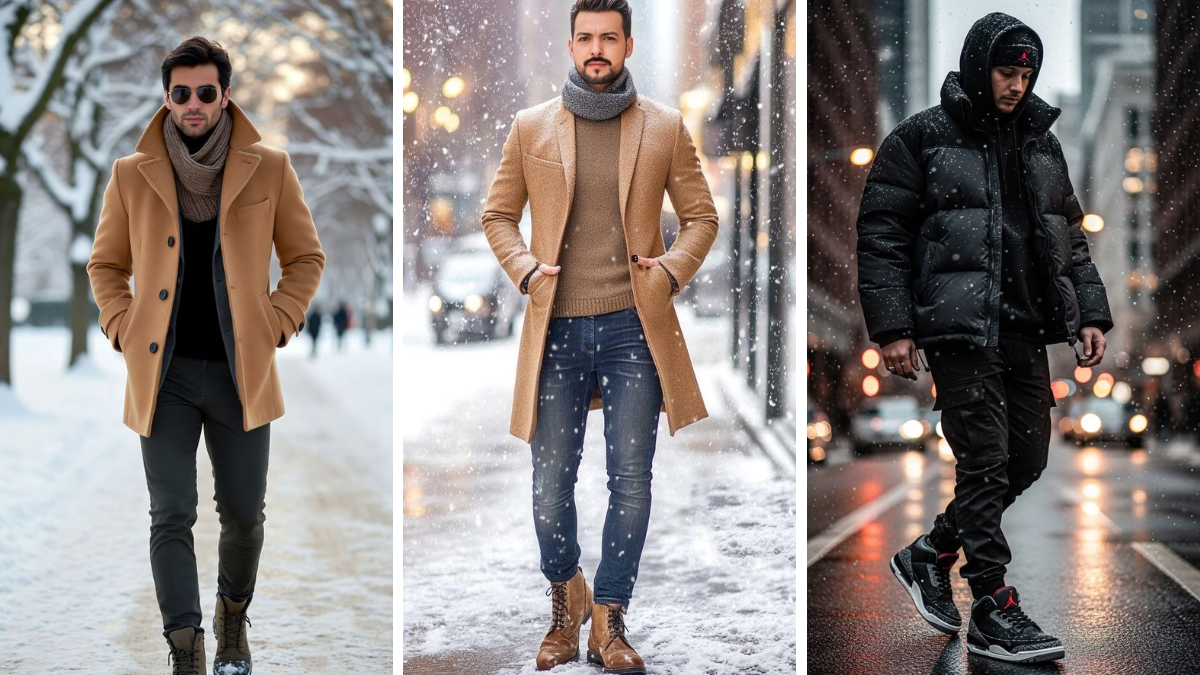
9. Camel Overcoat + All-Black Underneath
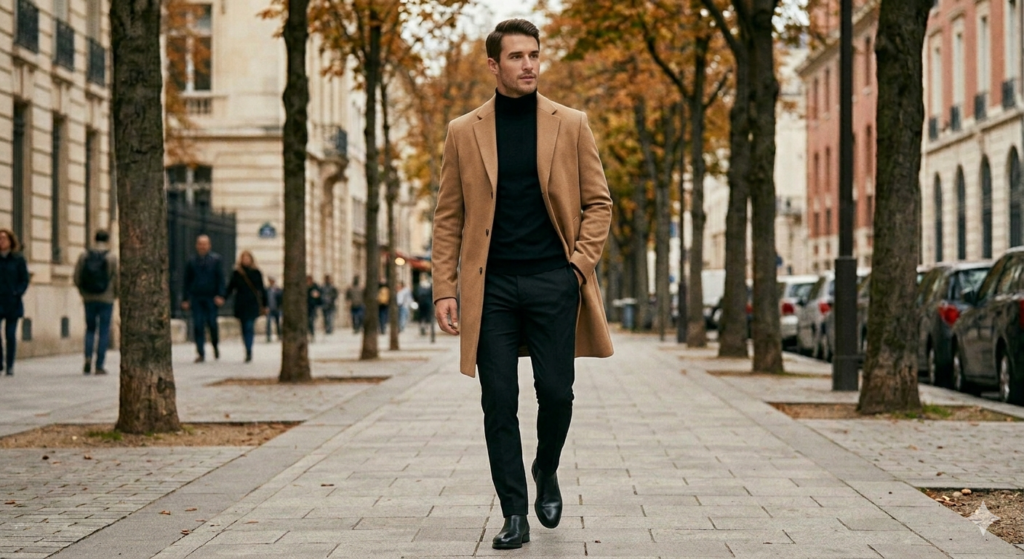
The Outfit: Camel wool overcoat + black slim trousers + black roll-neck or crewneck + black Chelsea boots
This is the winter outfit that photographs itself. The warm camel tone of the coat against an all-black outfit underneath creates one of the most visually powerful contrasts in cold-weather dressing. It’s bold without being loud, warm without being bulky, and it looks like you spent considerably more time on it than you did.
The all-black under-layer is deliberately simple — it exists to make the coat sing. Don’t add colour or pattern underneath. Let the contrast be the whole story.
A camel coat works on every skin tone and pairs with virtually every colour, which makes it the single most versatile outerwear investment a man can make.
- Best for: All builds; especially elongating on shorter frames
- Season: Winter, late Autumn
- When to wear: City days, smart casual evenings, work commutes, weekend outings — essentially anything
10. Leather Jacket + Hoodie + Dark Slim Jeans
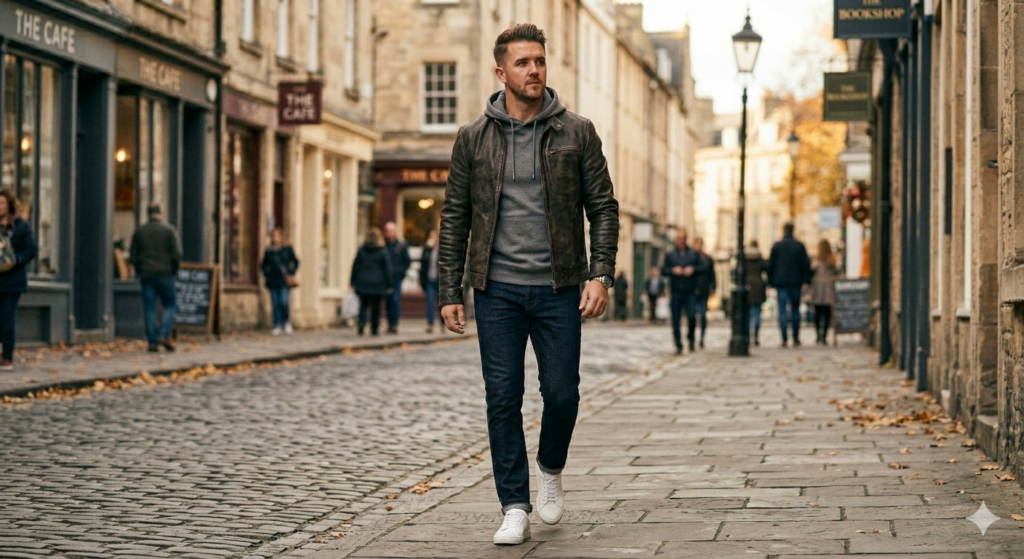
The Outfit: Slim leather jacket (black or dark brown) + plain fitted hoodie (grey or navy) + dark slim or straight jeans + white or black leather trainers or boots
Layering a leather jacket over a hoodie is a streetwear-rooted winter formula that looks genuinely cool when the proportions are right. The hoodie provides an extra layer of insulation while the leather jacket adds structure and edge to what would otherwise be a very casual look.
The key is fit: both the hoodie and the leather jacket need to be slim enough that the combination doesn’t create excessive bulk. The hoodie should fit close to the body, and the leather jacket should accommodate it without straining.
Keep the hood tucked in under the jacket collar. Letting it flop over looks untidy; a clean neckline keeps the look sharp.
- Best for: Slim and athletic builds
- Season: Winter, Autumn
- When to wear: Casual evenings, weekends, concerts, urban social settings
11. Smart Casual Winter: Knit Vest + Oxford Shirt + Wool Trousers
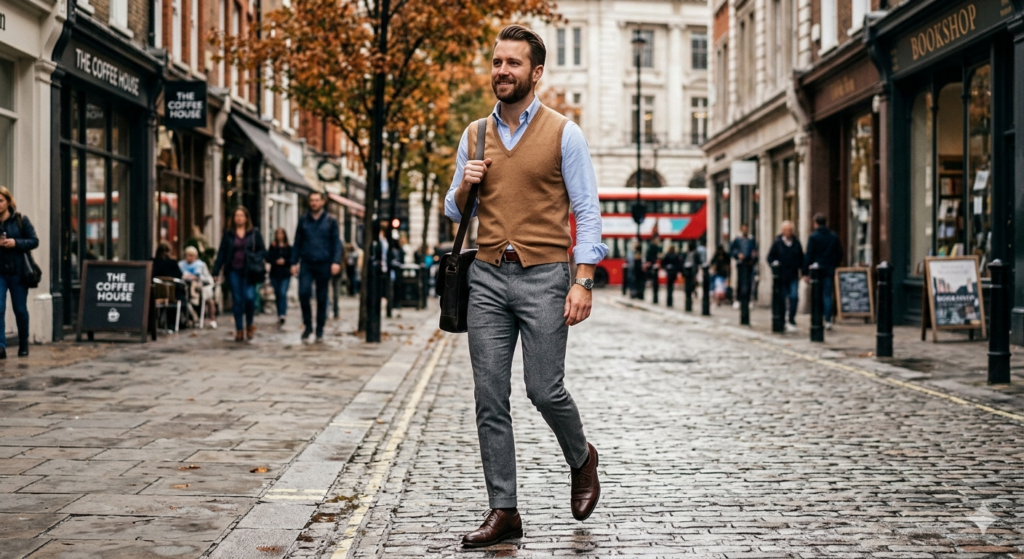
The Outfit: Fine-knit vest (V-neck, in grey, navy, or camel) + white or pale blue Oxford shirt (collar open, cuffs showing) + slim wool or flannel trousers + leather derby shoes or loafers
The knit vest trend has returned with force, and in winter it earns its place as a genuinely practical layering piece. A fine-knit vest over a crisp Oxford shirt adds warmth to the core without restricting arm movement — which is exactly what you want in an office or smart casual setting.
The open collar on the shirt and the visible cuffs below the vest sleeves keep the look relaxed despite its inherent polish. This is smart casual dressing that crosses the bridge between the office and an evening dinner without changing.
- Best for: Slim to medium builds
- Season: Winter, cool Autumn
- When to wear: Office-casual environments, business meetings, smart dinners, creative professional settings
12. Parka + Cargo Trousers + Chunky Boots
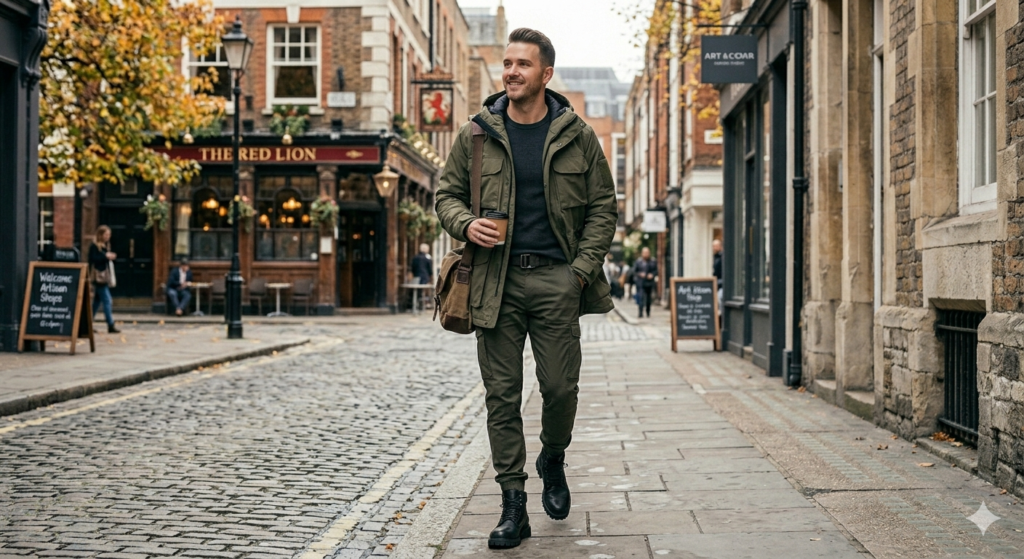
The Outfit: Military or urban parka (olive, khaki, or black) + slim-tapered cargo trousers + fitted crewneck or thermal tee + chunky leather or rubber-soled boots
The parka is one of winter’s most practical outerwear pieces — long enough to protect your lower body, warm enough to function in serious cold, and rugged enough to work in outdoor settings. Pairing it with slim-tapered cargo trousers and chunky boots creates a cohesive, utility-inspired winter look that’s built for real weather.
The secret to making this look intentional rather than purely functional is fit. Slim-tapered cargos rather than baggy ones, a fitted base layer rather than a bulky jumble underneath, and boots that have deliberate design detail rather than just being waterproof.
- Best for: Athletic and medium builds; the parka’s length suits most frames
- Season: Deep winter, cold rainy days
- When to wear: Outdoor activities, travel, cold-weather city exploring, practical winter days
13. Monochrome Winter Grey
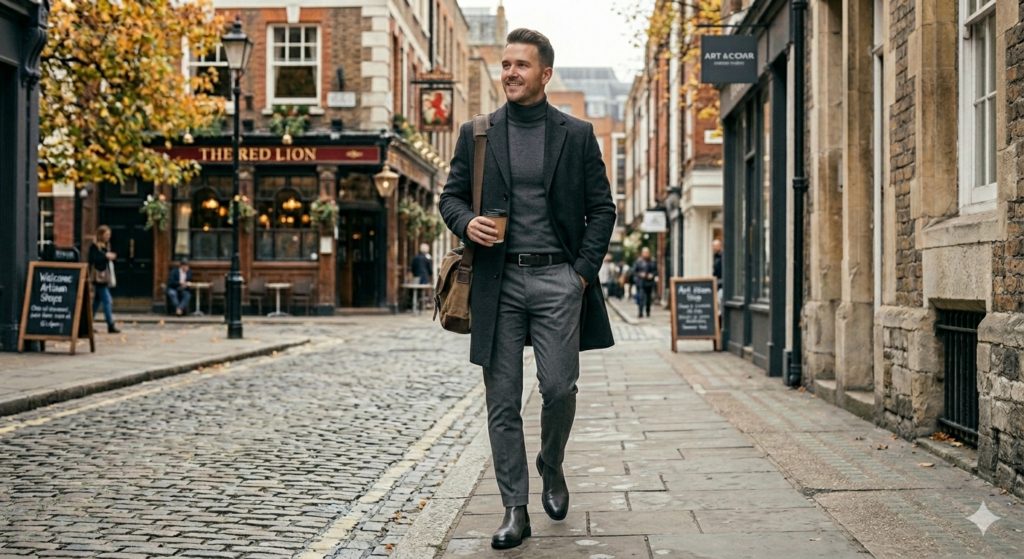
The Outfit: Charcoal or mid-grey slim trousers + grey fine-knit turtleneck or crewneck + grey or dark wool overcoat + dark grey or black Chelsea boots
Monochrome grey in winter is one of the most effortlessly sophisticated dressing strategies in men’s fashion. Grey is a colour that doesn’t demand attention — it simply looks inherently elegant, especially in winter when it echoes the season’s tonal palette.
The secret to making monochrome grey work is varying the shades and the textures. Charcoal trousers, mid-grey knitwear, and a darker wool coat sitting at slightly different points on the grey spectrum creates visual depth that a single flat tone cannot. Mix matte and textured fabrics for additional dimension.
- Best for: All builds; especially elongating on shorter frames when the palette runs top to bottom
- Season: Winter
- When to wear: City days, smart-casual occasions, evenings, work commutes — this look has wide reach
14. Merino Turtleneck + Wide-Leg Trousers + Loafers
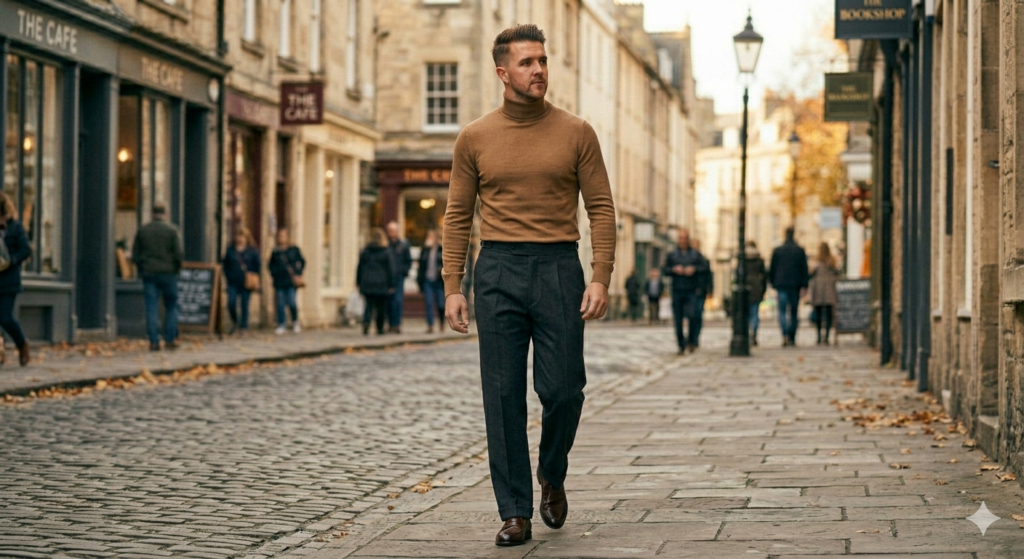
The Outfit: Slim merino turtleneck (black, navy, or camel) + wide-leg tailored trousers (wool or heavy cotton) + leather loafers + minimal accessories
This is a winter outfit that sits in its own lane — modern, quietly elevated, and deliberately shape-focused. The slim turtleneck tucked into wide-leg trousers creates a strong silhouette that feels fashion-forward without being costume-like.
Merino wool is ideal here because it’s warm without bulk, and a slim merino turtleneck disappears under the waistband of the trousers for a clean, seamless tuck. The loafers keep the look smart despite the relaxed trouser shape.
This outfit performs best in neutral or muted tones: camel + charcoal, black + grey, or navy + cream are particularly strong pairings.
- Best for: Slim builds especially; creates excellent visual balance
- Season: Winter, cool Autumn
- When to wear: Smart casual evenings, cultural events, dinners, creative professional settings
15. The Weekend Winter Coat Outfit
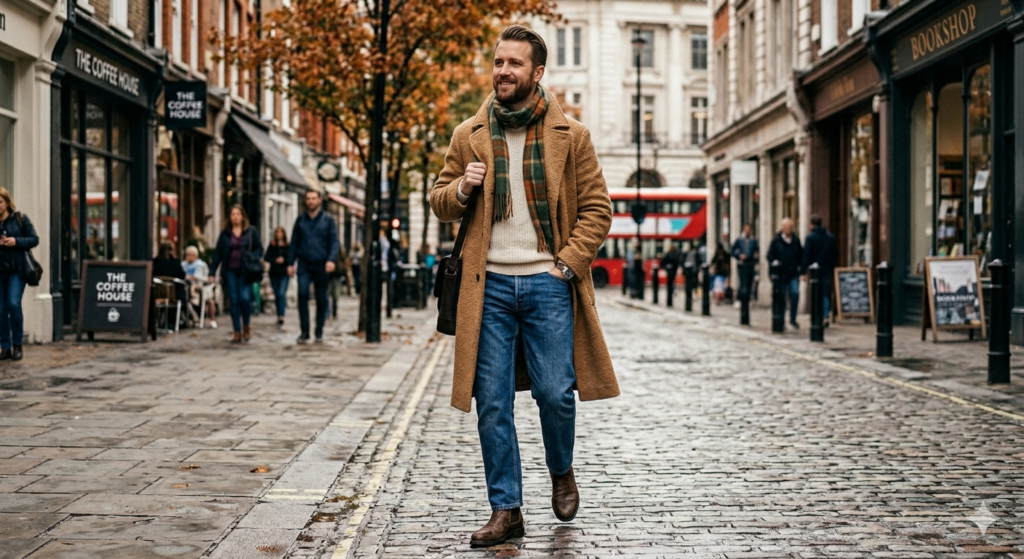
The Outfit: Long wool or bouclé coat (any neutral — camel, cream, or grey) + relaxed straight jeans + thick knit crewneck + leather boots or Chelsea boots + scarf
This is the winter weekend outfit in its most complete and reliable form. A long statement coat over relaxed jeans and a warm knit crewneck, finished with leather boots and a scarf — it’s simple, warm, and looks genuinely excellent with zero styling difficulty.
The coat length is important: mid-thigh to below-knee creates the elongated silhouette that makes this look so striking. The scarf adds both warmth and a textural layer that gives the outfit its final dimension.
This outfit is forgiving for most body types and requires minimal thought once the core pieces are in place. It’s the winter equivalent of throwing on a blazer and instantly looking better.
- Best for: All builds
- Season: Winter, cold Autumn
- When to wear: Weekend city days, casual outings, visiting friends, cold-weather errands that require looking good
Read also: How to Match Clothes Colors for Men (Beginner Guide)
Best Fabrics for Men’s Winter Outfits
The right fabric is the difference between looking good and actually being comfortable in the cold. Here’s what to prioritise:
- Wool: The undisputed king of winter fabrics. Naturally insulating, moisture-wicking, and durable. Applies to coats, blazers, trousers, and knitwear. Worth every penny.
- Merino wool: A finer, softer grade of wool that works beautifully in base layers and knitwear. Warm for its weight, non-itchy, and wrinkle-resistant. Ideal for turtlenecks and crewnecks worn close to the skin.
- Cashmere: Lightweight, incredibly warm, and the most luxurious of the natural fibres. A cashmere crewneck or turtleneck is a genuine investment that lasts years.
- Flannel: A brushed wool or cotton fabric with exceptional warmth and a soft, slightly napped texture. Excellent for trousers and shirts in winter.
- Leather and shearling: Leather blocks wind and looks exceptional. Shearling lining adds insulation. Both improve with age and wear.
- Heavy cotton canvas: Used in overshirts and workwear jackets, heavy cotton canvas provides mid-layer warmth with a rugged, durable aesthetic.
- Avoid: Thin synthetic fabrics, unlined polyester, and anything that doesn’t trap or retain heat. Looking stylish in a fabric that doesn’t keep you warm defeats the whole purpose.
Layering Tips for Winter Style
Layering is the core skill of winter dressing. These principles make it work every time:
- Build from thin to thick. Start with a close-fitting thermal or merino base layer, add a mid-weight knit or shirt layer, and finish with your outer layer. Each layer should be thinner than the one above it.
- Keep base layers slim. A bulky base layer creates lumps and bumps that distort every layer on top. Merino or thermal base layers should fit close to the body.
- Let details show. A shirt collar above a crewneck, cuffs below a sweater sleeve, a scarf tucked into a coat — these visible details communicate that you’ve layered intentionally, not just piled clothes on.
- Match coat length to the occasion. Long coats are more elegant and formal. Shorter jackets (peacoats, leather jackets) are more casual. Choose accordingly.
- Use accessories as functional style. A wool scarf, leather gloves, and a beanie aren’t just practical — they’re styling tools. Choose them in colours that complement your outfit rather than whatever’s closest to the door.
- Unbutton strategically. Leaving a coat unbuttoned to reveal a great knit or well-fitted layer underneath is always more interesting than everything done up. Give the outfit something to show.
Winter Style Mistakes to Avoid
These are the habits that undermine otherwise good winter outfits:
- Wearing too many thick layers at once. Three thin, well-fitted layers will always be warmer and look better than two thick, bulky ones. Bulk is the enemy of winter style.
- Ignoring fit in heavy outerwear. A coat that’s too big loses all its shape and elegance. The shoulder seam should still sit at the edge of your shoulder even with layers underneath.
- Wearing summer shoes in winter. Canvas sneakers, thin leather trainers, and suede loafers aren’t built for cold and wet weather. Invest in rubber-soled leather boots and weather-treated footwear for genuine winter use.
- Neglecting the base layer. The base layer is invisible but it’s where most of your warmth comes from. A good merino base layer under any winter outfit makes everything more comfortable without adding visible bulk.
- Over-accessorising. A scarf, hat, and gloves are all practical and can look great. A scarf, hat, gloves, multiple rings, a heavy chain, and a statement bag is too much. Edit down.
- Sticking to one coat for every occasion. A puffer jacket for a smart dinner or a peacoat for a muddy outdoor walk — context matters. Different outerwear pieces exist for different occasions and conditions.
How to Choose the Right Winter Outfit for You
With 15 options to choose from, matching the outfit to your life is the key step.
For smart-casual and work occasions: Outfits 1, 5, 7, 11, and 14 all navigate office-appropriate smart-casual winter dressing with ease. These are the outfits that take you from a morning meeting to a dinner without requiring a change.
For cold weekend days: Outfits 3, 6, 9, and 15 are your weekend cold-weather workhorses. Warm, practical, and genuinely stylish without requiring much effort.
For serious cold weather: Outfits 4, 8, and 12 are built around genuine warmth first. The puffer, parka, and thermal layering formula are the ones to reach for when the temperature drops significantly.
For evenings and social occasions: Outfits 2, 10, and 13 carry a more social, evening-ready energy. The shearling jacket, leather-and-hoodie formula, and monochrome grey are built for nights out in the cold.
Body type guidance: Long overcoats elongate shorter frames. Peacoats and leather jackets flatter athletic builds by emphasising the shoulder. Slim turtlenecks and tailored layering suit slim frames. Wide-leg trousers with fitted tops create strong silhouettes on lean bodies. Chunky knits add visual weight for slimmer men.
Frequently Asked Questions
Q: How do men dress stylishly in winter without looking bulky? The key is layering thin, fitted pieces rather than piling on thick ones. A merino base layer, a fine-knit sweater, and a well-cut overcoat will keep you warmer and look significantly slimmer than a chunky hoodie under a large puffer jacket. Fit matters more in winter than any other season — an overcoat should still sit cleanly at the shoulder even with layers underneath. Choosing slim-cut pieces throughout the outfit prevents the “bundled up” look entirely.
Q: What is the most versatile winter coat for men? A camel wool overcoat is the single most versatile piece of men’s winter outerwear. It works with nearly every colour palette, elevates casual and smart-casual outfits equally, looks appropriate across a wide range of occasions, and improves with age. If you can only invest in one quality winter coat, make it a camel overcoat in a mid-thigh to knee length. After that, a navy peacoat and a slim puffer jacket cover the remaining terrain most men need.
Q: What should men wear in winter to stay warm but look good? The formula is: fitted merino or thermal base layer + mid-weight knit layer (turtleneck, crewneck, or knit vest) + quality outerwear (wool overcoat, shearling, or structured puffer) + leather or rubber-soled boots. Each layer serves both a warmth and a style function. Accessories — a wool scarf, leather gloves — add warmth at the extremities without disrupting the outfit’s visual line. Natural fibres (wool, merino, cashmere) outperform synthetics in both warmth and appearance.
Q: What shoes should men wear in winter? Leather Chelsea boots are the most versatile winter shoe — they work with jeans, trousers, and chinos across casual and smart-casual settings. Chunky lace-up leather boots suit workwear and casual looks. Derby shoes work well in smart-casual contexts when the weather is dry. Invest in weather-treated or rubber-soled footwear for wet and cold conditions. Avoid canvas trainers, thin suede loafers, and dress shoes without weather protection — they won’t survive winter conditions and will look out of place.
Q: What colours work best for men’s winter outfits? Winter’s natural palette of charcoal, navy, camel, cream, forest green, burgundy, and black forms the foundation of most strong cold-weather looks. These tones complement each other naturally and work beautifully with the textures — wool, flannel, leather — that define winter dressing. Camel and cream add warmth and brightness to an otherwise dark seasonal palette. Monochrome outfits in grey or navy consistently look sophisticated. Add one accent colour — burgundy, forest green, or rust — as a scarf or knit layer to bring depth to a neutral base.
Conclusion
The best winter outfit ideas for men aren’t about piling on layers and hoping for the best. They’re about understanding which fabrics insulate without bulk, which silhouettes stay clean under heavy outerwear, and which combinations deliver on warmth and style in equal measure.
From the quiet power of a camel overcoat over all-black, to the layered intelligence of a crewneck over a collared shirt, to the rugged functionality of a parka and workwear trousers — every outfit in this guide is built around the same principle: winter dressing works when it’s intentional.
Start with one or two outfits that match the life you actually live in winter. Build around quality natural fabrics, invest in one great coat, and get the fit right at every layer. Do those three things and winter stops being a season you dress for out of necessity — and starts being the one you dress best in.
Cold never looked so good.
Read also: